


.
.
The global e-commerce landscape is expanding at an unprecedented rate. For ambitious sellers, cross-border trade offers a massive opportunity to tap into new markets, diversify revenue streams, and build a truly global brand. However, scaling internationally introduces a complex web of logistics, tax laws, and strict customs regulations.
If you are shipping physical goods across international borders—whether fulfilling orders from your Shopify store, sending inventory to Amazon FBA warehouses in Europe, or expanding your Etsy presence—you will inevitably encounter one of the most critical concepts in international trade: the importer-of-record.
Failing to understand the role of the importer-of-record can lead to catastrophic supply chain disruptions, seized shipments, and severe financial penalties. In this comprehensive guide, Complico Consulting GmbH breaks down everything you need to know about what an IOR is, the legal responsibilities involved, how it impacts your e-commerce business, and how to navigate complex compliance frameworks like those in the European Union.
Part 1: Defining the Importer of Record (IOR)
At its core, an importer-of-record (IOR) is the legal entity or individual officially recognized by a destination country’s government and customs authorities as the party fully responsible for bringing goods into their jurisdiction.
When a shipment reaches a border, the customs agency needs a specific “who” to hold legally and financially accountable for that shipment. The importer-of-record is that “who.” They are the party that ensures the transaction complies with all local laws, trade agreements, and safety regulations before the goods are allowed to enter the local commerce stream.
Who Can Act as the IOR? The importer-of-record does not necessarily have to be the manufacturer, the seller, or even the end consumer who purchased the product. Depending on the shipping terms (Incoterms) and the legal structure of the business, the IOR can be:
- The Seller/Brand Owner: A registered business acting as a non-resident importer.
- The Buyer/Consignee: The individual consumer purchasing the goods (though rarely ideal for e-commerce).
- A Business Partner: A distributor or specialized B2B buyer in the destination country.
- An IOR Service Provider: A specialized third-party compliance company hired specifically to assume the legal risks and responsibilities of importation on behalf of a foreign seller.
Part 2: The Exact Responsibilities of an Importer of Record
Customs authorities rely on the importer-of-record to act as the gatekeeper for their country’s borders. The responsibilities of an IOR are extensive, strictly enforced, and carry significant legal weight.
1. Accurate Customs Declarations and Paperwork
The foundation of international trade is documentation. The importer-of-record is legally responsible for filing flawless customs entries. This includes providing:
- Commercial invoices with accurate product valuations.
- Detailed packing lists.
- Bills of Lading (BOL) or Air Waybills (AWB).
- Certificates of Origin (crucial for claiming preferential tariff rates under free trade agreements).
- Correct Harmonized System (HS) codes, which dictate the tax rate applied to the goods. Misclassifying an HS code is a common trigger for customs audits and fines.
2. Payment of Duties, Tariffs, and Taxes
Governments use import duties to generate revenue and protect domestic industries. The importer-of-record is the party liable for calculating and remitting all applicable import duties, customs fees, and local consumption taxes (such as Value Added Tax, or VAT, in Europe and the UK). Until these financial obligations are settled, customs authorities will not release the goods.
3. Strict Product Compliance and Safety Certifications
This is perhaps the most complex area for e-commerce sellers. The importer-of-record must guarantee that the imported products meet all safety, health, environmental, and labeling standards of the destination country.
- If you are importing electronics, are they certified safe?
- If you are importing toys, do they meet choking hazard regulations?
- If the goods fail inspection, the importer-of-record is the entity held responsible for the recall, destruction, or re-exportation of the goods.
4. Mandatory Record Keeping and Audit Readiness
Customs authorities have the right to audit shipments years after they have crossed the border. In many jurisdictions, including the US and the EU, the importer-of-record is legally mandated to retain all import documentation (often for a minimum of 5 to 7 years). If audited, the IOR must produce these documents promptly; failure to do so results in heavy fines.
Part 3: IOR vs. Consignee vs. Customs Broker
To truly understand supply chain logistics, it is vital to distinguish the importer-of-record from other key players in the shipping process.
- The Consignee: The consignee is the ultimate recipient of the goods. In direct-to-consumer (DTC) e-commerce, this is usually the shopper who bought the item online. While a consignee can be the IOR (often seen in B2B transactions), an individual e-commerce shopper usually lacks the licenses and knowledge to clear commercial goods through customs.
- The Customs Broker: A customs broker is a licensed professional hired to facilitate the process of clearing goods. They prepare the paperwork, communicate with border officials, and process the duty payments. However, the customs broker is not the IOR. The broker acts merely as an agent; the legal liability for the accuracy of the paperwork and the compliance of the goods still rests entirely on the shoulders of the importer-of-record.
- The Exporter of Record (EOR): The EOR is the mirror image of the IOR, responsible for legally clearing the goods out of the origin country.
Part 4: Why Global E-commerce Sellers Need an IOR Strategy
In the early days of e-commerce, many sellers relied on DAP (Delivered at Place) or DDU (Delivered Duty Unpaid) shipping methods. Under these terms, the package arrives in the destination country, and the local postal service or courier contacts the buyer (the consignee), demanding they act as the importer-of-record, pay unexpected customs duties, and fill out clearance forms before they can receive their purchase.
This creates a terrible customer experience. Shoppers reject packages, leave negative reviews, and initiate chargebacks when hit with surprise fees.
Modern e-commerce requires a seamless, “local” experience for international buyers. This is achieved through DDP (Delivered Duty Paid) shipping. Under DDP, the seller (or their designated logistics partner) acts as the importer-of-record. The seller handles all customs clearance and absorbs or pre-calculates the duties at checkout. The buyer receives the package just as they would a domestic order, with zero friction at the border.
The Amazon FBA Challenge
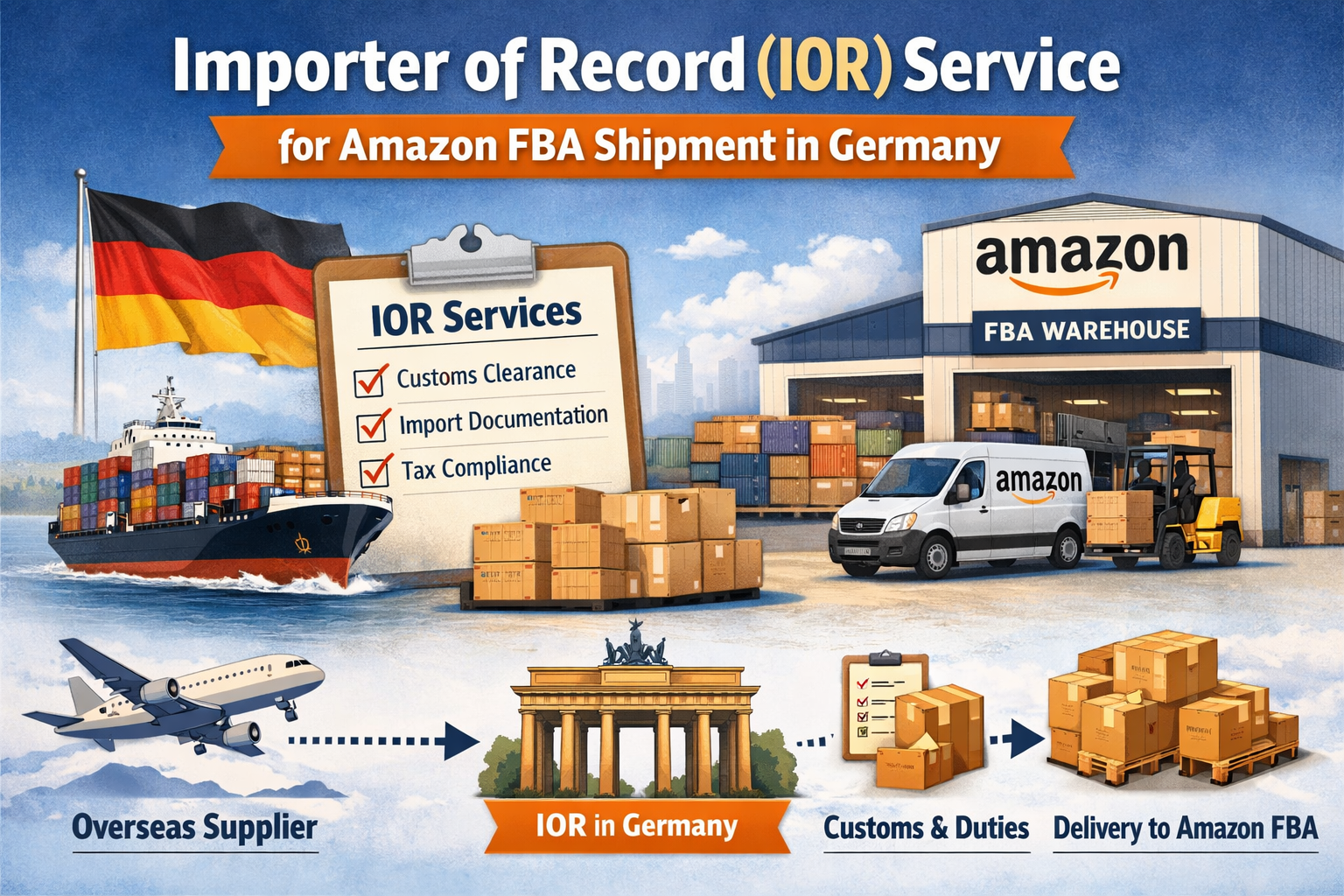
If you utilize Fulfilled by Amazon (FBA) in foreign markets, your IOR strategy is even more critical. Amazon explicitly states in its terms of service that Amazon will not act as the importer-of-record for FBA inventory shipments.
If you ship a container of goods to an Amazon fulfillment center in Germany or the UK without appointing a valid, locally registered importer-of-record, the shipment will be rejected at the border, abandoned, or sent back at your expense. You must have a registered entity or a third-party IOR service in place to clear the goods into the country before they ever touch an Amazon loading dock.
Part 5: Deep Dive: IOR and European Union (EU) Compliance
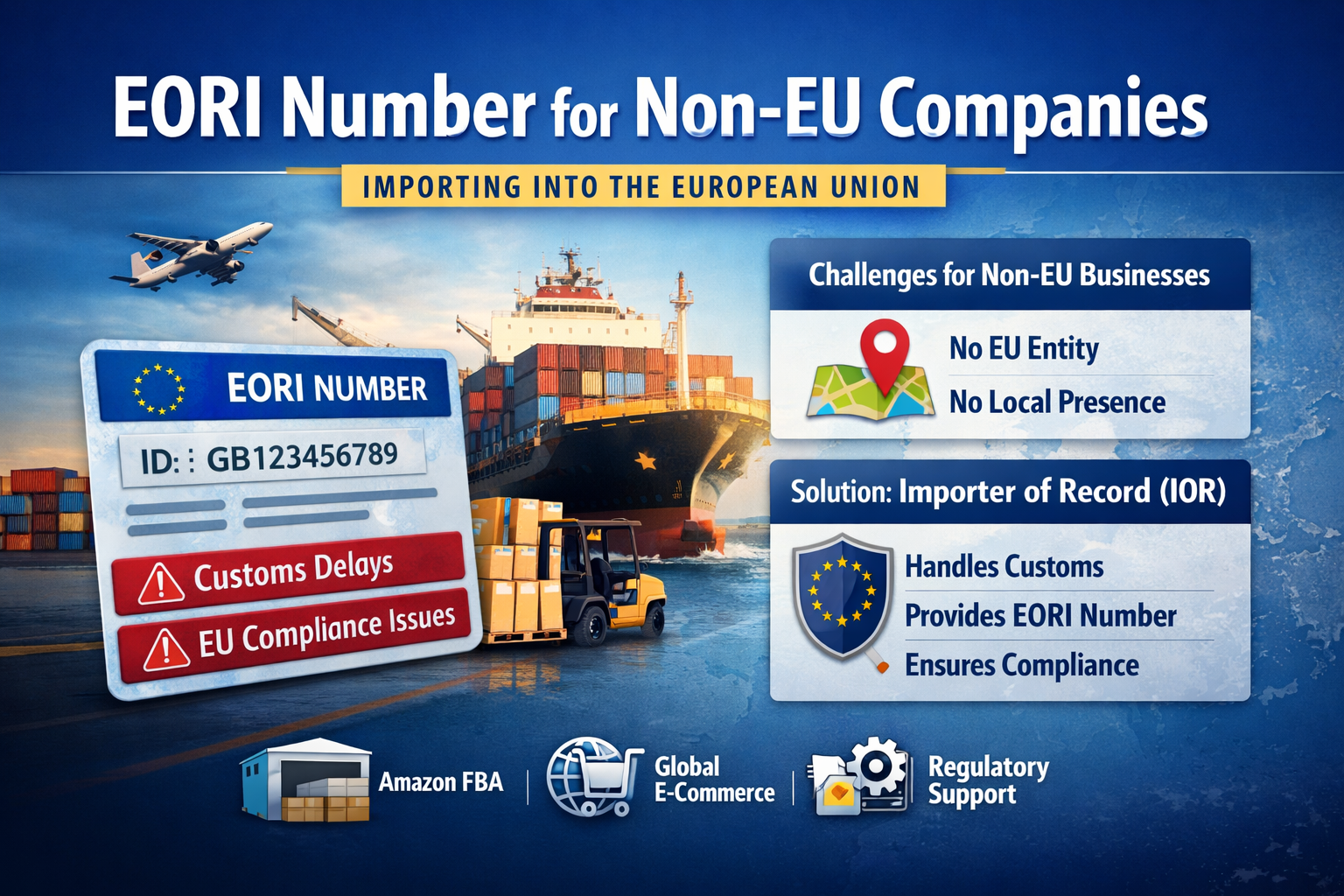
For e-commerce sellers targeting the lucrative European market, acting as the importer-of-record requires navigating some of the most stringent consumer protection and environmental laws in the world. As the IOR, you are legally declaring that the goods meet all EU directives.
Here are the critical compliance frameworks an importer-of-record must manage when entering the EU:
1. General Product Safety Regulation (GPSR)
Coming into full enforcement, the GPSR mandates that all consumer products placed on the EU market are safe. The importer-of-record is responsible for ensuring that the manufacturer has carried out the appropriate conformity assessment procedures, drawn up the necessary technical documentation, and applied clear labeling, including tracking information and safety warnings in the language of the target market.
2. Extended Producer Responsibility (EPR)
EPR is an environmental policy approach in which a producer’s responsibility for a product is extended to the post-consumer stage of a product’s life cycle. As an importer-of-record bringing goods into countries like Germany or France, you must often register for EPR schemes regarding packaging materials. You are required to track the volume of packaging (cardboard, plastic) you introduce to the market and pay eco-contributions to fund recycling and waste management.
3. WEEE Directive (Waste Electrical and Electronic Equipment)
If your e-commerce business sells electronics, the importer-of-record must comply with the WEEE Directive. This requires registering with national authorities, reporting the volume of electronic goods imported, and financing the collection, treatment, and environmentally sound disposal of electronic waste.
4. CE Marking and Technical Files
For specific product categories (toys, electronics, medical devices, machinery), the importer-of-record must verify that the product bears a valid CE marking. The IOR must ensure that the “Declaration of Conformity” is available and that they can provide the technical file to market surveillance authorities upon request. If the foreign manufacturer cannot be reached, the EU authorities will hold the importer-of-record entirely accountable for the non-compliant product.
Part 6: The Risks of Operating Without a Valid IOR Strategy
Attempting to bypass proper IOR protocols, or assigning the role to an unqualified party, exposes your e-commerce business to severe operational and financial risks:
- Customs Seizures: Goods lacking a registered importer-of-record will be stalled at customs. Over time, these goods accumulate massive demurrage and warehousing fees, and eventually, customs may seize or destroy the inventory entirely.
- Financial Penalties: Undervaluing goods on commercial invoices or using the wrong HS codes to lower duty payments is considered customs fraud. When caught during an audit, the importer-of-record will face staggering back-taxes, compound interest, and punitive fines.
- Loss of Import Privileges: Repeated compliance failures can result in your business being blacklisted by national customs authorities, effectively permanently locking you out of that country’s market.
- Supply Chain Paralysis: In e-commerce, out-of-stock events kill product rankings (especially on platforms like Amazon) and destroy sales momentum. Border delays caused by IOR issues directly impact your bottom line.
Part 7: Mastering Cross-Border Logistics with Complico Consulting GmbH
The role of the importer of record is not merely a logistical checkbox; it is a fundamental legal and strategic pillar of international e-commerce. Expanding globally requires a proactive approach to trade compliance, tax calculation, and product safety regulations.
Navigating the intricacies of international customs, particularly the rigorous compliance frameworks of the European Union—from EPR registrations to GPSR technical files—requires specialized knowledge. You do not have to manage this burden alone.
At Complico Consulting GmbH, we specialize in demystifying international trade regulations for e-commerce sellers. Whether you are structuring your global supply chain, looking for clarity on EU compliance directives, or ensuring your importer of record setup is fully optimized and legally sound, our team provides the expert guidance you need. We help you minimize supply chain friction, eliminate the risk of customs penalties, and build a robust foundation for scalable, uninterrupted, and highly profitable international growth.
Top 10 Trusted Resources for Importer of Record, Amazon FBA Germany & EU Compliance
- German Customs (Zoll): Official German customs website with import regulations and procedures
- European Commission: EU trade, VAT, and import/export rules
- Amazon Seller Central: Official Amazon FBA shipping and compliance guidelines
- Bundeszentralamt für Steuern (BZSt): Information on VAT registration in Germany
- European Chemicals Agency (ECHA): REACH compliance and product safety regulations
- Stiftung EAR (WEEE Register Germany): WEEE registration for electronics in Germany
- LUCID Packaging Register: Mandatory packaging registration (EPR compliance)
- International Trade Administration (ITA): Guide to exporting goods to Germany
- HM Revenue & Customs (HMRC): Importer/exporter responsibilities and VAT guidance
- World Customs Organization (WCO): Global standards for customs procedures
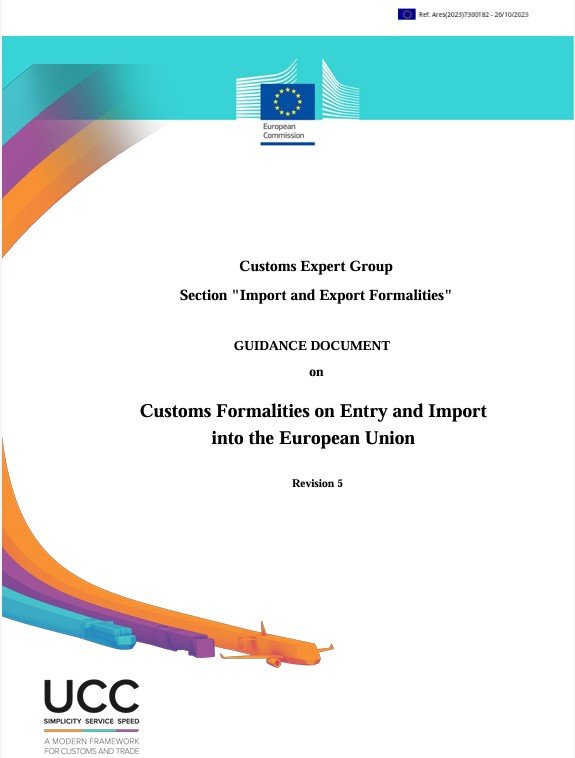
Download Import Export guideline
Related Posts:
Amazon Global Logistics: Importer of Record Service
EOR Exporter of Record Services for Amazon Sellers in Europe
Importer of Record (IOR) Service for Amazon FBA Shipment in Germany
EORI Number for Non-EU Companies: 2026 Guide
The Ultimate Guide to EU Customs: Importer of Record vs Indirect Representative
