

.
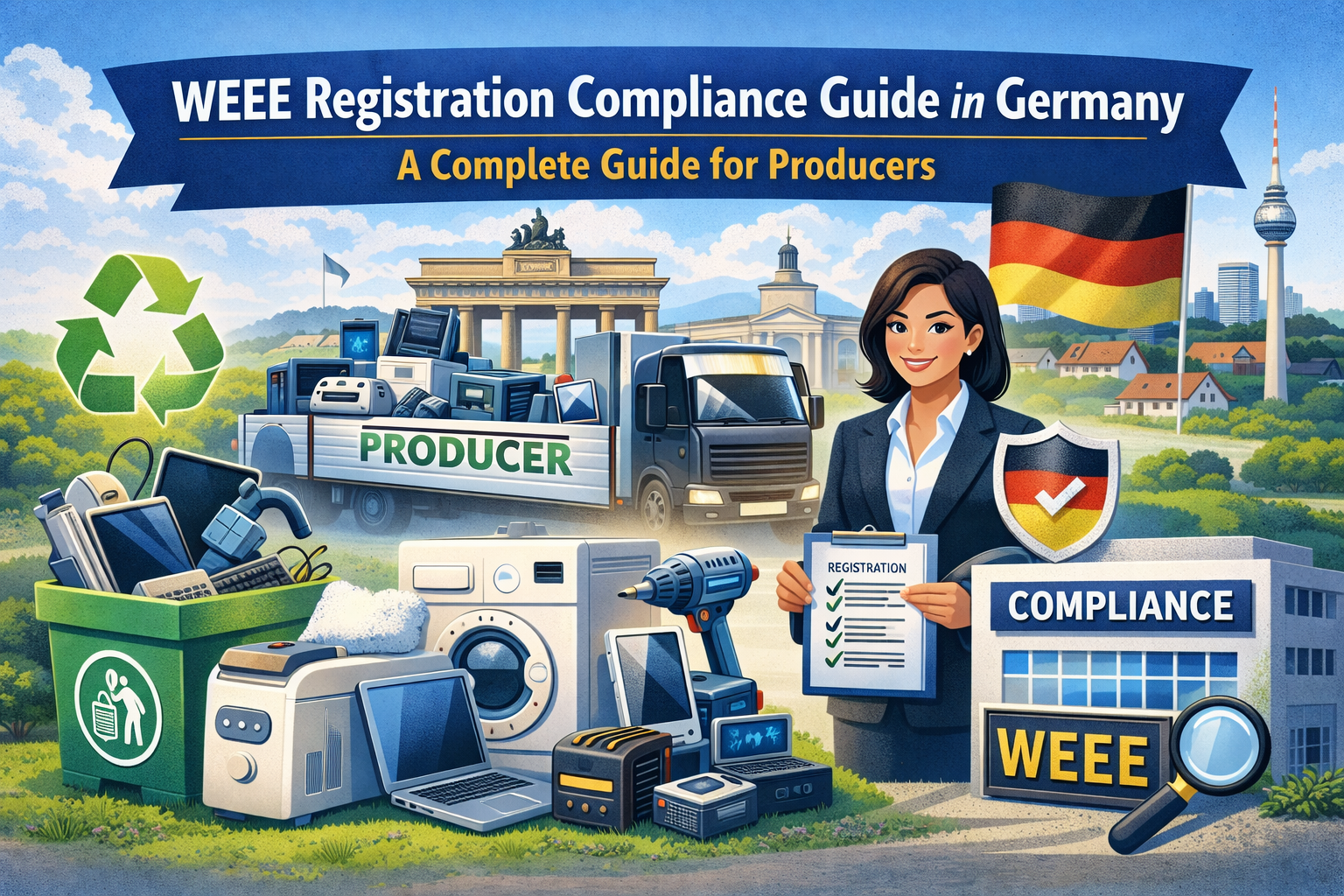
If you are selling electrical or electronic equipment (EEE) in Germany, you have likely encountered a major administrative hurdle: the WEEE registration. Whether you are selling on Amazon, eBay, or through your own Shopify store, having a valid WEEE number in Germany is a strict legal requirement. Without it, you face blocked marketplace listings, hefty fines, and confiscated inventory.
Germany’s implementation of the European WEEE Directive is governed by the ElektroG (Electrical and Electronic Equipment Act), and the registration process is managed by a central authority known as Stiftung EAR (national register for waste electric equipment).
Navigating the Stiftung EAR portal, understanding insolvency guarantees, and figuring out product categories can feel overwhelming—especially if you don’t speak German. But don’t worry. This comprehensive guide breaks down exactly how to get a WEEE number in Germany step-by-step, humanizes the complex legal jargon, and explains how to get your electronics to market legally and efficiently.
What is a WEEE Number in Germany ?
A WEEE number (WEEE-Reg.-Nr. DE) is a unique identification code issued by Stiftung EAR. It proves that you, as a “producer” or “first distributor” of electronics, are compliant with Germany’s Extended Producer Responsibility (EPR) laws. It signifies that you are taking financial responsibility for the collection and recycling of your products once they reach the end of their lifecycle.
Who is Considered a “Producer” ?
Under German law, you are legally considered a producer (and therefore need a WEEE registration in Germany) if you:
- Manufacture electronics in Germany under your own brand.
- Resell equipment produced by other suppliers under your own brand name in Germany.
- Import electrical and electronic equipment into Germany from a commercial basis (e.g., from China or the US).
- Sell directly to German end-users from outside of Germany (Distance Sellers).
Crucial Note for International Sellers: If your company is not physically based in Germany, you cannot register directly with Stiftung EAR. You are legally required to appoint an Authorized Representative based in Germany to handle the registration and reporting on your behalf.
The Step-by-Step WEEE Registration Process in Germany
Securing your WEEE number requires meticulous preparation. A single mistake in categorizing your products or calculating your guarantees can lead to rejected applications and months of delays. Here is the step-by-step process.
Step 1: Analyze and Categorize Your Products
Before touching any registration forms, you must determine exactly what you are selling. Stiftung EAR classifies electronics into six primary categories (e.g., heat exchange equipment, screens, lamps, large equipment, small equipment, and small IT/telecommunication equipment).
Within these categories, you must specify the type of equipment and whether it is intended for private households (B2C) or commercial use only (B2B).
- Pro Tip: B2C and B2B registrations have vastly different requirements. Selling B2C items requires a financial guarantee, whereas B2B does not, but you must provide a credible disposal concept.
Step 2: Appoint an Authorized Representative (For Non-German Sellers)
If your business operates from the UK, China, the US, or any other country outside Germany, you must sign a legal mandate with a German Authorized Representative.
This representative becomes legally liable for your WEEE compliance in Germany. They will set up your EAR account, manage all communications in German, and ensure your monthly tonnage reports are filed correctly.
Step 3: Secure an Insolvency Safe Guarantee (For B2C Sellers)
If you sell electronics to private consumers (B2C), the German government wants an insurance policy. You must provide an insolvency-safe guarantee to ensure that if your company goes bankrupt in the future, there is still money available to recycle the products you put on the market today.
- You must calculate the exact amount based on the weight of the products you plan to sell and the expected return rate.
- This guarantee must be reviewed and approved by Stiftung EAR before they issue your WEEE number.
Step 4: Submit Your Application to Stiftung EAR
Once your representative is appointed and your guarantees are in place, the formal application is submitted via the Stiftung EAR online portal. You will need to provide:
- Company details and brand names.
- Pictures and descriptions of the electronic products.
- Proof of the insolvency guarantee.
- A designated authorized representative mandate (if applicable).
Step 5: Wait for Approval and Receive Your WEEE Number
Stiftung EAR will review your application. If everything is flawless, the processing time typically takes between 6 to 10 weeks. Once approved, you will be issued your official WEEE-Reg.-Nr. DE.
You must immediately display this number on your invoices, your website’s imprint (Impressum), and provide it to marketplaces like Amazon or eBay to unlock your seller privileges.
Post-Registration: Your Ongoing EPR Obligations
Getting your WEEE number is just the beginning. To keep your number active and avoid penalties, you must adhere to strict ongoing compliance rules:
- Monthly Reporting: You must report the exact weight of electronics you placed on the German market the previous month.
- Annual Updates: You must update your insolvency guarantee annually based on your actual sales volumes.
- Proper Labeling: All products must be clearly marked with the brand name and the crossed-out wheelie bin symbol.
Why DIY Registration is a Massive Risk
While it might be tempting to try and navigate the Stiftung EAR portal alone to save money, it is generally a false economy. The portal is entirely in complex legal German. Selecting the wrong equipment type can result in your registration being rejected (meaning you lose the application fee and have to start over, costing you weeks of sales). Furthermore, calculating the financial guarantees incorrectly can trigger audits and severe fines.
For international businesses, DIY is not even an option due to the legal requirement for an Authorized Representative.
Simplify Your German Market Access with Complico Consulting GmbH
Selling in Germany should be about scaling your profits, not drowning in environmental bureaucracy. At Complico Consulting GmbH, we take the pain out of German EPR compliance.
As your dedicated compliance partner, we offer end-to-end WEEE registration services for the German market. Here is how we help:
- Authorized Representation: We act as your legally mandated representative in Germany.
- Accurate Categorization: Our experts analyze your product catalog to ensure you are registered in the exact right categories, preventing costly application rejections.
- Guarantee Management: We calculate and secure the necessary insolvency-safe guarantees on your behalf.
- Ongoing Account Management: We handle your monthly weight reporting and annual renewals, ensuring your Amazon or eBay listings never get suspended.
Don’t let complex waste regulations lock you out of Europe’s largest e-commerce market. Whether you are a drop-shipper, a brand owner, or a global manufacturer, we humanize the compliance process and get your products moving.
Ready to get your German WEEE number without the headache ? Partner with Complico Consulting GmbH today and secure your seamless entry into the German market.
More about WEEE registration Germany
- Official German WEEE Authority (EAR Foundation)
- Germany WEEE Compliance Guide (ElektroG Law)
- WEEE Registration Process with Stiftung EAR
Related Posts:
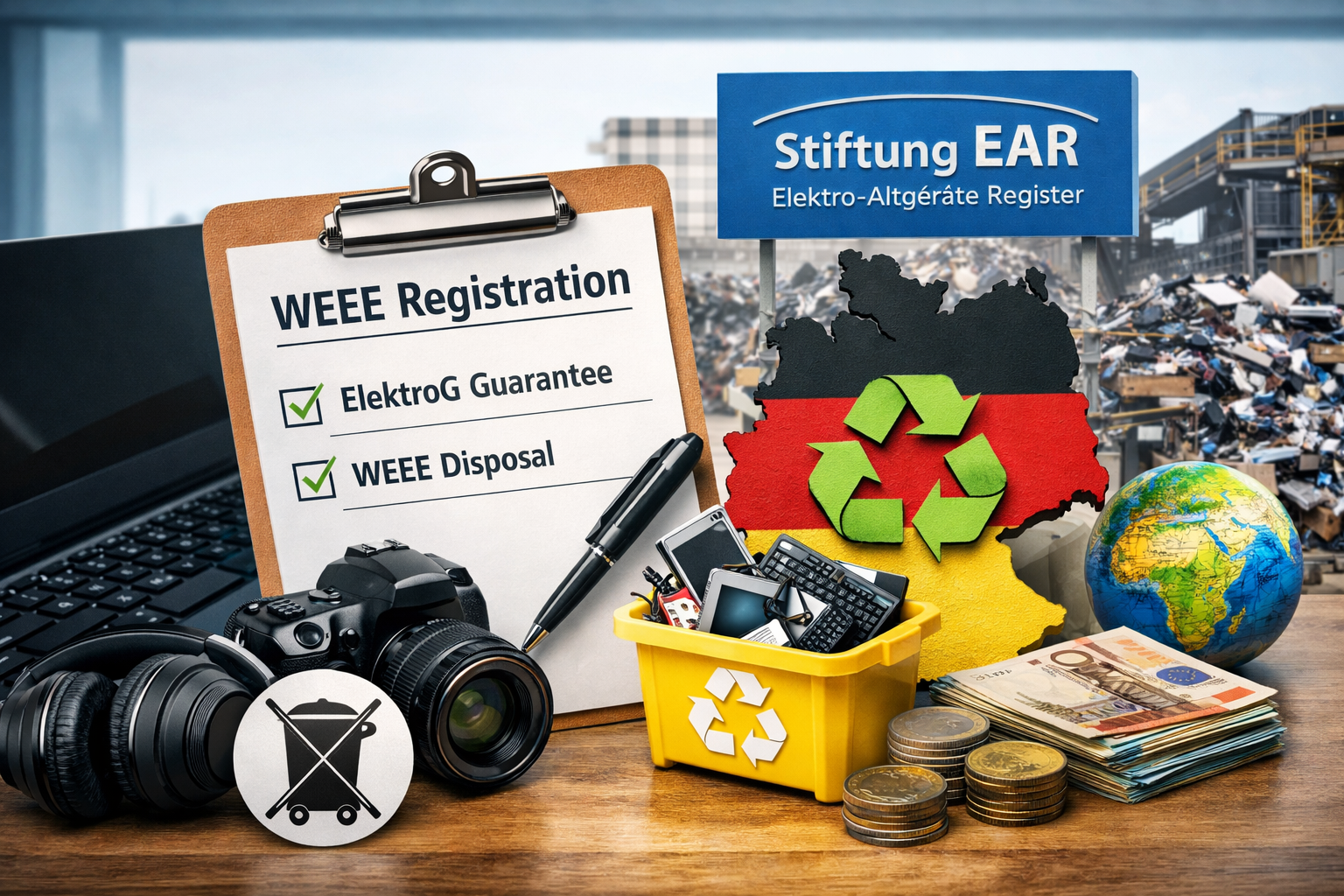
WEEE Registration – ElektroG Guarantee – WEEE Disposal
The Ultimate Guide: How to Get a WEEE Number Germany in 2026
WEEE Registration Compliance Guide in Germany: A Complete Guide for Producers
The Ultimate Guide to Appointing an EPR Authorized Representative in Europe
The Ultimate Guide to Getting Your WEEE Number France
