

.
.
The landscape of global e-commerce has transformed dramatically over the last decade, with platforms like Amazon providing sellers unprecedented access to international markets. For brands looking to scale, expanding across borders is no longer just an option; it is a vital growth strategy. To facilitate this, Amazon introduced Amazon Global Logistics (AGL), a service designed to streamline the supply chain by allowing sellers to ship inventory directly from manufacturers in regions like China to Amazon fulfillment centers worldwide.
However, while AGL simplifies the physical movement of freight, it does not absolve sellers of the complex legal and regulatory responsibilities associated with international trade. One of the most critical—and frequently misunderstood—requirements for utilizing AGL successfully is the necessity of appointing a qualified importer of record.
Navigating customs clearance, paying import duties, and ensuring strict adherence to destination-country regulations are hurdles that can derail a supply chain if not handled with precision. This comprehensive guide explores the intersection of Amazon Global Logistics and international customs compliance, detailing exactly why securing a professional importer of record is the cornerstone of a successful global Amazon business.
Understanding Amazon Global Logistics (AGL)
Amazon Global Logistics was created to solve a massive logistical headache for Fulfillment by Amazon (FBA) sellers: moving freight across oceans. Traditionally, an Amazon seller manufacturing goods in Asia and selling in Europe or North America would have to coordinate with multiple third-party freight forwarders, origin warehouses, destination warehouses, and trucking companies just to get their inventory to an Amazon fulfillment center.
AGL integrates these steps, allowing sellers to book ocean and air freight directly through Seller Central. This integration offers end-to-end visibility, competitive pricing, and the ability to send inventory straight into Amazon’s FBA network without the need for an intermediate prep center.
But there is a catch. Amazon is fundamentally a logistics and retail platform, not a customs brokerage or a legal import entity for your specific goods. When your shipment arrives at the border of the European Union, the United Kingdom, or the United States, customs authorities require a legally recognized entity to take responsibility for the shipment.
Amazon explicitly states in its terms of service that it will not act as the importer of record for FBA inventory. If a shipment arrives at a port of entry naming Amazon as the legal importer, customs will immediately reject it, leading to severe delays, storage fees, and potential seizure of the goods.
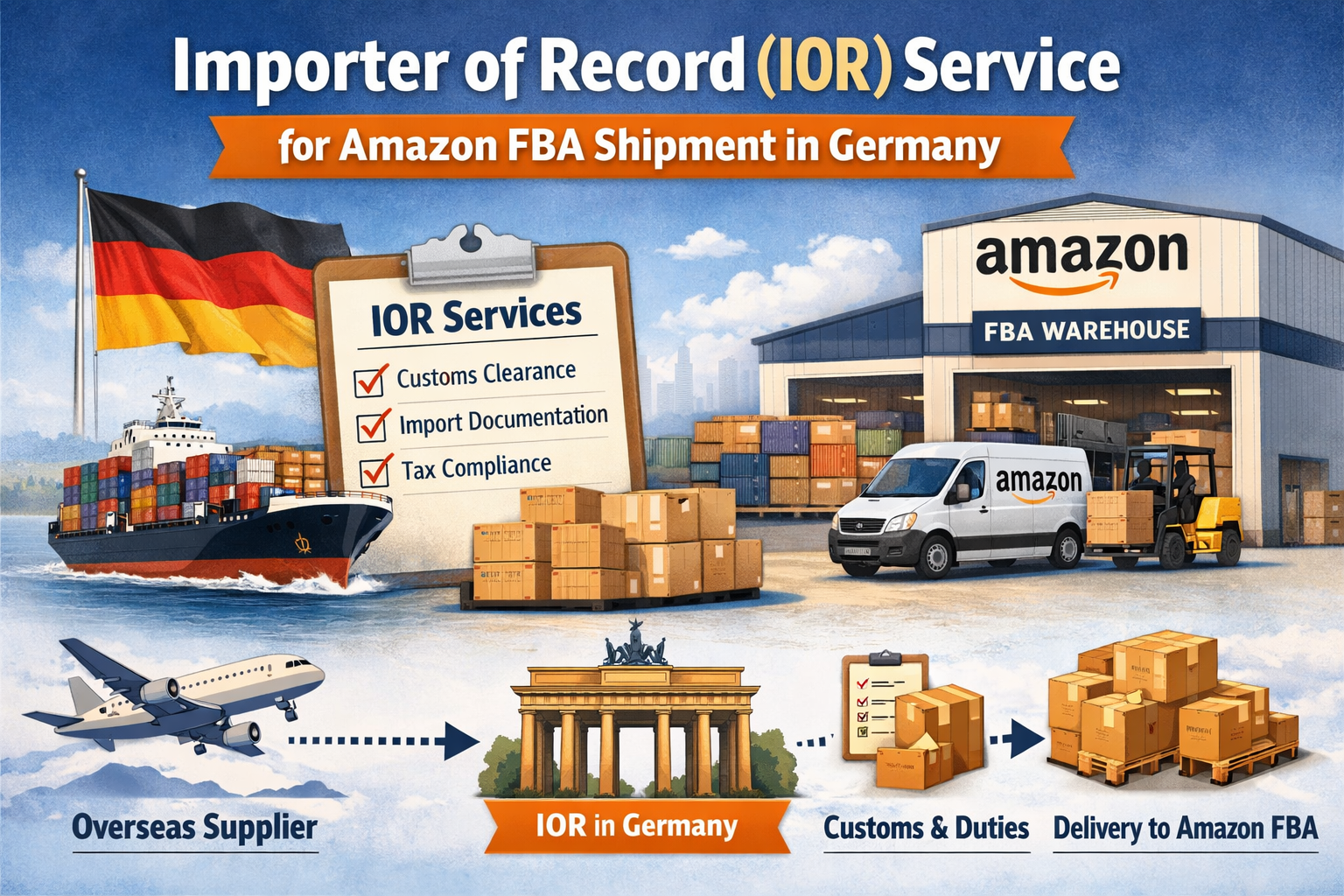
What Exactly is an Importer of Record ?
An importer of record (often abbreviated as IOR) is the legal entity or individual officially recognized by government customs authorities as being responsible for ensuring that imported goods comply with all local laws and regulations.
The responsibilities of an importer of record are extensive and carry significant legal and financial weight. They include:
- Customs Declarations: Filing all necessary paperwork with border authorities, accurately describing the goods, their origin, and their value.
- Duty and Tax Payment: Calculating and remitting all applicable import duties, tariffs, and taxes (such as Value Added Tax or VAT in the EU) to the government.
- Regulatory Compliance: Ensuring that the imported products meet all safety standards, certifications, and labeling requirements of the destination country.
- Record-Keeping: Maintaining detailed, legally compliant records of the import transaction for a specified number of years, ready to be presented in the event of a customs audit.
When you ship via Amazon Global Logistics, you must designate an importer of record on your commercial invoice and shipping documents. If your business is not physically located and legally established in the destination country (for example, a US-based LLC trying to import into Germany), you typically cannot act as your own IOR without setting up a complex corporate infrastructure or utilizing a specific type of indirect customs representation.
The Consequences of Operating Without a Proper Importer of Record
Attempting to bypass the IOR requirement or improperly designating an entity that lacks the authority to act as an importer of record can lead to catastrophic consequences for an e-commerce business.
1. Shipment Delays and Demurrage Fees
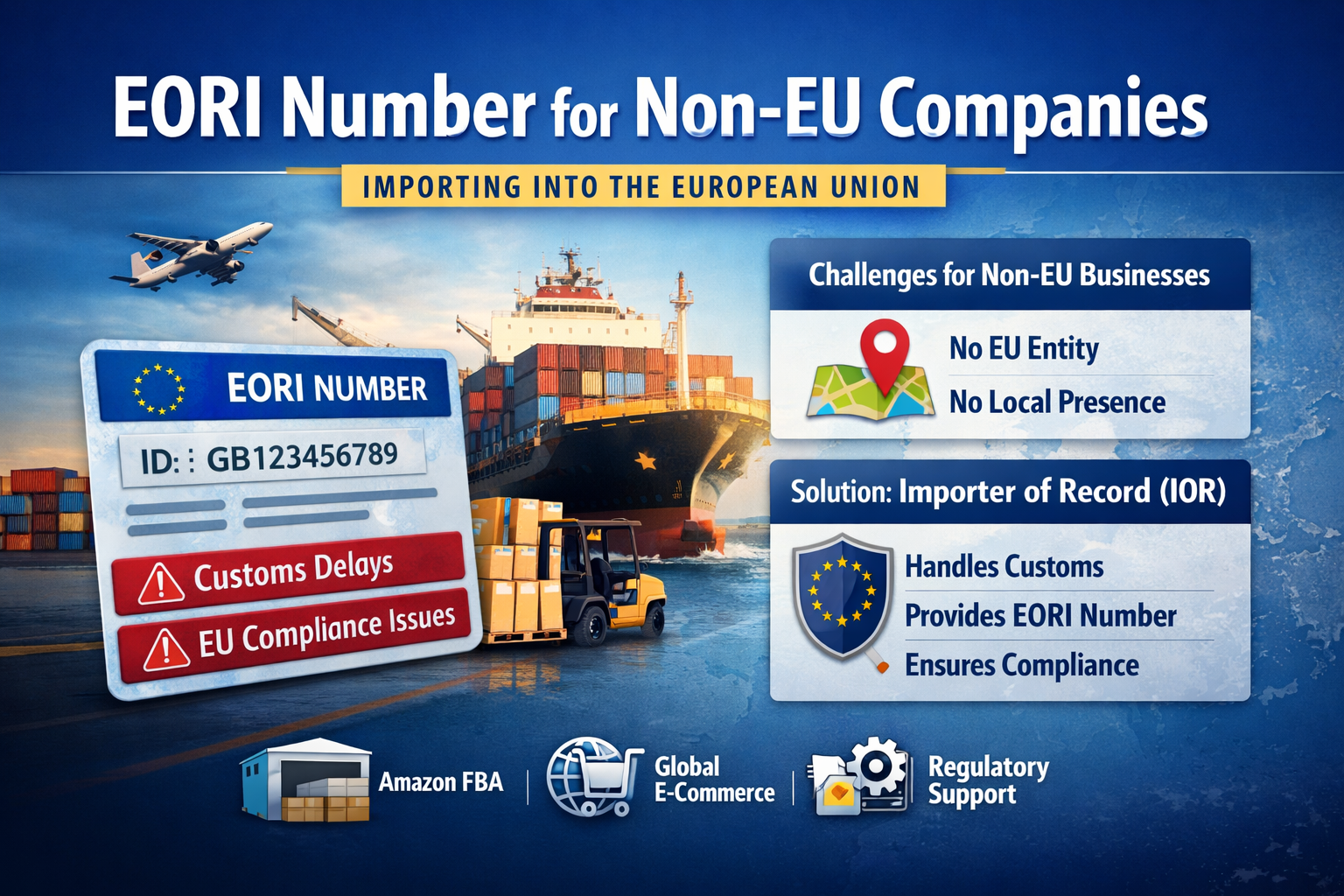
Customs authorities are notoriously strict. If your AGL shipment arrives at a European port without a valid importer of record holding a valid EORI (Economic Operators Registration and Identification) number, the shipment will not clear customs. It will be placed in a bonded warehouse or left at the port. Every day that your shipment sits uncleared, you accrue demurrage and detention fees. These daily port storage charges can easily spiral into thousands of euros, wiping out the profit margin of an entire production run.
2. Confiscation and Destruction of Goods
If an import remains in limbo for too long without a qualified importer of record stepping forward to claim legal responsibility and pay the required duties, customs authorities possess the legal right to seize the shipment. In many cases, non-compliant goods are eventually destroyed at the seller’s expense.
3. Amazon Account Suspension
Amazon monitors supply chain compliance closely. Continual issues with customs clearance, or attempting to improperly name Amazon FBA centers as the importer of record, violates Amazon’s inbound shipping policies. This can trigger an immediate suspension of your inbound shipping privileges or a complete suspension of your Seller Central account.
4. Legal and Financial Audits
Even if a shipment accidentally slips through customs with improper documentation, the liability does not disappear. Customs authorities routinely conduct post-clearance audits. If an audit reveals that duties were underpaid or that the entity acting as the importer of record was illegitimate, the penalties, back-taxes, and legal fines can be devastating.
The Intersection of IOR Services and European Product Safety
For sellers targeting the European Union, the role of the importer of record goes far beyond just paying tariffs; it is deeply intertwined with complex product safety and environmental regulations. The European market is highly regulated, and the legal importer shoulders the burden of proving that the goods are safe for consumers.
The General Product Safety Regulation (GPSR)
The EU’s General Product Safety Regulation (GPSR) mandates strict safety assessments, technical documentation, and traceability for all products sold within the bloc. An importer of record is legally obligated to verify that the manufacturer has drawn up the correct technical documentation and that the product bears the necessary conformity markings (like the CE mark) before the goods cross the border.
If a product is found to be non-compliant or poses a safety risk, authorities will look directly to the importer of record to initiate recalls, notify the public, and bear the legal liability.
Extended Producer Responsibility (EPR)
EPR regulations across European nations (such as Austria, Germany, and France) dictate that the party introducing a product into the market is financially responsible for the end-of-life disposal and recycling of that product and its packaging. This covers categories like Packaging, WEEE (Waste Electrical and Electronic Equipment), Batteries, and Textiles. A proficient importer of record must ensure that the appropriate EPR registrations and eco-contributions are aligned before clearing the goods, as customs checks increasingly verify EPR compliance at the border.
Why Complico Consulting GmbH is Your Ideal IOR Partner
Managing the friction of international borders requires specialized expertise. This is where Complico Consulting GmbH steps in to bridge the gap between your manufacturing hub and your Amazon FBA customers.
Headquartered in Ronneburg, Germany, Complico Consulting GmbH provides comprehensive importer of record and regulatory representation services tailored specifically for international e-commerce sellers utilizing Amazon Global Logistics. By partnering with a firm that possesses a deep, hyper-focused understanding of European trade logistics, sellers can completely eliminate the stress of cross-border compliance.
Here is how Complico Consulting GmbH elevates your supply chain:
1. Seamless Amazon Global Logistics Integration
We understand the exact documentation, commercial invoice structuring, and routing requirements mandated by AGL. By acting as your designated importer of record, we ensure that your shipping paperwork is flawlessly executed before your goods even leave the origin port. This guarantees a frictionless handover from ocean freight to EU customs, and finally into the Amazon fulfillment network.
2. Comprehensive Regulatory Shield
Unlike basic freight forwarders who simply process paperwork, Complico Consulting GmbH offers robust regulatory oversight. As your importer of record, we perform pre-shipment compliance checks, ensuring your goods align with the General Product Safety Regulation (GPSR), carry valid CE marking, and meet all regional Extended Producer Responsibility (EPR) mandates. We don’t just clear your goods; we protect your brand from post-import audits and regulatory takedowns.
3. Transparent Tax and Duty Handling
Calculating the precise landed cost of your goods requires an accurate assessment of HS (Harmonized System) codes and VAT liabilities. As your importer of record, we manage the accurate calculation and seamless disbursement of import duties and taxes to the respective EU authorities. This transparency allows you to price your Amazon products accurately and protect your profit margins.
4. Local EU Presence and Accountability
To import into the EU, you need a registered Economic Operator physically located within the bloc. Operating from our base in Ronneburg, Germany, Complico Consulting GmbH acts as your boots-on-the-ground legal representative. We handle all communications with customs officials, market surveillance authorities, and border agencies on your behalf, providing the local accountability that international law demands.
Step-by-Step: Integrating IOR Services with Your AGL Shipments
If you are preparing to leverage Amazon Global Logistics for your next inventory run, here is a practical roadmap for integrating professional IOR services into your workflow.
Step 1: Pre-Shipment Consultation Before manufacturing is even complete, consult with your importer of record. At Complico Consulting GmbH, we review your product catalog, assign accurate HS classification codes, and identify all necessary safety certifications (like RoHS, REACH, or specific children’s product safety reports).
Step 2: Documentation Review Your IOR will review your commercial invoices, packing lists, and Bill of Lading to ensure the IOR entity is correctly named and that the valuation of the goods meets customs standards. This prevents valuation disputes at the border.
Step 3: Booking via Seller Central When you log into Amazon Seller Central to book your AGL shipment, you will be prompted to enter the details of your importer of record. You will input the registered corporate details, EORI number, and contact information provided by Complico Consulting GmbH.
Step 4: Transit and Customs Clearance While your goods are in transit over the ocean or via air freight, your IOR actively prepares the customs entry declarations. The moment the vessel arrives at the destination port (such as Hamburg or Rotterdam), the customs entry is filed, duties are paid, and the goods are released.
Step 5: Final Delivery to FBA Once cleared, the shipment is legally naturalized into the local market. Amazon’s partnered carriers then collect the freight from the port or deconsolidation center and deliver it directly to the designated FBA warehouses, ready to be sold to millions of Prime customers.
Frequently Asked Questions About IOR Services
Can my freight forwarder act as my Importer of Record? In most cases, no. Freight forwarders are logistics providers, not legal representatives. While they have customs brokers who file the paperwork, the broker files it on behalf of the importer of record. The forwarder rarely takes on the legal and financial liability of the goods themselves.
If I am a non-EU company, can I just register for a local VAT number and act as my own IOR? A VAT number alone is insufficient. To act as an importer of record in the EU, you generally need to be an established business within the Union. If you are a non-established entity, you require “Indirect Representation” by a customs broker, which most brokers refuse to do because it makes them jointly liable for your compliance and taxes. Using a dedicated IOR service bypasses this roadblock.
Does using an IOR mean I lose ownership of my goods? Absolutely not. The importer of record only takes ownership for the purposes of customs clearance and regulatory compliance at the exact moment of importation. The physical and commercial ownership of the inventory remains entirely yours.
Conclusion
Expanding your Amazon business internationally is a massive milestone, and Amazon Global Logistics offers a powerful engine to get your inventory where it needs to go. However, a supply chain is only as strong as its weakest link, and for most international sellers, that link is customs compliance.
Attempting to navigate international borders without a dedicated importer of record is a high-risk gamble that can result in seized shipments, massive fines, and suspended Amazon accounts. By securing professional representation, you transform customs clearance from a bottleneck into a competitive advantage.
Complico Consulting GmbH stands ready to be your trusted partner in Europe. By absorbing the legal liabilities and managing the intricate web of EU product safety, taxation, and customs regulations, we empower you to focus on what you do best: sourcing great products, optimizing your Amazon listings, and growing your global brand. Don’t let your inventory get stuck at the border—ensure your next AGL shipment is seamless, compliant, and ready for sale.