


.
The landscape of European packaging is about to undergo its most significant transformation in decades. As we move closer to August 12, 2026, the new EPR EU PPWR (Packaging and Packaging Waste Regulation) will officially become the law of the land across all 27 EU Member States.
For businesses operating within or exporting to the European Union, this isn’t just another regulatory update—it is a fundamental shift from national directives to a harmonized, strictly enforced EU-wide regulation. At Complico Consulting GmbH, we are helping companies navigate these complexities to ensure they remain compliant and competitive.
In this comprehensive guide, we break down everything you need to know about the EPR EU PPWR and the critical steps you must take before the August 2026 deadline.
What is the EPR EU PPWR?
The EPR EU PPWR stands for the Extended Producer Responsibility framework under the Packaging and Packaging Waste Regulation (Regulation (EU) 2025/40). Unlike the previous Packaging Directive, which allowed individual countries to set their own rules, the PPWR is a Regulation. This means it applies directly and uniformly across the entire EU, leaving no room for national interpretation.
The primary goals are clear:
- Reduce the total volume of packaging waste.
- Harmonize labeling and recycling standards across borders.
- Mandate recyclability and the use of recycled content.
Key Deadlines: Why August 12, 2026, Matters
While the PPWR entered into force on February 11, 2025, the “General Application Date” is August 12, 2026. From this day forward, any packaging “placed on the market” in the EU must meet a new set of baseline requirements.
Wait and see is not an option. Because these rules affect packaging design, the lead times for manufacturing and supply chain adjustments mean that compliance planning must happen now.
The 5 Pillar Requirements of EPR EU PPWR (Effective August 2026)
1. Mandatory EPR Registration and Reporting
Extended Producer Responsibility (EPR) is the engine of this regulation. From August 2026, the PPWR clarifies that manufacturers, importers, and even e-commerce “distance sellers” bear full responsibility for the entire lifecycle of their packaging.
- National Registers: You must be registered in the “Producer Register” of every Member State where you sell.
- Standardized Data: Reporting will become more granular, requiring exact data on material weight, type, and recyclability.
- Authorized Representatives: Non-EU companies must appoint an EU-based Authorized Representative to handle these legal obligations.
2. Strict Substance Restrictions (The PFAS Ban)
Safety is at the forefront of the new rules. Specifically, from August 12, 2026:
- PFAS Limit: Food-contact packaging will face a total ban or strict limit of 100 ppm for “forever chemicals” (PFAS) used for grease or water resistance.
- Heavy Metals: The sum of lead, cadmium, mercury, and hexavalent chromium must not exceed 100 mg/kg in any packaging component.
3. EU Declaration of Conformity (DoC)
Just like CE marking for electronics, packaging will now require a formal EU Declaration of Conformity.
- Manufacturers must draw up technical documentation proving that the packaging meets the sustainability, substance, and design requirements of the PPWR.
- This document must include a unique identification number and be kept for 10 years.
4. Traceability and Identification
Every packaging unit must be traceable. This means including:
- The name and address of the manufacturer or importer.
- A batch, type, or serial number.
- Standardized abbreviations for materials (e.g., PET, PAP, ALU).
5. Design for Recyclability (DfR)
While the strictest “Grade A, B, C” performance classes arrive in 2030, the August 2026 deadline marks the beginning of the Design for Recyclability mandate. All packaging must be designed to be collected, sorted, and recycled “at scale.” If your packaging is a complex multi-layer laminate that cannot be separated, it may be blocked from the market.
Impact on Different Business Sectors
| Sector | Primary Challenge | Strategy |
| Manufacturing | Material substitution (removing PFAS/heavy metals). | Audit material safety data sheets (MSDS) immediately. |
| E-commerce | Compliance in multiple countries & empty space rules. | Optimize box sizes; “void space” must eventually be limited. |
| Importers | Responsibility for non-EU supplier designs. | Secure compliance certificates from overseas partners. |
| Food & Beverage | Mandatory recycled content in plastic (by 2030). | Secure long-term supply of food-grade recycled plastic. |
Harmonized Labeling: The End of National Confusion
One of the most significant changes under EPR EU PPWR is the move toward harmonized labeling. Currently, countries like France (Triman logo) and Italy have different requirements.
- The EU Commission is developing standardized pictograms to tell consumers exactly which bin to use.
- Digital Carriers: QR codes will be increasingly used to provide sorting instructions and reuse information without cluttering the physical package.
How to Prepare: A 5-Step Compliance Checklist
- Map Your Portfolio: Identify every piece of packaging you use—primary, secondary, and transport. Determine the material composition of each.
- Audit Your Suppliers: Request formal declarations regarding PFAS and heavy metal content. If they cannot provide them, start looking for new partners.
- Check Your Registrations: Ensure your EPR registrations are active in all target markets.
- Review Design for Minimization: The PPWR explicitly targets “over-packaging.” Avoid unnecessary double walls or false bottoms.
- Prepare the DoC: Set up a process for generating the EU Declaration of Conformity and technical documentation for every packaging type.
Why Partner with Complico Consulting GmbH ?
Navigating the EPR EU PPWR is a heavy administrative and technical lift. At Complico Consulting, we specialize in all-in-one compliance solutions:
- EPR Services: Management of packaging, battery, and WEEE obligations.
- EU Authorized Representation: Acting as your official contact from our office in Germany.
- Technical Documentation: Assisting with risk assessments, labeling reviews, and Declarations of Conformity.
- Marketplace Integration: Ensuring your credentials are valid for platforms like Amazon or eBay.
Conclusion
The EPR EU PPWR is a turning point for the circular economy. While the August 2026 deadline may feel distant, the reality of redesigning packaging and restructuring supply chains means the clock is already ticking.
Don’t let regulatory changes disrupt your access to the world’s largest single market. Contact Complico Consulting GmbH today to schedule a compliance audit and ensure your packaging is ready for the future.
More about EPR EU PPWR: new packaging rules from August 2026
- European Commission – Packaging and Packaging Waste
- European Parliament – Packaging Waste Rules Update
- OECD – Extended Producer Responsibility (EPR)
Related Posts:

Top 30 EPR Europe Authority Websites Every E-commerce Seller Must Know

France EPR Rules Expanded: What International Sellers Need to Know
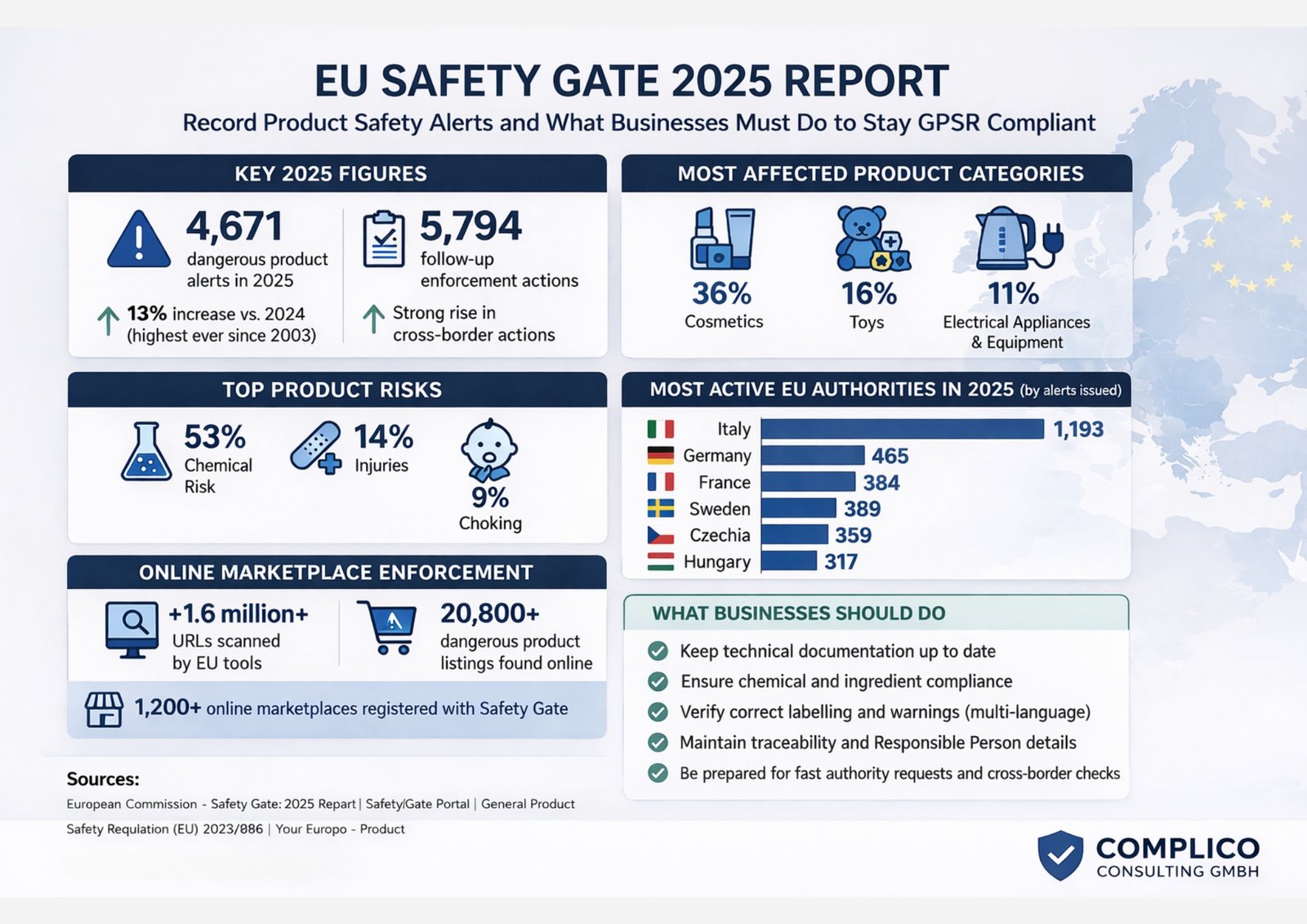
EU Safety Gate 2025 Report: Record Alerts and GPSR Compliance Guide
The 20 Biggest GDPR Fines So Far: What Businesses Can Learn from Record Data Protection Penalties
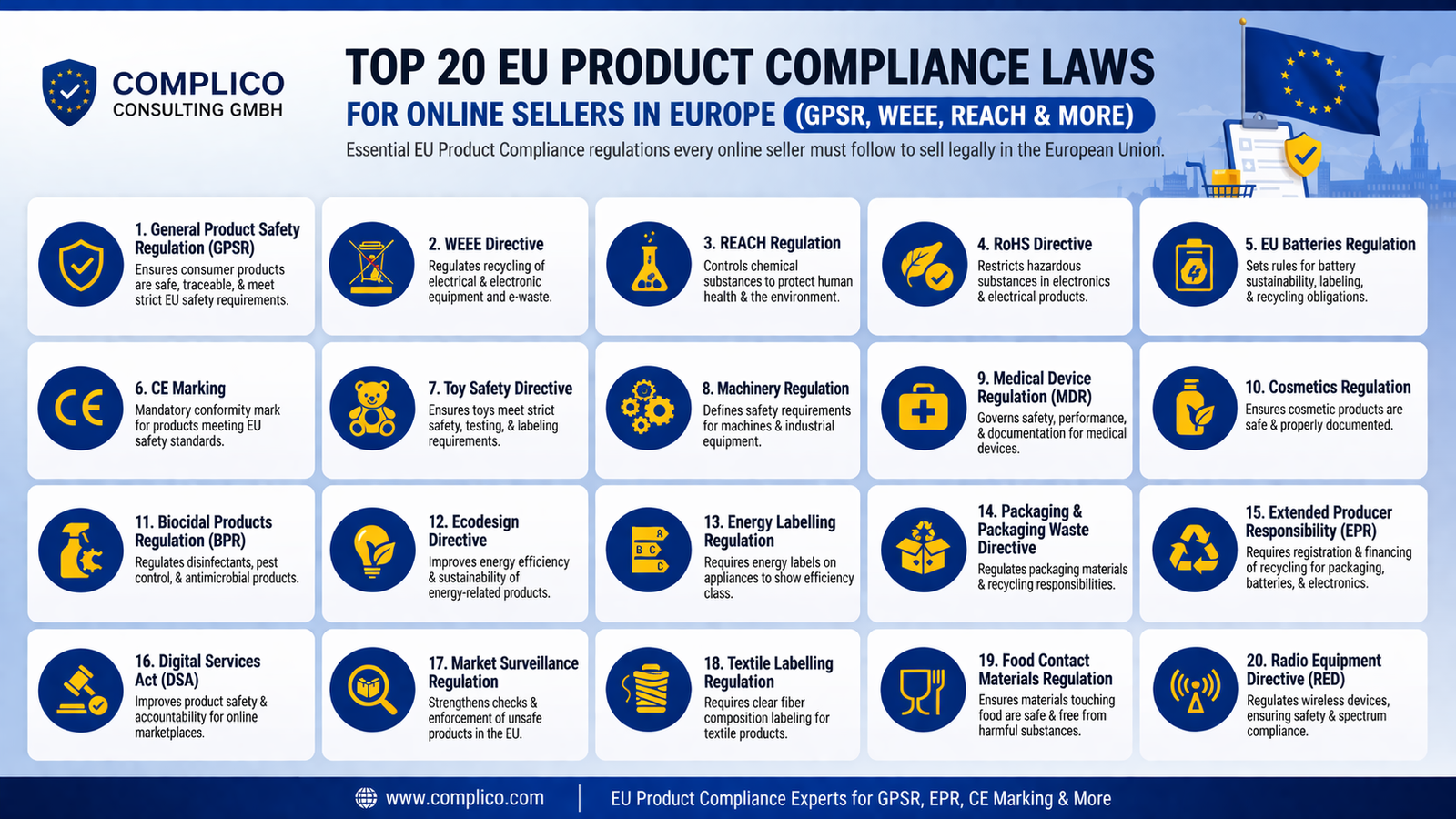
2026 Top 20 EU Product Compliance Laws for Online Sellers in Europe (GPSR, WEEE, REACH & More)
