



.
If you are an international brand selling your products in France, you’ve likely noticed a massive shift in how the European market handles compliance. What used to be a simple process of clearing customs and paying VAT has evolved into a strict, life-cycle accountability system. At the heart of this shift are the France EPR regulations (Extended Producer Responsibility)—and they are expanding rapidly.
With sweeping updates taking effect through 2025 and 2026, the French government is aggressively pushing its circular economy agenda via the AGEC (Anti-Waste) Law. For non-EU sellers, e-commerce brands, and manufacturers, these aren’t just minor administrative hurdles; they are mandatory gateways to one of Europe’s most lucrative markets. Failure to comply now means blocked listings on Amazon, hefty fines, and seized shipments at the border.
At Complico Consulting GmbH, we know that navigating international environmental law can feel like an insurmountable task. Let’s break down exactly what the expanded France EPR regulations mean for your business, what new categories are being targeted, and the actionable steps you must take to keep your sales flowing seamlessly into France.
What Exactly Are the France EPR Regulations?
Before we dive into the latest expansions, let’s establish the baseline. Extended Producer Responsibility (EPR) is an environmental policy approach that shifts the physical and financial responsibility of a product’s end-of-life management back to the “producer.”
Under French law, a “producer” isn’t necessarily the factory that manufactured the item. If you are a brand, an importer, or a cross-border e-commerce seller introducing a packaged product to the French market, you are the producer.
The fundamental rule of France EPR regulations is the “pay-or-play” principle. You must either physically manage the waste your products generate (which is impossible for an international e-commerce seller) or pay an “eco-contribution” fee to a recognized Producer Responsibility Organization (PRO). In exchange, you receive a Unique Identification Number (UIN), which proves your compliance to customs authorities and online marketplaces.
The 2025 and 2026 Expansions: What’s Changing?
France is already considered the gold standard (and the most rigorous enforcer) of EPR laws in the European Union. However, the roadmap laid out by the French Anti-Waste Law for a Circular Economy (AGEC) is accelerating. Here is what international sellers need to prepare for in 2025 and 2026.
1. New Product Categories
France has historically required EPR registration for household packaging, Waste Electrical and Electronic Equipment (WEEE), and batteries. However, the scope has massively expanded. If you sell any of the following, you are now subject to strict EPR rules:
- Textiles, Footwear, and Linen: Fast fashion and apparel brands must register and contribute to textile recycling.
- Toys and Sporting Goods: From board games to tennis rackets, end-of-life recovery is now mandated.
- DIY and Gardening Tools: Hardware, paint, and garden equipment fall under new, heavy scrutiny.
- Furniture: Both indoor and outdoor furnishing elements require distinct UINs.
- Professional Packaging (New for 2025): Previously, only household (consumer) packaging was strictly enforced. As of 2025, B2B professional packaging and shipping materials are being brought under the EPR umbrella.
2. The Group 3 Threshold for Environmental Labeling (2025)
Decree 2022-748 of the AGEC law requires sellers to provide consumers with detailed environmental qualities and characteristics of their products (traceability, presence of microplastics, recyclability). This was rolled out in phases based on company size.
- As of January 1, 2025: The “Group 3” threshold takes effect. If your company generates more than €10 Million in annual turnover in France across covered products, AND you place more than 10,000 units on the French market, you must fully comply with these deep-tier digital and physical labeling requirements.
3. The Durability Index (2025)
France introduced a “Repairability Index” for electronics in 2021. Starting in 2025, this is being expanded into a comprehensive Durability Index. This new metric will score products not just on how easy they are to fix, but on their overall longevity and robustness, forcing manufacturers to rethink product design entirely.
4. Microplastic Bans (2026)
Looking slightly ahead, France is targeting microplastics aggressively. By January 1, 2026, all rinse-off cosmetics containing intentional microplastics will be banned from the French market. If your brand operates in the health and beauty space, reformulating your products must begin immediately.
The Triman Logo: The Non-Negotiable Marking
You cannot discuss France EPR regulations without talking about the Triman Logo. This symbol is the visual cornerstone of French recycling compliance. It is not optional; it is a mandatory requirement for any recyclable product sold to French consumers.
For international sellers, the Triman logo requirement is often the biggest operational headache because it requires physical changes to your packaging. Here is what the law demands:
The Anatomy of a Compliant Triman Label
- The Logo Itself : The standard Triman figure must be printed on the packaging. Officials mandate a minimum size of 10mm (or a compact 6mm version for exceptionally small items).
- The Country Code : Because you are likely an international seller distributing across Europe, you must include the “FR” country code next to the logo to indicate that these specific sorting instructions apply to France.
- Recyclable Component Identification : You must clearly identify what parts of the packaging are recyclable. For example, if you sell cosmetics, you must use text (like “BOUTEILLE”) or a pictogram of a bottle to indicate the component. The font specifications are incredibly strict: Helvetica Neue 77 Bold is required for product descriptions.
- The Sorting Bin Color : You must guide the consumer on where to throw the waste. A yellow bin symbol is used for non-glass recyclables (plastics, paper), while a green bin is used for glass.
Real-World Example : Let’s say you ship a plastic bottle of shampoo in a cardboard box to a buyer in Paris. Under the expanded France EPR regulations, you pay a fee for the cardboard box and the plastic bottle. Your packaging must display the Triman logo, the “FR” text, pictograms showing both a box and a bottle, and a yellow sorting bin indicator. If you miss even one of these elements, French customs can seize the shipment.
Why Online Marketplaces Are Becoming the Compliance Police
If you think you can fly under the radar because you don’t have physical storefronts in France, think again. The French government recognized that policing thousands of international cross-border sellers was impossible. So, they changed the law to make the marketplaces legally liable for the waste.
Platforms like Amazon, eBay, Cdiscount, and TikTok Shop are now legally obligated to verify your compliance. If you cannot provide a valid Unique Identification Number (UIN) generated by the French ADEME (SYDEREP) portal, the marketplaces will take swift action.
Depending on the platform, they will either:
- Suspend your listings: Completely blocking your ability to sell into France.
- Pay on your behalf and charge you a premium: Amazon, for instance, may automatically enroll you in their “Pay on Behalf” system. While this keeps your listings active, you lose control over your compliance data, and Amazon will recover the eco-fees from your account balance—often without the eco-design discounts you could have secured by registering yourself.
Managing your own France EPR regulations compliance ensures you maintain control over your profit margins, your supply chain data, and your brand’s legal standing in Europe.
The Financial Risks of Non-Compliance
The era of warnings is over. The French authorities, working alongside market surveillance entities, are actively issuing penalties for non-compliance. Ignoring the expanded France EPR regulations carries severe financial and operational risks:
- Missing UIN or False Reporting : Fines of up to €30,000 per infraction.
- Triman Logo Violations : Legal entities can be fined up to €15,000 for failing to properly display the Triman logo and the required environmental sorting information.
- Daily Penalties : In severe cases of willful non-compliance, authorities can levy daily fines of up to €20,000 until the business rectifies its packaging and reporting processes.
- Total Market Exclusion : Beyond the fines, having your goods seized at customs or being permanently banned from European marketplaces can cripple an international brand’s revenue stream.
A Step-by-Step EPR Compliance Checklist for Non-EU Sellers
The landscape is complex, but compliance is achievable when broken down into manageable steps. If you are preparing for the 2025/2026 expansions, follow this roadmap:
Step 1: Conduct a Product Portfolio Audit
Identify exactly which of your products fall under the French EPR categories. Remember, even if you sell something simple like a cotton t-shirt, you are liable for at least two categories: Textiles (for the shirt) and Packaging (for the polybag and the cardboard shipping box).
Step 2: Choose and Join a PRO (Eco-Organization)
You cannot register directly with the government to pay fees; you must join an authorized Producer Responsibility Organization.
- For Packaging: Citeo or Léko
- For Electronics (WEEE): Ecosystem or Ecologic
- For Textiles: Refashion
- For Furniture: Ecomaison
Step 3: Obtain Your Unique Identification Number (UIN)
Once you sign a contract with a PRO, they will register your business with the French national registry (SYDEREP). You will then be issued a UIN (formatted as FR123456_78ZZZZ). You must input this number into your Amazon Seller Central, eBay, or Shopify configurations immediately.
Step 4: Redesign Your Packaging for the Triman Logo
Update your packaging artwork to include the Triman logo, the “FR” identifier, the component pictograms, and the color-coded sorting bins. Ensure your printers are using the correct Pantone colors and Helvetica fonts to avoid technical violations.
Step 5: Implement Traceability and Data Capture Systems
To meet the ongoing reporting requirements (and the Group 3 thresholds of the AGEC law), you need a robust data system. You must be able to track and report:
- The exact weight of packaging materials placed on the market.
- The percentage of recycled content used.
- The geographical traceability of your manufacturing steps (especially for textiles).
Step 6: File Annual Declarations
By May 31st of each year, you must submit a highly detailed report of your sales volume and material weights to your PRO, and pay the corresponding eco-contributions.
Don’t Let Regulatory Red Tape Slow Your Global Growth
The expansion of France EPR regulations in 2025 and 2026 proves that the European Union is serious about holding global sellers accountable for the environmental impact of their products. While the administrative burden—from securing UINs to redesigning packaging with the Triman logo—can feel overwhelming, it is also a powerful opportunity. Brands that master compliance quickly gain a competitive advantage, securing uninterrupted market access while slower competitors get bogged down in listing suspensions and customs delays.
You do not have to navigate this labyrinth alone.
At Complico Consulting GmbH, we specialize in turning complex EU environmental directives into streamlined, stress-free processes for international sellers. Whether you need an Authorized EU Representative, assistance auditing your product catalog for EPR liabilities, or full-service registration with French PROs, our experts are here to act as your dedicated compliance partners.
Ready to secure your French market access for 2025 and beyond? Ensure your packaging, products, and marketplace accounts are fully compliant today.
More About GPSR Resources
- 1. The EU Waste Framework Directive (European Commission)
- 2. The Principles of Extended Producer Responsibility (OECD)
- 3. The New EU Circular Economy Action Plan (European Commission)
Related Posts:
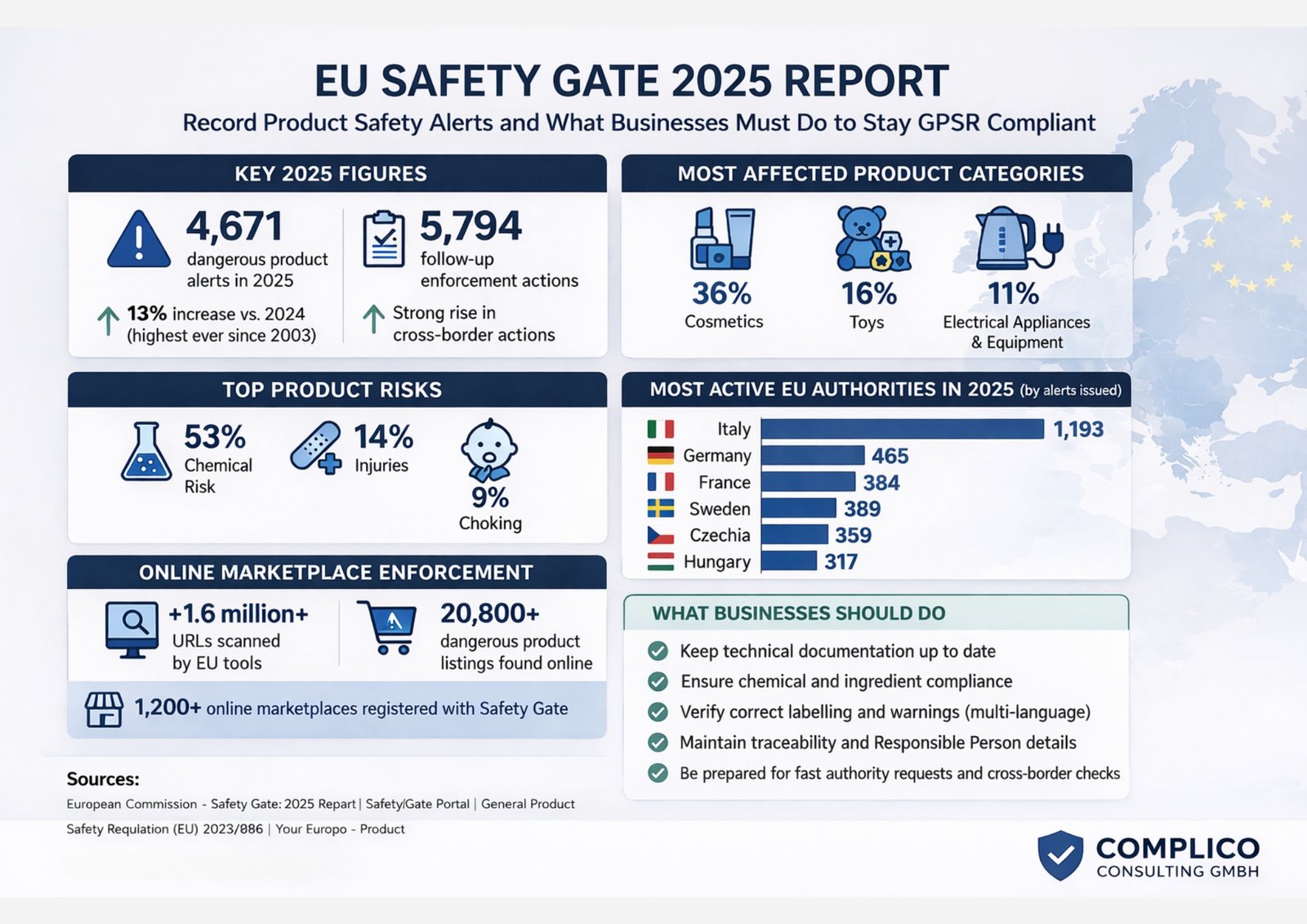
EU Safety Gate 2025 Report: Record Alerts and GPSR Compliance Guide

Top 30 EPR Europe Authority Websites Every E-commerce Seller Must Know
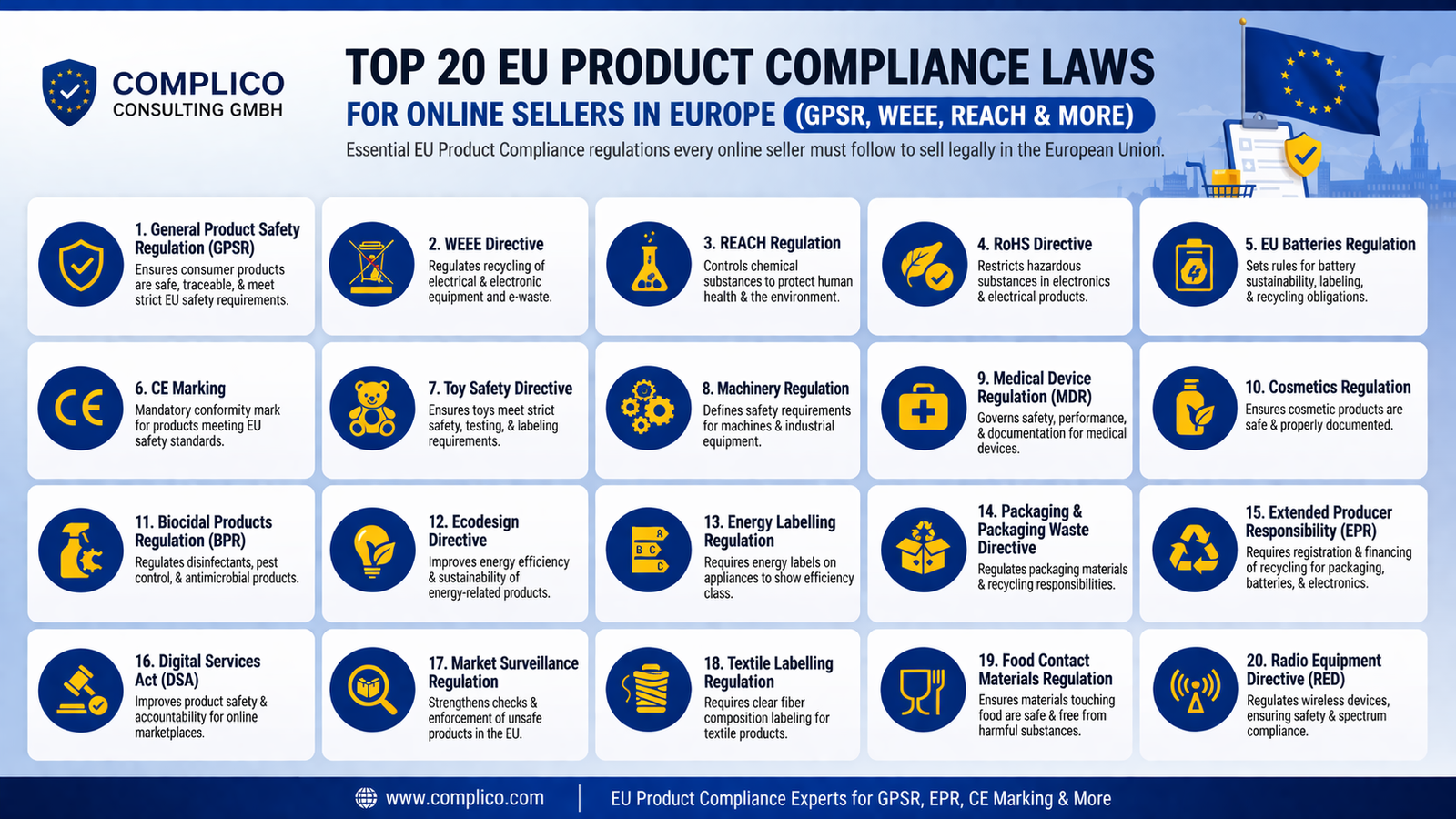
2026 Top 20 EU Product Compliance Laws for Online Sellers in Europe (GPSR, WEEE, REACH & More)
EPR EU PPWR: New Packaging Rules from August 2026 – Is Your Business Ready ?

WEEE Compliance Crackdown in Europe: Authorities Target Non-Registered Sellers
