
Summarize this article with:
Navigating the European Union's customs landscape can often feel like deciphering an ancient language. Whether you are a thriving e-commerce brand expanding into Berlin or a heavy machinery manufacturer shipping to Lyon, your goods cannot legally cross EU borders without one vital piece of administrative infrastructure: the EORI Number.
In the fast-evolving regulatory environment of 2026, international trade is no longer just about securing the best freight rates or understanding Incoterms. It is about flawless compliance. A single missing or outdated customs identifier can result in stranded inventory, exorbitant port storage fees, and severed client relationships.
At Complico Consulting GmbH, we specialize in demystifying these complex regulatory frameworks for businesses worldwide. This comprehensive guide will walk you through everything you need to know about the EORI Number in 2026, from basic definitions to the latest systemic changes across EU member states, ensuring your supply chain remains uninterrupted.
What Exactly is an EORI Number ?
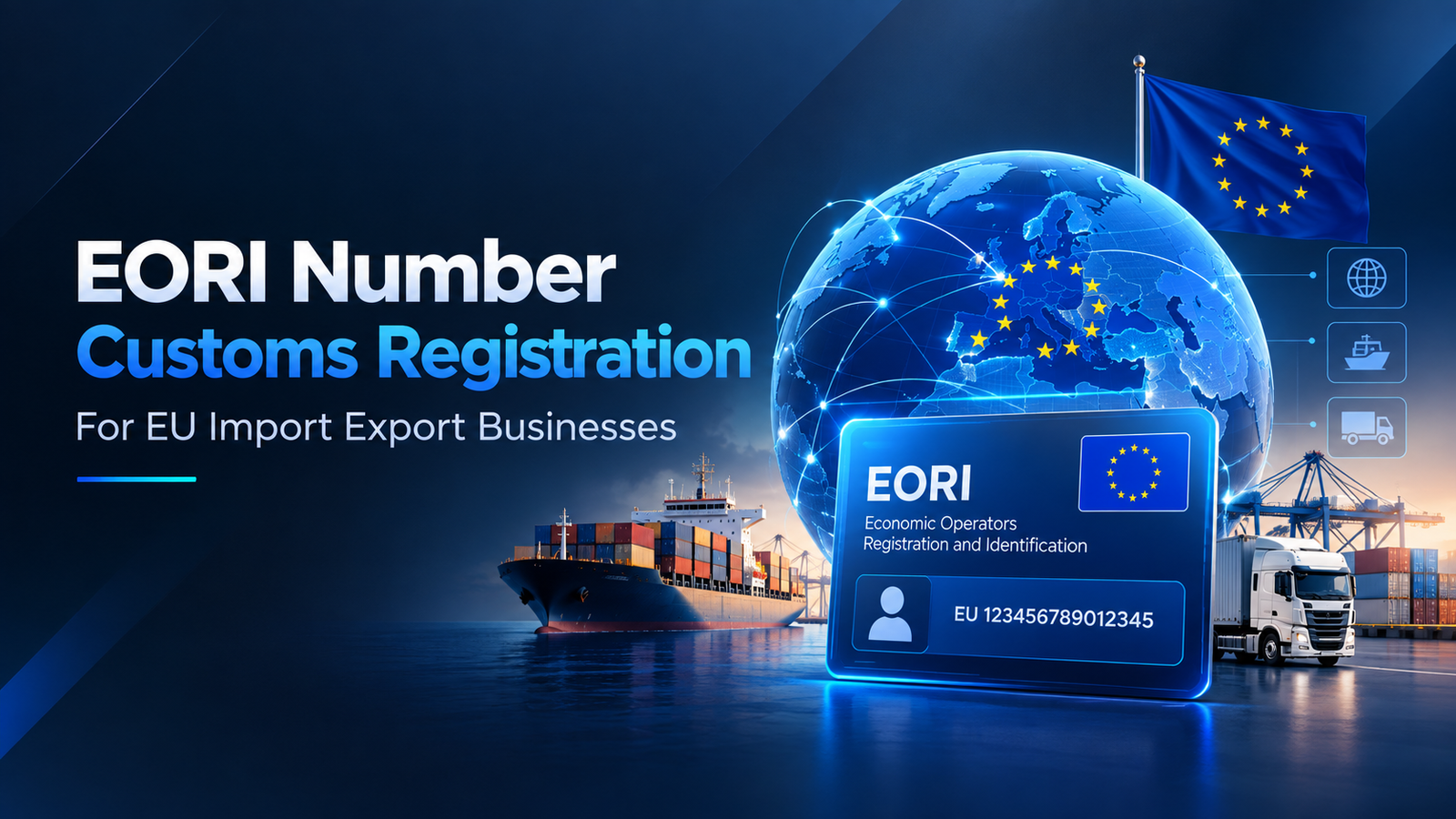
The acronym stands for Economic Operators Registration and Identification. Implemented by the European Union to harmonize customs procedures across all member states, the EORI Number acts as a unique, mandatory "passport" for your cargo.
Whenever a business or individual interacts with the customs authorities of any EU country—whether lodging an import declaration, an Entry Summary Declaration (ENS), or managing temporary storage—this unique alphanumeric code is required.
The EORI Number vs. The VAT Number
One of the most common pitfalls for emerging import-export businesses is confusing customs identity with tax identity.
EORI Number: This is your customs identity. It is used exclusively by customs authorities, freight forwarders, and declarants to track the physical movement of goods in and out of the EU for security and statistical purposes.
VAT Number: This is your tax identity. It is used by tax authorities to monitor revenue, collect Value Added Tax (VAT), and manage financial reporting.
While your EORI Number may visually resemble your VAT number (and is often derived from it), possessing a VAT number does not automatically mean you are registered for customs. You must actively apply for EORI status.
Who Needs an EORI Number in 2026 ?
The rule is absolute: No EORI, No Ship. Customs authorities will automatically block any commercial shipment lacking this validated identifier. But who exactly is legally responsible for holding it?
1. EU-Established Businesses
Any economic operator (a business or sole trader) physically established within the customs territory of the European Union that engages in international trade must hold a valid EORI Number.
2. Non-EU Businesses
If your company is headquartered outside of the EU (e.g., in the United States, China, or Canada), you still need an EU-issued EORI Number if you are the legally designated "Importer of Record" or if you are conducting the following activities:
- Lodging customs declarations within the EU.
- Lodging Entry Summary Declarations (ENS) or Exit Summary Declarations (EXS).
- Acting as a carrier of goods via sea, air, or land.
3. The "Double EORI" Post-Brexit Reality
For businesses based in the United Kingdom trading with the EU, the landscape remains strictly divided. You cannot use a UK EORI (which begins with "GB") to clear goods in France or Germany. Conversely, an EU EORI cannot be used to clear goods entering the UK. If you manage cross-channel supply chains, you must maintain two separate registrations: one for Her Majesty's Revenue and Customs (HMRC) and one issued by an EU member state, as outlined in our guide to the importer of record for the EU/UK.
The 2026 Customs Landscape: Critical Updates
Supply chain compliance is never static. In 2026, the European Union is undergoing significant digital transformations that directly impact how the EORI Number is managed and validated. Relying on outdated procedures from even two years ago can jeopardize your shipments.
The French Format Shift: From SIRET to SIREN
One of the most drastic changes implemented in 2026 is occurring in France. Historically, French customs assigned identifiers based on a company's specific operational establishment (the 14-digit SIRET). This led to complex corporate structures managing dozens of different EORIs.
As of January 1, 2026, French customs have fully transitioned to the EORI SIREN format.
The New Rule: The identifier is now firmly attached to the company's head office (the 9-digit SIREN).
The Risk: Old 14-digit identifiers linked to closed or consolidated establishments are being aggressively deactivated in the European database. If your logistics team attempts to clear goods using an outdated SIRET-based EORI Number, the customs software (like the new DELTA I/E system) will reject the declaration outright.
Holistic EU Compliance Integration
Obtaining your customs registration is merely the first layer of entering the European market. The modern regulatory landscape requires a deeply integrated approach to compliance. For instance, a consumer goods company successfully importing products into Scandinavia using their EORI Number must simultaneously ensure their packaging meets stringent local environmental laws. Navigating frameworks like Sweden's Extended Producer Responsibility (EPR) guidelines for single-use plastics requires just as much precision as customs clearance. At Complico Consulting GmbH, we view these obligations not as isolated hurdles, but as an interconnected ecosystem of compliance that must be managed holistically to protect your bottom line.
Understanding the Format and Structure
While the administrative backend is complex, the structure of the EORI Number itself is highly standardized across the 27 member states. It consists of two distinct parts:
The Country Code: A two-letter ISO 3166-1 alpha-2 code representing the issuing Member State (e.g., DE for Germany, NL for the Netherlands, FR for France).
The Unique Identifier: A string of up to 15 alphanumeric characters. For businesses established in the EU, this is almost always identical to the company's national tax or company registration number.
| Issuing Country | Prefix | Typical Structure (2026 Standard) | Example Format |
|---|---|---|---|
| Germany | DE | Prefix + 15 digits | DE123456789012345 |
| France | FR | Prefix + 9 digits (SIREN) | FR123456789 |
| Netherlands | NL | Prefix + RSIN/BSN | NL123456789 |
| Ireland | IE | Prefix + VAT Number | IE1234567T |
Note: A company can only hold ONE valid EU EORI Number at any given time. It must be issued by the first member state where the non-EU company conducts a customs operation.
Step-by-Step: How to Apply for an EORI Number
Securing your registration is generally a streamlined process if you prepare the correct documentation. Most member states offer free, fully digitized application portals.
Step 1: Determine the Correct Jurisdiction
EU Companies: You must apply to the customs authority of the country where your business is legally established.
Non-EU Companies: You must apply to the customs authority of the EU country where you intend to lodge your first customs declaration. (For example, if your goods will arrive at the Port of Rotterdam, apply via the Dutch customs portal).
Step 2: Gather Required Documentation
To prevent fraudulent registrations, customs authorities require strict proof of identity and corporate existence. Prepare the following in digital format:
- An official extract from your national commercial or business register (dated within the last 3-6 months).
- Your company's VAT registration certificate (if applicable).
- Valid passports or national IDs of the company's legal representatives or directors.
Tip for non-EU entities: Some member states require these documents to be officially translated and apostilled.
Step 3: Submit via National Portals
Access the specific national customs portal (such as the SOPRANO portal in France or the Zoll portal in Germany). Complete the online forms, upload your documentation, and submit.
Step 4: Processing Time
Allocation is generally rapid. If your documentation is flawless, you can receive your active EORI Number within 3 to 7 working days. However, during peak shipping seasons, this can stretch to several weeks. Never ship goods before your number is actively validated in the central database.
How to Verify Your EORI Status
An invalid identifier is just as detrimental as not having one at all. Changes in corporate structure, shifts in tax status, or systemic updates (like the 2026 SIREN shift in France) can cause an active number to be invalidated by authorities.
Before booking freight, your logistics coordinators and customs brokers must verify the status of the identifier.
- Visit the official European Commission EORI Validation Portal.
- Input the complete alphanumeric code.
- The system will instantly return a "Valid" or "Invalid" status, along with the registered name and address of the economic operator (if the operator has consented to public disclosure).
Common Customs Pitfalls (And How to Avoid Them)
Even seasoned import-export managers can stumble over administrative nuances. Here are the most common errors we see paralyzing supply chains in 2026:
The "Assume It's Handled" Error: Believing your freight forwarder (like DHL or FedEx) will automatically generate an EORI Number for you. They cannot. They can act as your representative to apply for one, but you must provide the legal mandate and documentation — a service our IOR/EOR team handles daily.
The Incoterms Trap: Agreeing to DDP (Delivered Duty Paid) shipping terms without realizing it requires the seller (often based outside the EU) to act as the Importer of Record. If the seller lacks an EU EORI Number, the goods will be seized at the border — a risk explained further in our indirect representative guide.
Data Mismatch: The company name and address linked to your customs identifier must perfectly match the details on your commercial invoices, packing lists, and bill of lading. A slight discrepancy (e.g., "Complico Consulting" vs. "Complico Consulting GmbH") can trigger an administrative hold.
Final Thoughts: Securing Your Supply Chain
In the highly regulated arena of international trade, ignorance of customs law is never an accepted defense. The EORI Number is the foundational building block of your European import-export strategy. Without it, your carefully crafted marketing campaigns, sales projections, and supply chain logistics are rendered useless.
As we move deeper into 2026, customs authorities are relying on increasingly sophisticated, automated systems to screen cargo, in line with the Union Customs Code framework. Ensuring your administrative data is perfectly aligned is the only way to guarantee smooth, profitable operations.
Need help securing or verifying your EORI Number? Explore our full range of EU compliance services or contact our team today. You can also browse more insights on our compliance blog.