
Summarize this article with:
Companies that sell electrical and electronic equipment in Germany[cite: 1] must comply with strict environmental regulations regarding electronic waste[cite: 1]. One of the most important requirements is obtaining a WEEE registration number before placing products on the market.
A WEEE number confirms that a company is officially registered for electronic waste compliance[cite: 1] and contributes to the proper collection, recycling, and disposal of electronic products. Without this registration, selling electronics in Germany is illegal.
This guide explains what a WEEE number is[cite: 1], why it is required, who needs it, and how businesses can obtain one in Germany.
What Is a WEEE Number ?
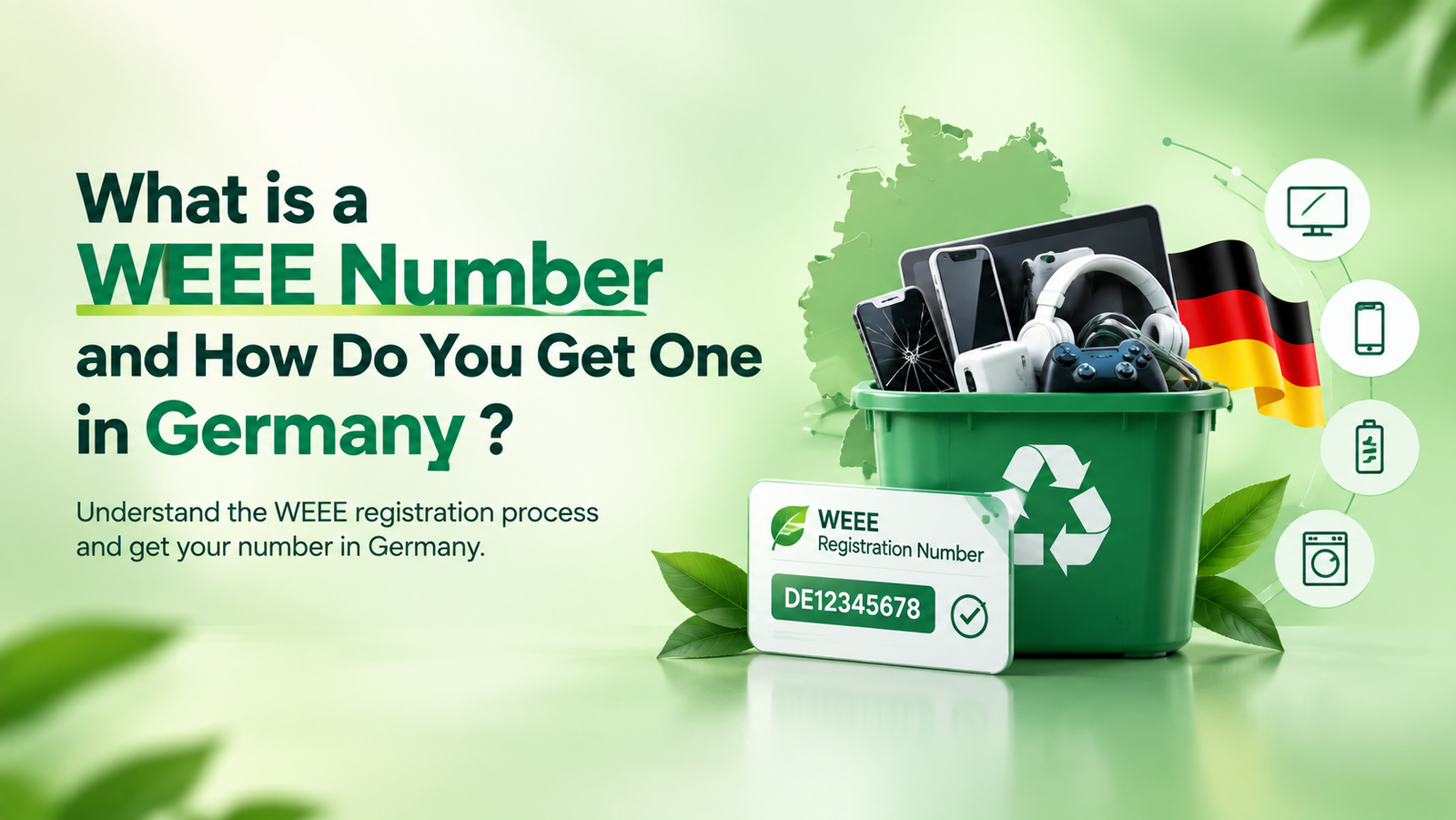
A WEEE number is a unique registration number issued to companies that place electrical and electronic equipment on the German market under the Waste Electrical and Electronic Equipment Directive.
The purpose of this directive is to reduce electronic waste and promote the recycling of electrical equipment across Europe[cite: 1].
In Germany, WEEE registration is managed by the Stiftung Elektro-Altgeräte Register (EAR), which operates the national WEEE register.
Once a company successfully registers, it receives a WEEE-Reg.-Nr. DE, which confirms that the business is authorized to sell electronic products in Germany and has fulfilled its environmental responsibilities.
Legal Framework for WEEE in Germany
Germany implements the EU WEEE Directive through national legislation known as the Elektro- und Elektronikgerätegesetz (ElektroG)[cite: 1].
The ElektroG regulates how electrical and electronic equipment must be:
- registered before sale
- collected after use
- recycled and disposed of responsibly
The law also assigns financial responsibility for electronic waste management to the companies placing products on the market.
This means that manufacturers, importers, and online sellers must ensure proper waste collection and recycling systems are in place.
Why WEEE Registration Is Important
WEEE registration serves several key purposes for environmental protection and market transparency.
Environmental Protection
Electronic waste often contains hazardous materials such as lead, mercury, and cadmium. Proper recycling prevents these substances from polluting the environment.
Producer Responsibility
The regulation follows the principle of Extended Producer Responsibility (EPR)[cite: 1]. Companies placing products on the market must take responsibility for their end-of-life disposal.
Market Compliance
Companies without WEEE registration cannot legally sell electrical products in Germany.
Marketplace Requirements
Major online marketplaces require a valid WEEE number before allowing electronics to be sold.
For example, platforms like Amazon and eBay request WEEE registration numbers from sellers to comply with German environmental laws. Sellers looking to navigate this process can explore resources for Amazon Germany WEEE compliance[cite: 1].
Who Needs a WEEE Number in Germany ?
Several types of businesses must register for WEEE if they place electrical or electronic equipment on the German market.
Manufacturers
Companies producing electronic devices under their own brand name.
Importers
Businesses importing electronic products into Germany[cite: 1] from outside the EU.
Online Sellers
E-commerce companies selling electronics directly to German customers through websites or marketplaces.
Private Label Brands
Businesses selling products manufactured by third parties under their own brand name.
Even if a company only sells products online, it is still considered a producer under German WEEE law if it sells directly to German consumers.
Categories of Electrical Equipment Covered by WEEE
Electrical and electronic equipment covered by WEEE includes a wide range of products.
Examples include:
- Large household appliances (refrigerators, washing machines)
- Small household appliances (kettles, vacuum cleaners)
- IT and telecommunications equipment (computers, routers)
- Consumer electronics (televisions, audio systems)
- Lighting equipment (LED lamps, fluorescent lights)
- Electrical tools
- Electronic toys and leisure equipment
In general, if a product requires electricity, batteries[cite: 1], or electromagnetic fields to function, it likely falls under WEEE regulations.
Step-by-Step Process to Obtain a WEEE Number in Germany
The process of obtaining a WEEE number involves several regulatory steps that must be completed correctly before selling products in Germany.
Step 1: Determine Product Categories and Brand Registration
Companies must identify the correct WEEE categories for their products.
During registration, businesses must also list:
- brand names used in Germany
- product types placed on the market
- expected sales volumes
Incorrect classification may delay approval.
Step 2: Register With the EAR Foundation
The next step is submitting a registration application to the Stiftung Elektro-Altgeräte Register (EAR).
The application includes:
- company registration documents
- brand names used for products
- product categories
- contact details
- compliance declarations
The EAR authority reviews the application to ensure the company meets legal requirements.
Step 3: Provide Insolvency Guarantee for B2C Products
For products sold to private consumers (B2C), companies must provide a financial guarantee[cite: 1].
This guarantee ensures that recycling costs will still be covered if the company goes bankrupt or stops operating.
Common forms of guarantees include:
- bank guarantees
- insurance-backed recycling guarantees
- collective guarantee systems
This requirement protects the public waste management system from financial risks.
Step 4: Appoint an Authorized Representative (for Non-EU Companies)
Non-EU companies must appoint a German-based authorized representative[cite: 1].
This representative acts as the legal contact point for German authorities and handles compliance responsibilities.
Responsibilities of the authorized representative include:
- managing EAR registration
- submitting required reports
- communicating with authorities
- ensuring compliance with German WEEE laws
Without an authorized representative, non-EU companies cannot register directly in Germany.
Step 5: Receive the WEEE Registration Number
Once the EAR authority approves the application, the company receives a WEEE registration number (WEEE-Reg.-Nr. DE).
This number confirms that the company is registered and compliant with German WEEE regulations.
The number must be used in:
- invoices
- marketplace registrations
- compliance documentation
- communication with distributors and retailers
Ongoing Compliance Requirements
After obtaining a WEEE number, companies must continue meeting several compliance obligations.
Monthly or Annual Reporting
Producers must report the quantity of electronic products placed on the German market.
Waste Collection Participation
Companies must contribute financially to national waste collection systems.
Product Marking
Electronic products must display the crossed-out wheeled bin symbol, indicating that the product must not be disposed of with household waste.
Record Keeping
Companies must maintain records of sales volumes and waste management contributions.
Consequences of Non-Compliance
Selling electronic products without WEEE registration in Germany can result in serious penalties.
Potential consequences include:
- significant financial penalties
- product sales bans
- legal actions from competitors
- removal from online marketplaces
- customs issues when importing products
German authorities actively monitor compliance and conduct marketplace checks.
How Professional WEEE Compliance Services Help
For many companies, especially non-EU businesses, WEEE compliance can be complicated.
Professional compliance providers[cite: 1] typically offer services such as:
- WEEE registration with the EAR authority
- authorized representative services
- insolvency guarantee arrangement
- compliance documentation support
- ongoing reporting management
These services help companies avoid regulatory mistakes and ensure smooth market entry into Germany.
Conclusion
Obtaining a WEEE number is a mandatory requirement for companies selling electrical and electronic equipment in Germany. The registration confirms compliance with environmental regulations and ensures proper recycling and disposal of electronic waste.
Businesses must register with the EAR Foundation, provide financial guarantees when required, and comply with ongoing reporting obligations. By completing these steps, companies can legally sell electronics in Germany while contributing to sustainable waste management.
For companies entering the German market, ensuring WEEE compliance early in the process helps prevent regulatory delays and ensures smooth product distribution.
What is a WEEE number in Germany ?
A WEEE number is a unique registration number issued to companies that place electrical and electronic equipment on the German market. It confirms that the company is registered under the Elektro- und Elektronikgerätegesetz (ElektroG) and complies with electronic waste management requirements.
Who issues the WEEE registration number in Germany ?
The WEEE number is issued by the Stiftung Elektro-Altgeräte Register (EAR), the official authority responsible for managing WEEE registrations and monitoring electronic waste compliance in Germany.
Is WEEE registration mandatory in Germany ?
Yes, WEEE registration is mandatory for any company placing electrical or electronic equipment on the German market. This requirement is based on the Waste Electrical and Electronic Equipment Directive, which aims to reduce electronic waste and promote recycling across the European Union.
Do non-EU companies need a WEEE number to sell in Germany ?
Yes. Non-EU companies that sell electrical products directly to customers in Germany must appoint an authorized representative located in Germany and complete WEEE registration before selling their products.
What products require WEEE registration ?
Most electrical and electronic equipment requires WEEE registration, including:
- household appliances
- computers and IT equipment
- televisions and consumer electronics
- lighting products
- electrical tools
- toys with electronic components
If a product requires electricity, batteries, or electromagnetic fields to operate, it typically falls under WEEE regulations.
What happens if a company sells electronics without WEEE registration ?
Selling electrical products without WEEE registration in Germany can result in serious consequences, including fines, sales bans, removal from online marketplaces, and legal actions from competitors.
Do online marketplace sellers need a WEEE number ?
Yes. Sellers on platforms such as Amazon or eBay must provide a valid WEEE registration number before listing electrical products for sale in Germany.
How long does WEEE registration take in Germany ?
The WEEE registration process typically takes several weeks, depending on the complexity of the application, the product categories involved, and whether additional documentation or financial guarantees are required.
More About WEEE Number Resources:
- Stiftung Elektro-Altgeräte Register (EAR) – WEEE Registration Guide
- Stiftung Elektro-Altgeräte Register (EAR) – Producer Obligations
- Elektro- und Elektronikgerätegesetz (ElektroG) - Overview
- Waste Electrical and Electronic Equipment Directive - WEEE
- Stiftung Elektro-Altgeräte Register (EAR) – About the Authority