
Summarize this article with:
Let’s be honest: "Product Recall" are the two words that keep e-commerce directors and compliance officers awake at night. It’s the logistics nightmare of a lifetime, a potential PR disaster, and until recently a legal gray area that varied wildly across European borders.
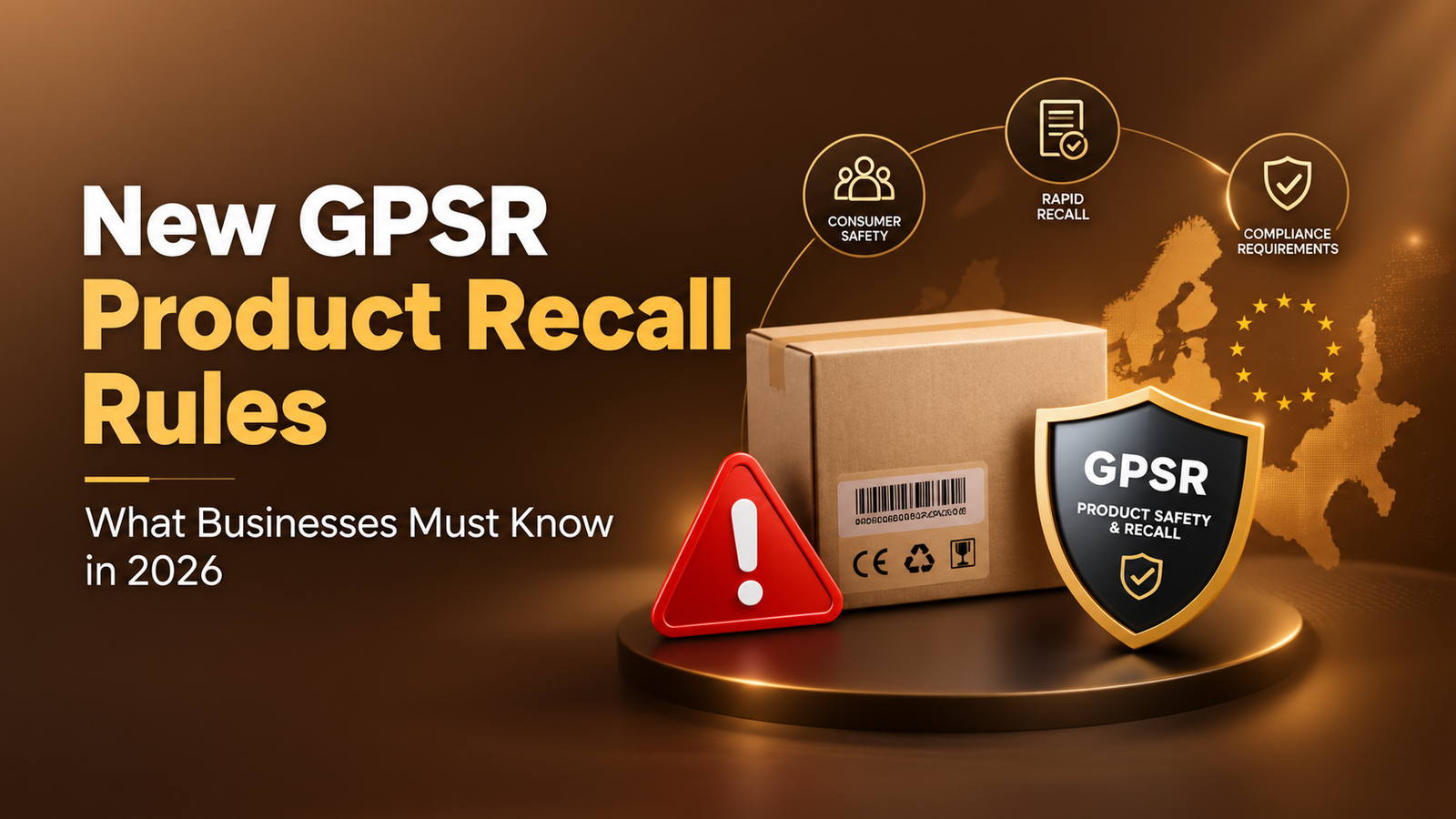
However, the landscape changed. With the full implementation of the General Product Safety Regulation (GPSR), the "suggested guidelines" of the past have been replaced by ironclad, harmonized laws. If you are selling consumer goods in the EU, understanding the GPSR recall requirements is no longer optional; it is a fundamental survival skill for your brand.
In this guide, we’ll break down the new reality of product recalls, focusing on the rules that became mandatory in 2025 and how they are being enforced in 2026.
The End of the "Silent Recall"
Before the GPSR, many businesses practiced what was known as a "silent recall"—quietly removing a product from shelves or listings without making much noise, hoping the units already in the wild wouldn't cause trouble.
Those days are over.
Under the new GPSR recall requirements, if a product is found to be dangerous, the business has a proactive legal duty to notify consumers. The EU’s logic is simple: if you had the technology to target that customer with an ad to buy the product, you have the technology to find them and tell them it’s broken.
The Direct Notification Mandate
If you have the contact details of your customers (which almost all e-commerce sellers do), you must notify them individually and directly. You cannot simply post a notice on your website and hope they see it. This applies to:
- Email notifications.
- Direct messages on marketplace platforms (Amazon, eBay, etc.).
- Physical mail if no digital contact exists.
1. The Recall Notice: No More Marketing Fluff
The EU noticed that companies were getting "creative" with recall notices—using soft language like "Product Enhancement Program" or "Safety Upgrade" to avoid the scary word RECALL.
The GPSR puts a stop to this. A recall notice must now follow a strict, standardized format.
Key Requirements for the Notice:
- The Heading: It must clearly state "Product Safety Recall". No euphemisms allowed.
- Clear Description: You must include a photo of the product, the brand name, and the specific batch or serial numbers affected.
- The Hazard: You cannot be vague. If a toy is a choking hazard, you must say: "The small parts can detach and pose a choking hazard to children."
- Instructions: Clear "Stop Use" instructions must be at the top of the notice, following the GPSR labeling standards.
2. The "Right to Remedy": You Must Offer Choice
One of the biggest shifts in the GPSR recall requirements is the mandatory remedy system. You can no longer just say "sorry" and offer a discount code for a future purchase.
When a product is recalled, you must offer the consumer at least two of the following three remedies:
- Repair: Fixing the issue (if possible and safe).
- Replacement: Sending a new, compliant version of the same or equivalent product.
- Refund: Returning the full purchase price to the consumer.
Crucially: The consumer should not have to pay for shipping or any other costs associated with the recall. The financial burden sits 100% on the business, which is one reason non-compliance can trigger the steep GPSR penalties authorities are now enforcing.
3. The Role of the EU Responsible Person in Recalls
For non-EU businesses, the EU Responsible Person (RP) is now the "single point of contact" for authorities during a recall.
If a market surveillance authority in Germany or France identifies a risk with your product, they will contact your RP. Your RP is legally required to:
- Cooperate with the authorities to mitigate risks.
- Ensure the technical documentation is available to explain why the failure happened.
- Verify that the recall notice is being distributed correctly in the local language.
At Complico Consulting, we act as the Authorized Representative for hundreds of brands. We don't just put our name on your label; we manage the "Recall Preparedness Plan" so that if an issue arises, you aren't scrambling to translate documents while your Amazon account is being suspended.
4. Safety Gate: The Public Wall of Shame
The EU’s "Safety Gate" (formerly RAPEX) has been supercharged. It is now a highly searchable, public database of all dangerous products, and the volume of alerts is documented every year in the EU Safety Gate annual report.
When a recall is triggered, it is logged in the Safety Gate. This data is then instantly shared with:
- Customs Authorities: To block any future shipments of that product at the border.
- Online Marketplaces: To automatically take down listings across the EU.
- Consumer Groups: Who blast the information across social media.
5. How to Prepare: A 4-Step Recall Plan
In 2026, "I didn't know" is not a legal defense. You need a Recall Preparedness Plan in your technical file.
Step 1: Traceability is King
Ensure every product you sell has a batch or serial number. If one unit fails, you want to be able to recall "Batch A" (100 units) rather than your "Entire Catalog" (10,000 units).
Step 2: Language Localization
Recall notices must be in the language of the country where the product was sold. If you sell in Germany, France, and Italy, you need three versions of your notice ready to go.
Step 3: Digital Records
Maintain a clean database of your customers. If you sell via Amazon, ensure you understand how to use their "Communication Center" for safety alerts, and review our GPSR compliance guide for Amazon sellers.
Step 4: Appoint a Proactive Responsible Person
Do not wait for a crisis to find out if your compliance partner knows what they are doing. You need a partner who understands the GPSR recall requirements inside and out.
Why Complico Consulting GmbH ?
Compliance isn't just about checkboxes; it’s about protecting your brand’s reputation and your bottom line. Based in Ronneburg, Germany, Complico Consulting GmbH provides the legal bridge for international manufacturers to thrive in the EU.
We handle the hard stuff:
- Authorized Representative Services: We are your boots on the ground for GPSR and Market Surveillance.
- Recall Management: We help you draft compliant notices and coordinate with authorities.
- Labeling & Documentation: We ensure you never trigger a recall for "administrative errors" like missing addresses or bad translations.
Ready to build your Recall Preparedness Plan ? Get in touch with our team or explore our full range of compliance services.
More about GPSR Resources
- The Official GPSR Legal Text on EUR-Lex
- The European Commission: GPSR Framework Overview
- Matheson Law: Analysis of the New GPSR Guidelines
Frequently Asked Questions (FAQs)
1. What is a GPSR product recall ?
A GPSR product recall is the process of removing unsafe products from the EU market and notifying affected consumers.
2. When is a product recall required ?
A recall is required when a product is found to pose a risk to consumer health or safety.
3. What remedies must businesses offer during a recall ?
Businesses must offer at least two remedies, such as a repair, replacement, or full refund.
4. Who manages recalls for non-EU manufacturers ?
The EU Responsible Person helps coordinate recalls, communicate with authorities, and ensure regulatory compliance.
5. What happens if a business does not follow GPSR recall requirements ?
Non-compliance can lead to product recalls, marketplace listing removal, fines, customs actions, and legal penalties.