
Summarize this article with:
If your company sells physical products in the European Union, the compliance landscape is shifting beneath your feet. For years, environmental regulations felt like a moving target fragmented across different countries, often reliant on vague directives, and mostly focused on end-of-the-line waste management. But as we look toward 2026, the rules of the game are changing entirely.
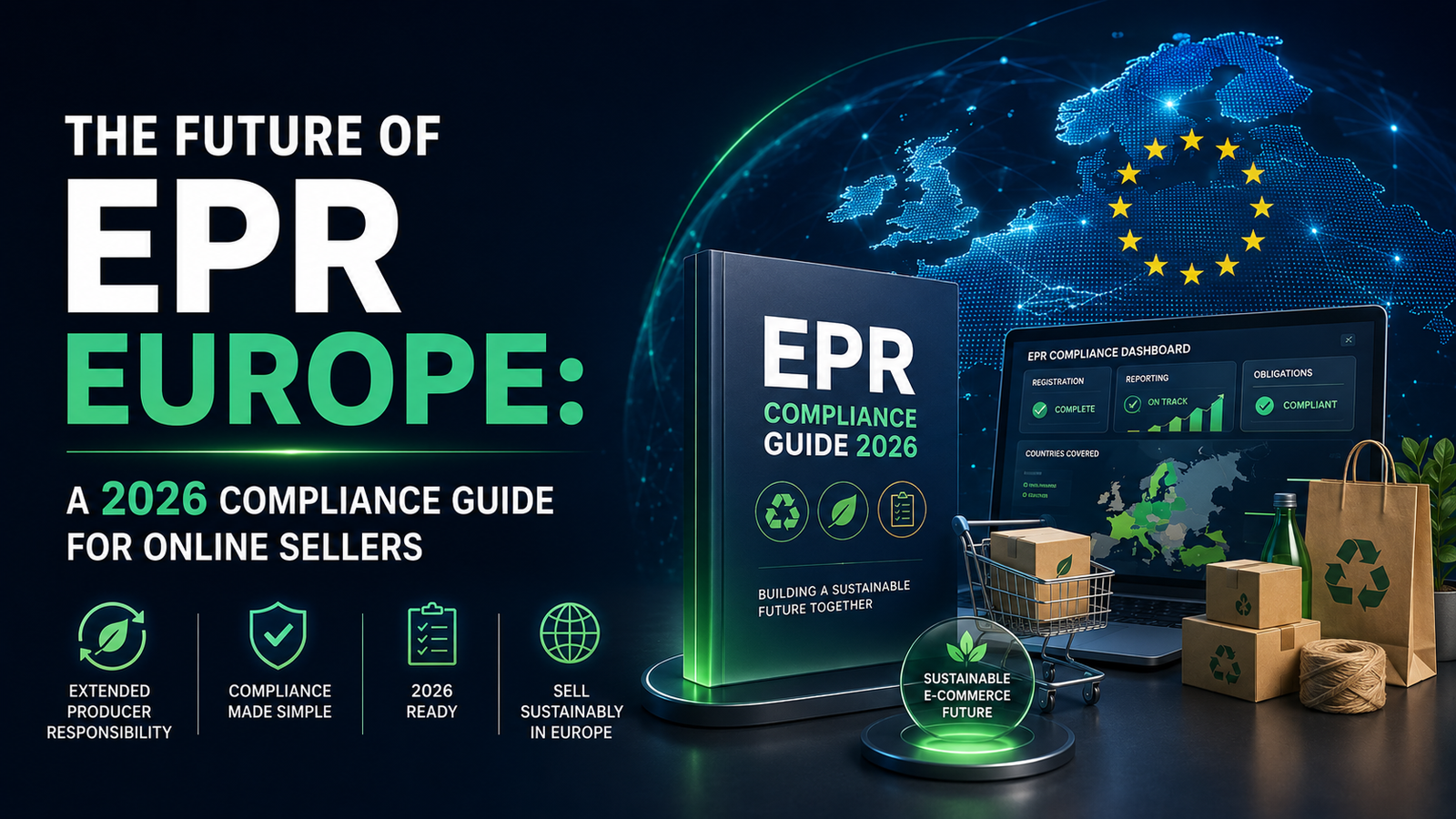
Extended Producer Responsibility (EPR) is no longer just an administrative box to check or a minor fee to pay at the end of the year. The future of EPR Europe represents a fundamental shift in how products are designed, tracked, and sold. Regulators are moving from simply charging companies for the waste they produce to actively dictating what can and cannot enter the market.
At Complico Consulting GmbH, we are watching this transformation unfold daily. We see the panic when cross-border sellers realize their packaging is no longer compliant, and we see the success of brands that strategically adapt ahead of the curve. Whether you are dealing with packaging, textiles, or electronics, navigating EPR Europe requires a proactive strategy. Here is your comprehensive guide to the future of EPR regulations in Europe and how your business can prepare.
The Evolution of EPR Europe: From Directives to Direct Regulations
To understand where we are going, it helps to look at how we got here. Historically, the European Union relied on Directives to enforce environmental policies. A directive sets a goal at the EU level, but it is up to each of the 27 Member States to write their own national laws to achieve that goal.
This led to a chaotic, patchwork system. A company selling the same product in France, Germany, and Italy had to navigate three completely different sets of rules, register with different Producer Responsibility Organizations (PROs), and apply different sorting labels to their packaging. The future of EPR Europe is moving away from this fragmented approach and toward harmonization through Regulations. Unlike a directive, an EU Regulation applies immediately and uniformly across all Member States as soon as it goes into effect. It supersedes conflicting national laws. This shift is designed to close loopholes, level the playing field, and force companies to take absolute accountability for their products' lifecycles. It also means that non-compliance will be caught faster and penalized more severely.
The 2026 Turning Point: The PPWR Checkpoint
If you take only one date away from this article, make it August 12, 2026. This is the day the EU Packaging and Packaging Waste Regulation (PPWR) becomes fully mandatory. It is arguably the most significant overhaul of packaging laws in decades, and it directly intertwines with your EPR Europe obligations. The PPWR fundamentally shifts packaging compliance from a "cost allocation" model to a "market access" model. Currently, if your packaging is difficult to recycle, you simply pay a higher EPR fee. Under the PPWR, if your packaging does not meet strict environmental criteria, it will be banned from the EU market entirely. Paying a higher fee will no longer save you.
Here is what you need to prepare for by August 2026:
- Strict Bans on Hazardous Substances: Safety and sustainability are starting at the molecular level. From August 2026, the EU is enforcing incredibly strict limits on PFAS and toxic heavy metals in packaging. For example, if you produce food-contact packaging—like grease-resistant fast-food wrappers or resealable bags—you must ensure your PFAS levels fall below 25 parts per billion (ppb). If your packaging fails this test, you cannot sell it in Europe.
- The EU Declaration of Conformity (DoC): By the August deadline, every single packaging type sold in the EU must be accompanied by a formal EU Declaration of Conformity. Manufacturers must draft and issue this document, and importers must validate it for every shipment. This means your packaging must undergo third-party conformity assessments, and you must maintain a technical file (including material lists, test reports, and recyclability assessments) for five to ten years.
- Mandatory EPR Registration: Under the harmonized rules, you must hold an active EPR registration in every single Member State where you make packaging available for the first time. For non-EU companies, this means you will likely need an authorized representative based in the EU to handle your EPR Europe declarations and fee payments.
Beyond Packaging: The Expansion of EPR Categories
While packaging is the most mature EPR stream, the European Union is rapidly expanding the concept to cover other high-impact industries. If your business touches textiles, electronics, or batteries, the net is widening.
The Rise of Textile EPR
Europe generates over 6 million tonnes of textile waste annually, with clothing and footwear accounting for the vast majority. Historically, the fashion industry avoided strict end-of-life accountability. That era is over. Under the revised Waste Framework Directive, textile EPR is becoming mandatory across the EU. Member States have until roughly 2027 to transpose the rules, with fully operational national schemes expected by 2028. Brands and retailers will be required to pay a fee for every garment or pair of shoes placed on the market. Countries like France and the Netherlands already have mature textile EPR schemes, but the rest of the continent is catching up quickly.
Batteries and the Digital Product Passport
The new EU Batteries Regulation completely replaced the old directive in August 2025. It places strict operational and financial responsibility on all battery producers, including those who repurpose or re-use batteries. The most groundbreaking change here is the introduction of the Digital Product Passport (DPP), a requirement stemming from the broader Ecodesign for Sustainable Products Regulation (ESPR). Soon, products will need to carry a scannable digital passport containing standardized, accessible data on material composition, sustainability metrics, and recycling instructions.
Electronics (WEEE)
The Waste Electrical and Electronic Equipment (WEEE) framework has been relatively stable, but enforcement is tightening dramatically. Regulators are specifically targeting e-commerce platforms and distance sellers who have historically flown under the radar. If you sell electronics across borders, simply assuming the marketplace will handle your EPR obligations is a massive financial risk. Ensure you are registered for WEEE registration in Germany or other relevant jurisdictions to maintain compliance.
FAQs – Future of EPR Europe (2026)
1. What is Extended Producer Responsibility (EPR) in Europe ?
Extended Producer Responsibility (EPR) is an environmental policy that makes producers financially and operationally responsible for collecting, recycling, and disposing of products and packaging after they become waste.
2. Why is 2026 important for EPR compliance ?
August 12, 2026, marks the full implementation of the EU Packaging and Packaging Waste Regulation (PPWR), introducing stricter packaging requirements, mandatory compliance documentation, and enhanced EPR obligations across the European Union.
3. What is the PPWR ?
The Packaging and Packaging Waste Regulation (PPWR) is a new EU regulation that sets uniform packaging rules across all Member States, focusing on recyclability, hazardous substance restrictions, packaging reduction, and sustainable product design.
4. Which businesses need to comply with EPR Europe regulations ?
Any business that manufactures, imports, sells, or distributes packaged products, electronics, batteries, textiles, or other regulated goods in the European Union must comply with applicable EPR requirements.
5. What is an EU Declaration of Conformity (DoC) ?
The EU Declaration of Conformity (DoC) is a legal document confirming that your packaging or product complies with all relevant EU regulations. Manufacturers must prepare it, while importers must verify it before placing products on the EU market.
6. Is EPR registration required in every EU country ?
Yes. Businesses must register for EPR separately in every EU Member State where they first place regulated products or packaging on the market, unless a specific harmonized system applies.
7. What is the Digital Product Passport (DPP) ?
The Digital Product Passport (DPP) is a digital record that provides detailed information about a product's materials, sustainability, repairability, and recycling instructions through a scannable code, supporting circular economy goals.
8. Will textile products be covered under EPR ?
Yes. Textile EPR is being introduced across the EU under the revised Waste Framework Directive. Fashion brands and retailers will be responsible for managing the end-of-life of clothing, footwear, and other textile products.
9. What happens if a company fails to comply with EPR regulations ?
Non-compliance can result in financial penalties, product sales restrictions, marketplace delisting, customs delays, and, in some cases, a complete ban on placing products on the EU market.
10. How can businesses prepare for future EPR requirements ?
Businesses should audit their products, identify applicable EPR categories, collect accurate packaging and material data, complete registrations in relevant countries, maintain technical documentation, and work with compliance experts to stay ahead of changing regulations.
11. Does EPR apply to online sellers and e-commerce businesses ?
Yes. E-commerce businesses and cross-border online sellers must comply with EPR obligations in every EU country where they sell regulated products. Many marketplaces now require proof of EPR registration before allowing product listings.
12. How can Complico Consulting GmbH help with EPR compliance ?
Complico Consulting GmbH assists businesses with EPR registrations, PPWR compliance, GPSR compliance, WEEE registration, EPREL registration, Authorized Representative services, and ongoing regulatory support to ensure smooth access to the EU market.
A Strategic Roadmap: How to Prepare Now
With the clock ticking toward the 2026 deadlines, waiting to see how regulations play out is a dangerous strategy. At Complico Consulting GmbH, we advise our clients to treat EPR Europe compliance as a core business function. Here is how you can start preparing today:
- Map Your Obligations: Conduct a full audit of the countries you sell into and the exact volumes you place on each market. Determine which EPR streams apply to your products packaging is almost guaranteed, but you must also assess electronics, batteries, and textiles.
- Build a Data Machine: Say goodbye to manual spreadsheets. You need to implement systems that can accurately track SKUs, weights, and material breakdowns. For LUCID registration in Germany or other national reporting, precision is non-negotiable.
- Partner with Experts: While the EU is moving toward harmonization, local operational nuances will remain. You still need to register with national PROs and navigate specific local reporting calendars.
At Complico Consulting GmbH, we specialize in turning complex environmental legislation into clear, actionable compliance strategies. Whether you need help with GPSR compliance, EPREL registration, or acting as your Authorized Representative, our team is ready to ensure your business is positioned for the laws of tomorrow.
More About EPR Europe Resources:
- The Official PPWR Regulation Text (EUR-Lex)
- European Commission – Packaging Waste Overview
- European Commission – EU Batteries Regulation
- European Commission (WEEE)
- Official Waste Statistics (Eurostat)
Ready to future-proof your business against the 2026 EPR overhaul ? Explore our services overview, check our compliance pricing, or contact our team for a tailored EPR strategy session. You may also find our guides on EPR registration for manufacturers and EPR compliance for Amazon sellers useful, or browse more insights on our blog.