
Summarize this article with:
If you manufacture, import, or sell energy-consuming products in the European Union, there is a regulatory hurdle you cannot afford to ignore: the European Product Registry for Energy Labelling. Navigating the legalities of the EU market can feel overwhelming, but mastering EPREL Registration is non-negotiable for keeping your products on shelves and avoiding hefty penalties.
The company, defined as the manufacturer (of packaging or packed products), is generally responsible for creating the DoC and the technical documentation. There are also some circumstances in which the packaging supplier is responsible.ompany, defined as the manufacturer (of packaging or packed products), is generally responsible for creating the DoC and the technical documentation. There are also some circumstances in which the packaging supplier is responsible.
As of 2026, the European Commission has tightened its grip on supplier verification, introduced new digital seal requirements, and expanded the capabilities of the platform. Whether you are an EU-based manufacturer, an importer, or an international seller utilizing an Authorised Representative, this guide will walk you through everything you need to know about EPREL compliance today.
What is EPREL Registration ?
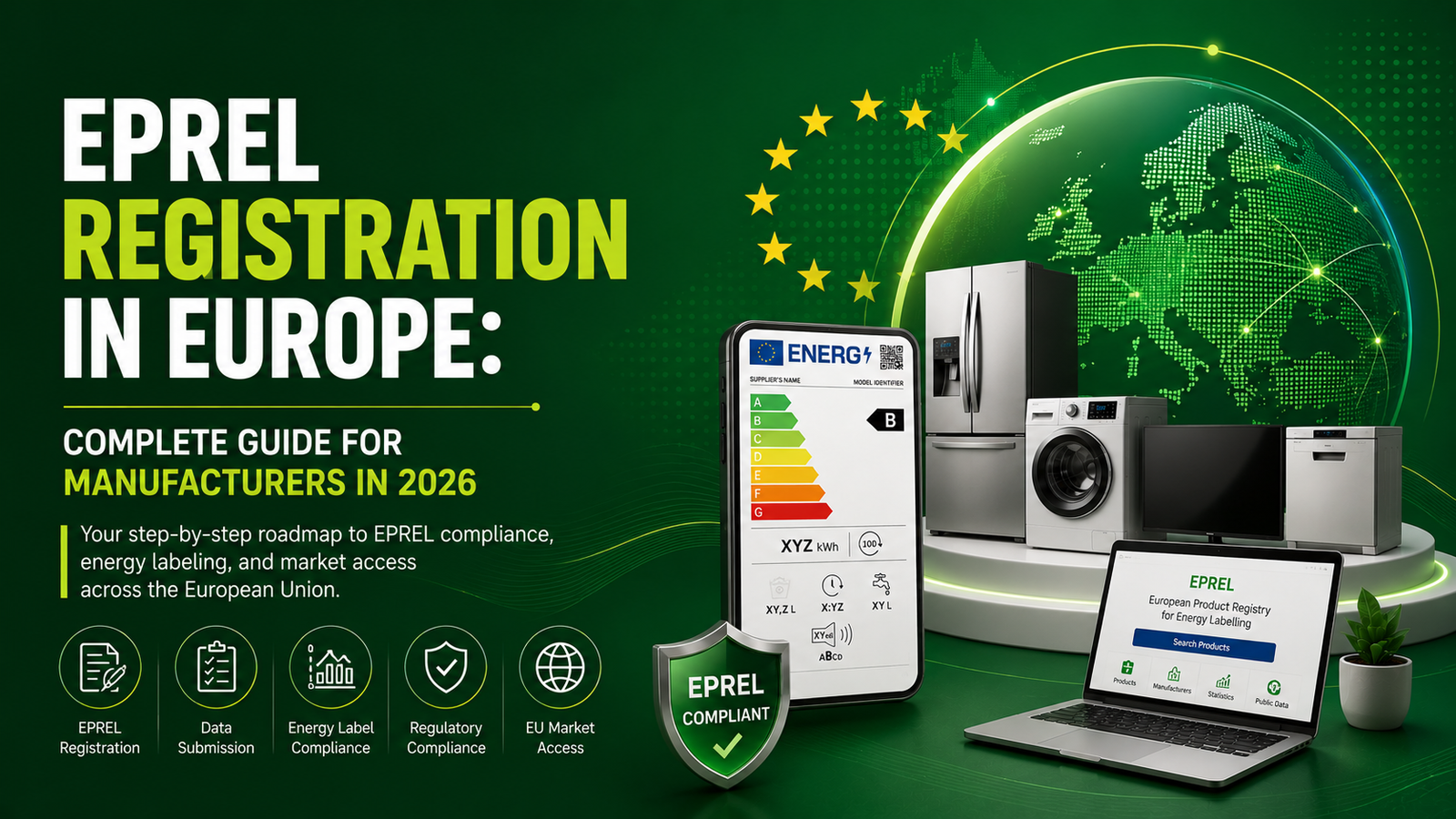
EPREL Registration is the mandatory process of entering detailed technical and compliance information about energy-labelled products into the EU's central database before they can be legally sold on the European or Northern Ireland markets.
The registry was designed with two primary goals: to empower consumers to make greener purchasing decisions and to give Market Surveillance Authorities (MSAs) the data they need to enforce ecodesign and energy labelling regulations. The dual architecture of EPREL, AI generated
The database is split into two distinct environments:
- The Public Database: This is what consumers see when they scan the QR code on your product's energy label. It displays basic information, energy efficiency classes, and product information sheets. In 2026, this public interface is evolving to include comparative data, allowing consumers to compare the exact kilowatt-hour usage of competing products side-by-side.
- The Compliance Database: This highly secure backend is restricted to MSAs and the European Commission. It houses your full technical documentation, test reports, and calculations used to justify the values on your energy label.
Who Needs to Complete EPREL Registration ?
Under EU law, the legal obligation to register a product falls on the "supplier." But who exactly qualifies as a supplier ?
- EU Manufacturers: If your company is established within the EU and you manufacture energy-related products, the responsibility falls directly on you.
- Importers: If you are importing products from outside the EU/EEA, you take on the legal responsibilities of the supplier and must handle the EPREL Registration.
- Non-EU Manufacturers: If you are based outside the EU (e.g., in the US, China, or the UK) and want to sell directly into the European market, you cannot register on your own. You must appoint an EU-based Authorised Representative to create and maintain your EPREL entries on your behalf.
Does This Apply to Northern Ireland ?
Yes. Thanks to the Windsor Framework, products placed on the Northern Ireland market must continue to follow EU energy labelling rules. Even if you are applying a UKNI mark alongside a CE mark, EPREL Registration remains mandatory before the product can be sold in Northern Ireland.
Which Products Require Registration ?
If your product requires an EU energy label, it requires an EPREL entry. The list of regulated product groups is extensive and continually growing. Key categories include:
- Home Appliances: Dishwashers, washing machines, washer-dryers, domestic ovens, and range hoods.
- Cooling & Heating: Refrigerators, freezers, air conditioners, space heaters, and water heaters.
- Electronics: Electronic displays, televisions, monitors, signage, and smartphones/tablets.
- Commercial Equipment: Professional refrigerated storage cabinets, commercial beverage coolers, and ice-cream freezers.
- Lighting & Automotive: Light sources and passenger/commercial vehicle tyres.
Critical 2026 Updates: The Shift in Supplier Verification
If you registered products in the past and think you are in the clear, think again. The European Commission has overhauled the supplier verification process to crack down on unverified entities and fraudulent registrations.
Understanding this timeline is crucial to ensure your products remain visible in the public database.
Mandatory Supplier Verification Begins — October 22, 2024
Supplier verification became strictly mandatory. Any models registered by unverified suppliers were hidden from public searches and APIs, meaning consumers scanning QR codes receive a warning message instead of product data.
NTR Electronic Seals Become Mandatory — April 22, 2025
The transition period ended. The use of a National Trade Register (NTR) code within your qualified electronic seal became the only accepted identity type for new verifications.
Legacy Seals Expire — April 22, 2027
Total phase-out. Any verification completed before April 2025 using legacy identity types (like VAT, LEI, or PSD) will officially expire. Suppliers must renew their verification using an NTR-compliant qualified electronic seal to maintain compliance.
The EPREL Registration Process: Step-by-Step
Completing an EPREL Registration is a meticulous process. A single error in your technical documentation can trigger an MSA investigation. Here is how the process works from start to finish.
1. Create and Verify Your Supplier Profile: Requires an EU Login and a Qualified Electronic Seal
First, create an EU Login account linked to the legal entity placing the product on the market. Once logged in, establish your supplier organization profile. You must then undergo electronic verification using a qualified electronic seal provided by an EU Trust Service Provider. This seal must contain your National Trade Register (NTR) identifier to prove you are a legally established entity in the EU.
2. Select Your Product Group and Model: Identify your category accurately
Navigate to the EPREL dashboard and select the specific product group (e.g., "Air Conditioners" or "Electronic Displays"). You will need to provide two mandatory identifiers to initialize the record: your Brand/Trademark and a unique alphanumeric Model Identifier.
3. Upload Public and Technical Data: Prepare your compliance documents
Input the required parameters for the public interface, including energy efficiency classes and product dimensions. Then, upload your full technical documentation to the secure compliance side. This includes test reports, energy consumption calculations, and declarations of conformity.
4. Generate Labels and QR Codes: Finalize for printing and packaging
Once all data is validated, EPREL allows you to auto-generate the official EU energy label and the mandatory Product Information Sheet in multiple languages. Finally, generate the unique QR code, which must be printed clearly on your physical product packaging and displayed on all online sales pages.
The Power of the EPREL QR Code
2026 marks the 5-year anniversary of the mandatory QR code on EU energy labels. This tiny black-and-white square has revolutionized market transparency.
For manufacturers, the QR code is more than just a regulatory burden — it is a verifiable badge of green credentials. Customers are increasingly prioritizing sustainability. When a consumer scans your product's QR code in a retail store, they are instantly linked to your verified EPREL entry, proving your product meets the latest European environmental standards. This transparency builds brand trust and protects your business from accusations of greenwashing.
Penalties for Non-Compliance
Market Surveillance Authorities across all EU Member States actively monitor both physical retail shelves and e-commerce platforms like Amazon, eBay, and TikTok Shop.
Failing to complete your EPREL Registration, uploading incorrect technical data, or failing to display the QR code online can result in severe consequences:
- Immediate removal of your products from e-commerce marketplaces.
- Product recalls and mandatory withdrawal from physical stores.
- Significant financial penalties that vary by Member State.
- Lasting damage to your brand's reputation and trust among B2B bulk purchasers.
How Complico Consulting GmbH Can Secure Your Compliance
Navigating the nuances of EU energy labelling, securing qualified electronic seals, and managing complex technical documentation is a massive drain on your internal resources — especially if you are an international seller based outside the EU.
At Complico Consulting GmbH, we specialize in turning regulatory roadblocks into competitive advantages. We provide end-to-end support for your EPREL Registration and broader e-commerce compliance needs.
Our Specialized Services Include:
- Authorised Representative Services: Legally required representation for non-EU manufacturers to create, verify, and manage your EPREL database entries.
- EU Responsible Person Services: Ensuring your broader product safety compliance (GPSR) is handled flawlessly.
- Importer of Record (IOR) & Export of Record (EOR): Streamlining your international shipping and Amazon Global Logistics requirements.
- Technical Documentation Management: We audit and maintain your compliance files so you are always prepared for MSA inquiries.
Do not let the complexities of the 2026 regulatory landscape slow down your European expansion. Ensure your products are fully registered, verifiable, and ready for market.
Ready to simplify your EU compliance ? Contact our regulatory experts today.
Email: info@complicoconsulting.com
WhatsApp: +49 160 7959362
Website: www.complicoconsulting.com
VAT ID: DE459923379
FAQ – EPREL Registration (2026)
1. What is EPREL Registration ?
EPREL (European Product Registry for Energy Labelling) is the European Union's official database where suppliers must register energy-labelled products before selling them in the EU and Northern Ireland.
2. Who is required to complete EPREL Registration ?
EU manufacturers, importers, and non-EU manufacturers selling energy-related products in the EU must ensure EPREL registration. Non-EU businesses typically need an EU Authorised Representative to complete the registration.
3. Which products require EPREL Registration ?
Products covered by EU energy labelling regulations, including refrigerators, washing machines, dishwashers, air conditioners, televisions, monitors, lighting products, smartphones, tablets, water heaters, and commercial refrigeration equipment.
4. Is EPREL Registration mandatory ?
Yes. Products requiring an EU energy label cannot legally be sold in the EU or Northern Ireland without being registered in the EPREL database.
5. Does EPREL Registration apply to Northern Ireland ?
Yes. Under the Windsor Framework, products sold in Northern Ireland must continue to comply with EU energy labelling rules, including EPREL registration.
6. What information is required for EPREL Registration ?
Suppliers must provide product specifications, energy efficiency data, technical documentation, declarations of conformity, test reports, product information sheets, and manufacturer details.
7. What is the EPREL QR code ?
The EPREL QR code appears on the EU energy label and links consumers directly to the product's public information page within the EPREL database.
8. What happens if a supplier fails to register products in EPREL ?
Non-compliance may result in product removal from marketplaces, product recalls, financial penalties, customs delays, and enforcement actions by Market Surveillance Authorities.
9. What changed in the EPREL verification process ?
The European Commission now requires supplier verification using a qualified electronic seal containing a National Trade Register (NTR) identifier. Unverified suppliers may have their products hidden from the public database.
10. Can non-EU manufacturers register directly in EPREL ?
No. Non-EU manufacturers generally need an EU-based Authorised Representative to create, verify, and maintain their EPREL registrations.
More About EPREL Resources: