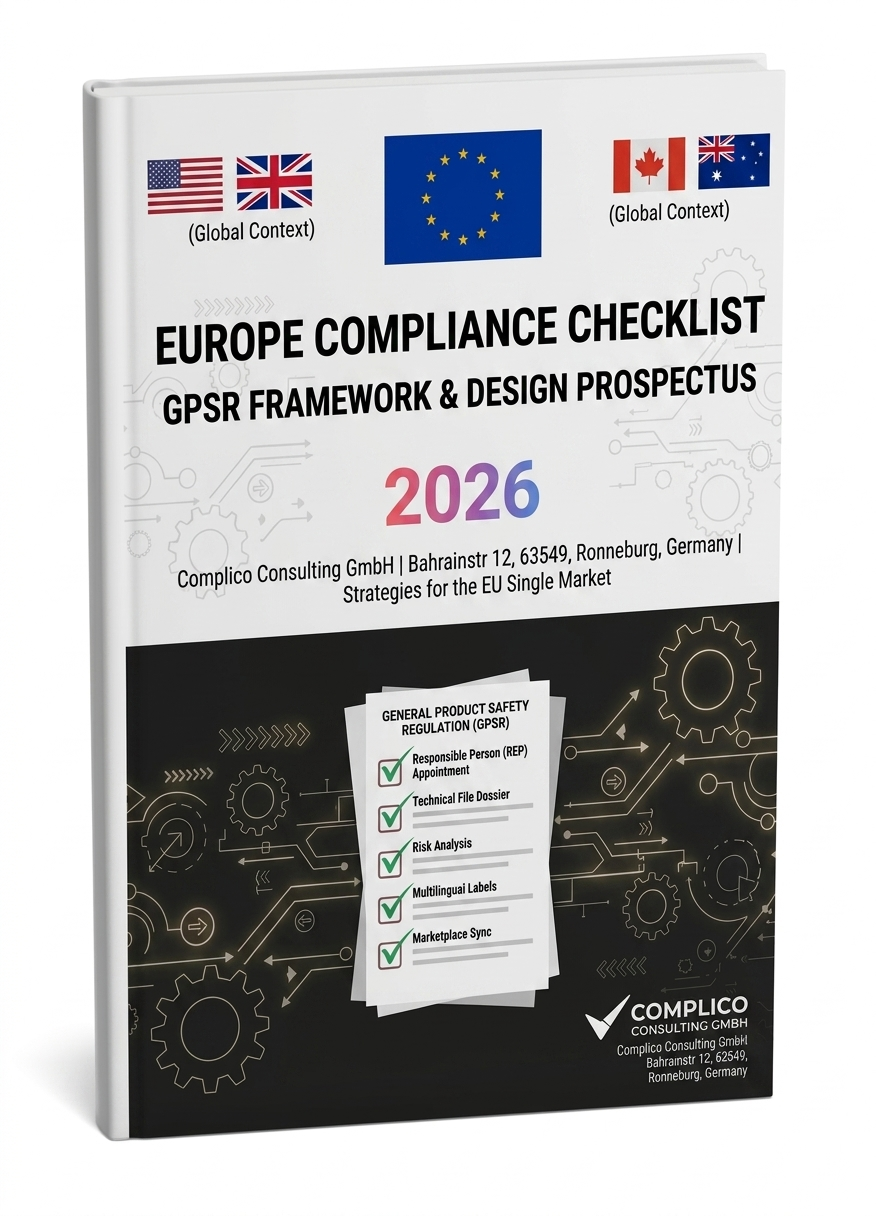
What is Product Safety Assessment ?
In the global marketplace, ensuring consumer goods are safe is a strict legal mandate. A Product Safety Assessment is a systematic evaluation by manufacturers or importers to mitigate hazards across a product's life cycle. Under the EU’s General Product Safety Regulation (GPSR), this assessment benchmarks mechanical, electrical, and chemical risks against harmonized standards, acting as your ultimate defense against recalls and brand damage.
Why is Product Safety Assessment Important ?
Purpose: Eliminates design flaws and operational hazards before consumer use.
Business Relevance: Mandatory for selling on Amazon or eBay; lowers liability insurance.
Regulatory Significance: The legal foundation for CE Marking and EU compliance.
Risks of Non-Compliance: Up to €50,000 in fines, mandatory EU Safety Gate recalls, customs seizures, and criminal liability.
Who Needs Product Safety Assessment ?
Manufacturers: EU-based creators must execute the original risk analysis.
Importers: Bear identical legal liabilities as manufacturers when sourcing outside the EU.
E-commerce Sellers: Private labelers are legally classified as manufacturers.
Distributors: Share co-responsibility for product traceability under GPSR.
Key Responsibilities and Requirements
Comprehensive Risk Mapping: Evaluate assembly, usage, and disposal.
Vulnerable Groups: Analyze risks to children or the elderly.
Foreseeable Misuse: Account for predictable human errors.
File Retention: Archive the assessment for 10 years post-production.
Legal Basis and Relevant Regulations
European safety assessments rely on a strict legal hierarchy:
GPSR (EU) 2023/988: The baseline safety net for all consumer goods.
CE Sector Directives: E.g., Low Voltage (2014/35/EU) or Toy Safety.
Chemical Rules: REACH and RoHS restrictions.
Harmonized EN Standards: Grants a legal "presumption of conformity."
Step-by-Step Process
Scope Definition: Detail technical parameters and target consumers.
Hazard Identification: Flag mechanical, electrical, thermal, or chemical risks.
Risk Evaluation: Calculate severity and probability.
Mitigation: Apply safe design, technical safeguards, or warnings.
Verification Testing: Validate via ISO 17025 accredited labs.
Documentation: Compile the formal Technical File.
Common Mistakes
Assessing safety retroactively after manufacturing.
Ignoring foreseeable consumer misuse.
Blindly trusting unverified overseas supplier certificates.
Failing to update files when EN standards change.
Neglecting localized hazard warning translations.
Benefits of Compliance
Proper compliance ensures frictionless customs clearance, protects against liability lawsuits, builds trust with major retail distributors, and drastically reduces product return rates.
Real-World Example
Smart Home Comfort GmbH developed a Wi-Fi water kettle. Partnering with Complico Consulting GmbH, their assessment revealed a severe fire risk if activated while empty. Following EN 60335-2-15, they engineered an automatic dry-boil shutoff. This mitigation passed French market surveillance audits flawlessly, preserving their brand reputation.
Frequently Asked Questions (FAQ)
1. What is a Product Safety Assessment ?
A formal evaluation identifying and mitigating product hazards to ensure public safety.
2. Who needs it ?
Any manufacturer, importer, or private labeler selling goods in the EU.
3. Is it mandatory ?
Yes, it is legally required under the EU GPSR and CE directives.
4. How much does it cost ?
Costs range from €500 for simple audits to over €15,000 for complex lab testing.
5. What happens if I don't comply ?
You risk heavy fines, border seizures, and mandatory EU-wide recalls.
6. Risk vs. Safety Assessment ?
Risk assessment calculates the danger; safety assessment includes testing and final mitigation.
7. How long is it valid ?
Indefinitely, but it must be updated if designs or legal standards change.
8. Does Amazon require it ?
Yes, Amazon suppresses EU listings lacking safety documentation.
9. Can I do it myself ?
Yes, but external experts are recommended to minimize severe liability risks.
10. What is the AR's role ?
An EU Authorized Representative holds your safety file for local regulatory inspections.
Related Compliance Terms
GPSR | CE Marking | Technical File | Declaration of Conformity | Authorized Representative | Post-Market Surveillance | Harmonized Standards | REACH | Product Recall | Presumption of Conformity
Need Help With Product Safety Assessment?
Navigating EU regulations, EN standards, and GPSR requirements is complex. At Complico Consulting GmbH, our compliance engineers provide end-to-end hazard analysis, file auditing, and testing liaison services to secure your supply chain.