
Summarize this article with:
If you are a manufacturer, importer, or e-commerce seller planning to introduce energy-consuming products to the European Union, you are likely already familiar with the strict regulatory environment. Between the General Product Safety Regulation (GPSR), Extended Producer Responsibility (EPR), and various data protection laws, achieving compliance can feel like a labyrinth. However, if your catalog includes electronics, lighting, or household appliances, there is one critical database you cannot ignore: EPREL.
If you are a manufacturer, importer, or e-commerce seller planning to introduce energy-consuming products to the European Union, you are likely already familiar with the strict regulatory environment. Between the General Product Safety Regulation (GPSR), Extended Producer Responsibility (EPR), and various data protection laws, achieving compliance can feel like a labyrinth. However, if your catalog includes electronics, lighting, or household appliances, there is one critical database you cannot ignore: EPREL.
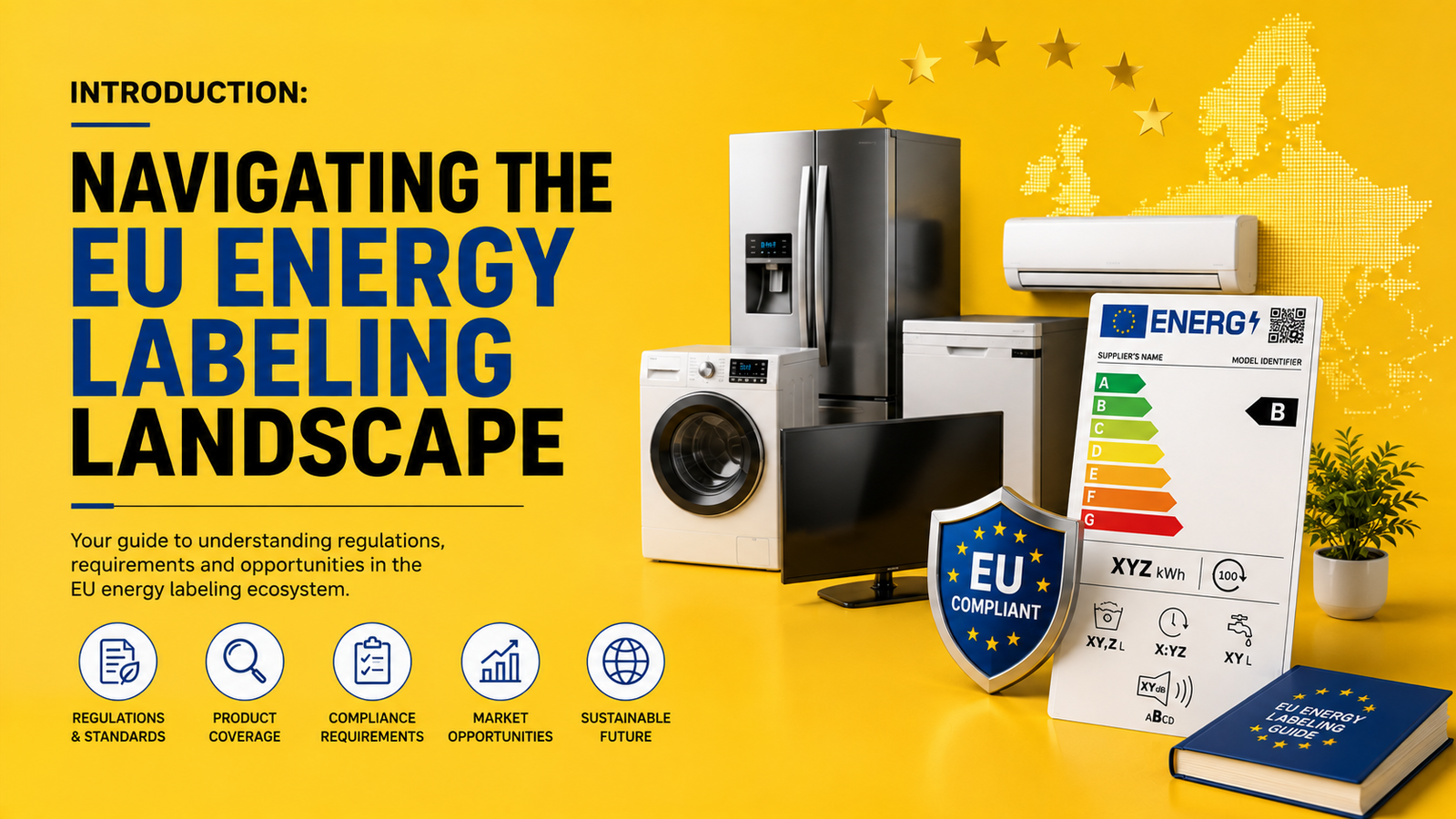
The European Product Registry for Energy Labelling (EPREL) is a mandatory database for all products requiring an EU energy label. Before a single unit can be sold to a European consumer—whether through a physical storefront or online via Amazon, eBay, or TikTok Shop — the product must be fully registered in this system.
Failing to register products in EPREL can lead to immediate border rejections, account suspensions on major e-commerce platforms, and severe financial penalties. This comprehensive guide will walk you through everything you need to know about the EPREL database, who is responsible, and the exact steps required to get your products compliant and ready for the EU market.
What is EPREL ?
EPREL stands for the European Product Registry for Energy Labelling. Established by the European Commission, the database serves a dual purpose:
- For Consumers: It provides a public-facing portal where buyers can scan a QR code on a product's energy label to access detailed, transparent information about its energy efficiency and performance.
- For Market Surveillance Authorities: It acts as a secure, backend compliance tool. Authorities use EPREL to verify that products entering the EU market meet the required eco-design and energy labeling standards.
The registry enforces transparency, helping the EU reach its ambitious climate and energy-saving goals while protecting consumers from misleading efficiency claims.
Why is it Mandatory to Register Products in EPREL ?
The legal framework surrounding EPREL is stringent. The EU Energy Labelling Regulation (EU) 2017/1369 mandates that suppliers must register their appliances in the EPREL database before selling them on the European market.
If you are an international seller leveraging platforms like Amazon FBA or shipping directly to EU consumers, here is why you must prioritize this step:
- Customs Clearance: European customs authorities routinely check EPREL compliance. If a product arrives without a valid energy label and corresponding database entry, it will be held at the border, incurring storage fees or facing destruction.
- E-Commerce Platform Enforcement: Marketplaces like Amazon, eBay, and Etsy are legally required to verify the compliance of third-party sellers. If you cannot provide an EPREL registration number and a compliant energy label, your listings will be suppressed or removed entirely.
- Fines and Legal Action: Market surveillance authorities conduct regular audits. Non-compliance can result in heavy fines and a permanent ban on selling specific products within the EU.
Which Products Require EPREL Registration ?
Not every product needs to be registered. EPREL specifically targets energy-related products that require an energy label. It is crucial to determine if your items fall into these regulated categories. Common product groups include:
- Lighting: Light sources and separate control gears (including LED bulbs, smart lights, and integrated lighting fixtures).
- Electronic Displays: Televisions, computer monitors, and digital signage displays.
- Household Appliances: Washing machines, washer-dryers, dishwashers, and refrigerators.
- HVAC Systems: Air conditioners, space heaters, water heaters, and solid fuel boilers.
- Commercial Equipment: Professional refrigerated storage cabinets, vending machines, and commercial displays.
- Tires: Car, van, and heavy-duty vehicle tires (which have their own specific labeling requirements for fuel efficiency and wet grip).
Note: As eco-design directives evolve, the EU continuously adds new product categories to the EPREL scope. Always verify the latest regulatory updates before launching a new product line.
Who is Responsible for the Registration ?
The European Commission designates the "Supplier" as the entity legally responsible for registering the product. However, the definition of a "Supplier" varies depending on your business model:
- EU-based Manufacturers: If you manufacture the product within the EU, you are the supplier and must handle the registration.
- EU Importers: If the product is manufactured outside the EU (e.g., in China or the US) and you import it into Europe, you take on the responsibilities of the supplier.
- Authorized Representatives (EU Responsible Persons): If you are a non-EU manufacturer selling directly to European consumers (via e-commerce platforms), you must appoint an EU-based Authorized Representative. This legal representative will act on your behalf to register products in EPREL, ensure technical documentation is correct, and serve as the point of contact for market surveillance authorities.
Step-by-Step Guide: How to Register Products in EPREL
Navigating the backend of the European Commission's portals can be highly technical. Here is the exact, step-by-step process to ensure your products are successfully registered.
Step 1: Create an EU Login Account
Before you can access the EPREL database, you need an EU Login. This is the central authentication service for a wide range of European Commission information systems.
- Go to the EU Login portal.
- Create an account using your professional business email.
- Set up two-factor authentication (2FA), as this is mandatory for accessing sensitive compliance databases.
Step 2: Verify Your Organization with an Electronic Seal (e-Seal)
This is often the most challenging step for international sellers. To prove that your company is legitimate and authorized to enter data into EPREL, you must verify your organization using a qualified electronic seal (e-Seal) that complies with the eIDAS regulation.
- What is an e-Seal ? It is essentially a digital signature for legal entities, ensuring the authenticity and integrity of the data submitted.
- How to get one: You must purchase an e-Seal from an EU-trusted provider. The provider will verify your company's legal existence (using business registration documents, VAT numbers, etc.) before issuing the certificate.
- Linking the e-Seal: Once obtained, you will upload this certificate to your EPREL organization profile to activate your account.
Step 3: Access the EPREL Compliance System
Once your organization is verified, you can log into the EPREL compliance environment. Here, you will set up your supplier profile, adding details like your company name, registered address, and primary contact information.
Step 4: Prepare the Technical Documentation
Before you begin data entry, you must have your technical documentation perfectly organized. EPREL requires you to upload a comprehensive technical file for each product model. This file typically includes:
- Detailed product descriptions and model identifiers.
- Verified test reports from accredited laboratories demonstrating energy efficiency.
- Details on specific eco-design parameters (e.g., power consumption in standby mode, water usage, noise levels).
- Instructions for users and end-of-life disposal guidelines.
Important Note: Your technical documentation must clearly align with your broader compliance strategies, including WEEE (Waste Electrical and Electronic Equipment) directives, as EPREL heavily intersects with sustainable product design.
Step 5: Input Product Data and Generate the Energy Label
Now you will input the specific data points for your product model into the EPREL system.
- Enter the performance parameters precisely as they appear on your laboratory test reports.
- Based on the data you provide, the EPREL system will automatically calculate the energy efficiency class (e.g., A to G).
- The system will then generate the official EU energy label in the correct format and language requirements.
Step 6: Generate the EPREL QR Code
Once the registration is complete and published in the database, EPREL will generate a unique QR code for your specific product model.
- This QR code must be integrated into the physical energy label.
- When printed and affixed to the product packaging (and displayed on your e-commerce product pages), consumers and customs officials can scan the QR code to instantly view the product's official public EPREL entry.
EPREL and the Broader Compliance Ecosystem
When you register products in EPREL, you are fulfilling just one piece of the EU compliance puzzle. It is vital to understand how energy labeling interacts with other strict European regulations:
The General Product Safety Regulation (GPSR)
By 2024 and beyond, the GPSR demands rigorous safety assessments, traceability, and clear labeling for all products sold in the EU. Your EPREL data (which identifies the manufacturer and product specifications) must perfectly match the safety documentation required by the GPSR. Inconsistencies between your energy test reports and your general safety declarations can trigger compliance audits.
Extended Producer Responsibility (EPR) & WEEE
Products that require EPREL registration—such as electronics, lighting, and appliances—almost universally fall under the WEEE directive. This means that alongside energy labeling, you must also comply with EPR regulations. You are required to register with national packaging and electronic waste registries in every EU country where you sell (such as the LUCID register in Germany or SYDEREP in France). Ensuring your EPREL data aligns with your WEEE tonnage reporting is crucial for avoiding environmental fines.
Importer of Record (IOR) Liabilities
If you are utilizing Amazon Global Logistics or similar freight forwarding services, your Importer of Record must ensure that EPREL registration is completed before the goods cross the EU border. The IOR bears the immediate legal risk during customs clearance if the energy labels or EPREL QR codes are missing.
Common Pitfalls to Avoid During Registration
- Delays in Acquiring the e-Seal: Many non-EU companies severely underestimate the time it takes to get an eIDAS-compliant e-Seal. The verification process can take weeks. Start this step long before your planned launch date.
- "Equivalent Model" Errors: If you sell the exact same product under different brand names or model numbers, each unique identifier must be registered in EPREL, even if the technical specifications are identical.
- Failing to Update Legacy Products: The EU periodically rescales energy labels (e.g., moving from the old A+++ system to the strict A-G scale). Suppliers must proactively update their EPREL registrations and generate new labels when these transitions occur.
- Incorrect E-Commerce Display: It is not enough to just put the label on the physical box. Online sellers must display the energy label and the product information sheet directly adjacent to the price on their webshops or marketplace listings.
Simplify Your EU Market Access
For international sellers and non-EU manufacturers, the administrative burden of European compliance can be overwhelming. Attempting to navigate the EU Login system, secure eIDAS e-Seals, and parse through technical testing requirements drains valuable time that could be spent growing your business.
You do not have to tackle this alone. Appointing an experienced EU Authorized Representative ensures that your technical documentation is flawless, your products are registered swiftly, and your supply chain remains uninterrupted.
At Complico Consulting GmbH, we specialize in comprehensive European Union regulatory compliance for e-commerce sellers. From navigating the complexities of the GPSR and EPR frameworks to acting as your dedicated EU Responsible Person, we provide end-to-end solutions to keep your products moving across borders and selling smoothly on platforms like Amazon, eBay, and TikTok Shop.
If you are ready to confidently register products in EPREL and secure your foothold in the European market, our team is here to handle the regulatory heavy lifting.
Ready to get compliant ? Contact us today:
Complico Consulting GmbH
📍 Bahnhofstr 12, 63549, Ronneburg, Germany
🌐 complicoconsulting.com
✉️ info@complicoconsulting.com
📱 WhatsApp: +49 160 7959362
🏢 VAT: DE459923379
Frequently Asked Questions (FAQs)
1. What is EPREL ?
EPREL (European Product Registry for Energy Labelling) is the European Commission's official database for energy-labelled products. It helps consumers compare energy efficiency while enabling market surveillance authorities to verify product compliance before products are sold in the EU.
2. Who is required to register products in EPREL ?
EU manufacturers, EU importers, and EU-based Authorised Representatives acting on behalf of non-EU manufacturers are responsible for registering applicable products in EPREL before they are placed on the European market.
3. Which products require EPREL registration ?
Products requiring an EU Energy Label must be registered in EPREL. These include televisions, monitors, refrigerators, washing machines, dishwashers, tumble dryers, air conditioners, heat pumps, lighting products, smartphones, tablets, tyres, and other regulated energy-related products.
4. Can a non-EU manufacturer register products directly in EPREL ?
No. Non-EU manufacturers must appoint an EU-based Authorised Representative or work through an EU importer to register products and manage compliance obligations within the European Union.
5. Is EPREL registration mandatory for Amazon, eBay, and Etsy sellers ?
Yes. If you sell products covered by EU Energy Labelling Regulations through marketplaces such as Amazon, eBay, or Etsy, you must ensure the products are registered in EPREL. Failure to comply may result in listing suspensions or removal from the platform.
6. What documents are required for EPREL registration ?
Typical documentation includes:
- Technical documentation (Technical File)
- Accredited laboratory test reports
- Product specifications
- Energy efficiency data
- Supplier information
- EU Declaration of Conformity (where applicable)
- Qualified Electronic Seal (e-Seal) for supplier verification
7. What happens if I do not register my products in EPREL ?
Non-compliance can lead to customs delays or seizure of goods, removal of marketplace listings, product recalls, financial penalties imposed by market surveillance authorities, and restrictions on selling products within the European Union.
8. Does EPREL registration replace CE marking ?
No. EPREL and CE marking are separate compliance requirements. CE marking demonstrates conformity with applicable EU legislation, while EPREL is specifically required for products subject to EU Energy Labelling Regulations.
9. How long does the EPREL registration process take ?
The timeline depends on the completeness of your documentation and supplier verification. Businesses with all required technical files and a verified Qualified Electronic Seal can often complete the registration within a few business days, while additional verification requirements may extend the process.
10. How can Complico Consulting GmbH help with EPREL compliance ?
Complico Consulting GmbH assists manufacturers, importers, and e-commerce sellers with EPREL registration, Authorised Representative services, technical documentation reviews, supplier verification, energy label compliance, GPSR support, and broader EU regulatory compliance to help businesses access the European market with confidence.
More About Register Products in EPREL Resources