
Summarize this article with:
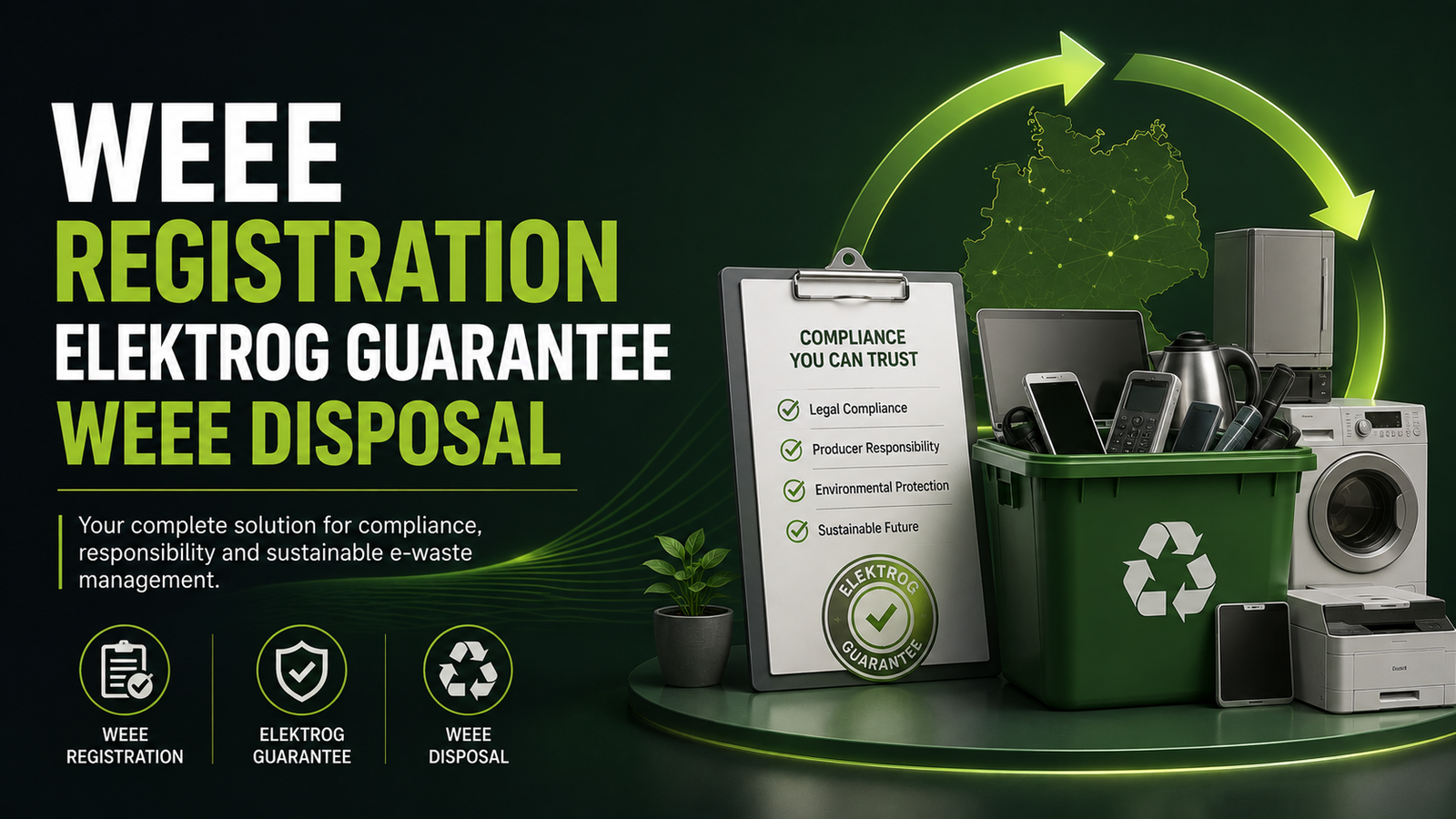
If you manufacture, import, or sell electrical and electronic equipment (EEE) in Germany, the regulatory landscape has never been stricter. With the enforcement of the 2026 ElektroG4 amendments, online marketplaces, customs authorities, and regulatory bodies are aggressively cracking down on non-compliant sellers.
The cornerstone of compliance is WEEE Registration. Without it, major platforms like Amazon, eBay, and Shopify will legally block your listings from reaching German buyers, and you could face administrative fines of up to €100,000.
Navigating the German Electrical and Electronic Equipment Act (ElektroG) can feel overwhelming. Between securing an insolvency-proof guarantee, managing proper WEEE disposal, and dealing with the Stiftung EAR bureaucracy, compliance requires a strategic approach.
Here is the ultimate, humanized guide to understanding WEEE Registration, the ElektroG Guarantee, and your disposal obligations—brought to you by the compliance experts at Complico Consulting GmbH.
1. What is WEEE Registration and the ElektroG ?
To understand WEEE Registration, you first need to understand the philosophy behind it: Extended Producer Responsibility (EPR). The principle is simple—if your business profits from placing electronic products on the market, your business is financially responsible for the recycling and disposal of those products at the end of their lifecycle.
The EU WEEE Directive vs. The German ElektroG
The European Union established the Waste Electrical and Electronic Equipment (WEEE) Directive to minimize e-waste and promote recycling. However, the EU directive is not a single, blanket law. Every member state translates this directive into its own national legislation.
In Germany, this legislation is known as the ElektroG (Elektro- und Elektronikgerätegesetz). Under the ElektroG, the German government established the Stiftung EAR (Stiftung Elektro-Altgeräte Register) to act as the central clearing house.
Before you sell a single electronic device in Germany, you must complete your WEEE Registration with Stiftung EAR and obtain an official WEEE registration number (WEEE-Reg.-Nr.). There are no minimum volume thresholds; the rule applies from the very first unit sold.
2. Who Actually Needs a WEEE Registration ?
A common misconception is that only actual factories or physical manufacturers need to worry about WEEE Registration. Under the ElektroG, the definition of a "producer" is incredibly broad.
You are legally considered a producer (and therefore require a registration) if you fall into any of these categories:
The Manufacturer: You produce electrical equipment under your own brand name.
The OEM / Re-brander: You buy unbranded equipment from a supplier (e.g., in China) and apply your own brand name or logo to it.
The Importer: You are the first entity to commercially import electrical equipment into Germany from outside the country. See our Importer of Record services if this applies to you.
The Dropshipper / Online Seller: You sell electrical devices directly to German end-users from a foreign country.
The Marketplace Gatekeeper Rules
In 2026, e-commerce platforms have strict legal "gatekeeper" obligations. Marketplaces must actively verify that every seller listing an electronic product holds a valid Stiftung EAR WEEE Registration number. If a platform allows an unregistered seller to operate, the platform itself can be held financially liable. This is why Amazon now automatically suspends listings that lack a valid WEEE-Reg.-Nr.
3. The ElektroG Guarantee: Securing Insolvency-Proof Financials
One of the most complex hurdles in the WEEE Registration process for Business-to-Consumer (B2C) products is the ElektroG Guarantee (insolvenzsichere Garantie).
Why does the WEEE Guarantee exist?
Imagine a scenario where a popular consumer electronics brand sells millions of smartwatches in Germany over five years, but then goes bankrupt. Years later, those millions of smartwatches reach the end of their lives and are thrown into municipal recycling centers. Because the company no longer exists, who pays for the recycling?
To prevent the German taxpayer from footing the bill, the ElektroG requires all B2C producers to provide a financial guarantee before they are granted a WEEE Registration.
How the Guarantee Works
This insolvency-proof guarantee proves that funds are locked away specifically to finance the future disposal of your products if your company ceases to exist.
It must be calculated based on the weight and expected return rate of the specific product categories you sell.
It must be updated and approved annually.
Without an accepted guarantee on file, Stiftung EAR will simply reject your WEEE Registration application.
At Complico Consulting GmbH, we help our clients secure and structure these financial guarantees quickly, bypassing the heavy bureaucratic delays that often stall product launches. Read our detailed breakdown of the WEEE Guarantee process in Germany.
4. WEEE Disposal and Ongoing EPR Obligations
Obtaining your WEEE Registration number is not a one-and-done event; it is the beginning of your ongoing compliance journey. Proper WEEE disposal requires active, continuous management.
Monthly and Annual Reporting
Once registered, you are legally obligated to report the exact quantities (in kilograms) of electrical and electronic equipment you place on the German market.
Monthly Reports: You must submit placed-on-market volumes to Stiftung EAR.
Annual Reports: A comprehensive yearly reconciliation of all volumes sold and collected.
Take-Back Orders and Disposal
When municipal collection facilities (recycling centers) fill a container with e-waste in your registered category, Stiftung EAR uses an algorithm to issue a "take-back order."
If your company receives a take-back order, you are legally required to dispatch a certified logistics provider to pick up the full container, transport it to a certified treatment facility, and provide an empty container in its place. Failing to fulfill a take-back order within the strict statutory deadline results in immediate and severe financial penalties.
5. The WEEE Registration Process
Attempting to navigate Stiftung EAR without a deep understanding of the ElektroG can lead to costly rejections and delays. Here is the standard procedural flow for achieving compliance:
1. Determine Your Scope and Categories: B2B vs. B2C classification. Audit your product catalog to determine exactly which of the 6 official ElektroG categories your products fall into, and whether they are classified for consumer (B2C) or professional (B2B) use.
2. Appoint an Authorised Representative: Mandatory for non-German companies. If your company does not have a registered branch office in Germany, you cannot register directly. You must legally mandate a German-based Authorized Representative to hold the registration and assume legal liability on your behalf.
3. Secure the ElektroG Guarantee: For B2C products only. Calculate your anticipated sales volumes, purchase a certified insolvency-proof guarantee from a recognized financial institution or surety provider, and submit the certificate to Stiftung EAR.
4. Submit the WEEE Registration Application: Brand and equipment type details. Create an account in the Stiftung EAR portal. Submit detailed product descriptions, photographs, brand names, and technical specifications for every equipment type you intend to sell.
5. Implement the WEEE-Reg.-Nr.: Labeling and marketplace validation. Upon successful registration (which takes 4 to 10 weeks), you will receive an 8-digit WEEE number. You must prominently display this number on your invoices, website imprint, and provide it to your marketplace partners.
6. How Complico Consulting GmbH Secures Your Market Access
The complexities of WEEE Registration, from classifying borderline products to securing insolvency guarantees and managing continuous disposal logistics, distract you from what you do best: growing your business.
At Complico Consulting GmbH, we offer a fully managed compliance infrastructure tailored for modern brands, importers, and e-commerce sellers.
What we handle for you:
Full Stiftung EAR Registration: We manage the entire application process from start to finish.
Authorized Representation: We provide reliable, German-based representation for international companies.
Guarantee Management: We facilitate fast, cost-effective ElektroG Guarantees.
Data Reporting & Disposal Logistics: We take over your monthly reporting and coordinate all mandatory WEEE take-back orders and recycling protocols.
Cross-Regime Compliance: We ensure your WEEE obligations perfectly align with your German Packaging (LUCID) and Battery Act requirements.
Don't let regulatory bottlenecks keep your products out of Europe's largest economy. Proper WEEE Registration is not just a legal hurdle; it is a competitive advantage that ensures uninterrupted sales, protects your brand reputation, and demonstrates your commitment to environmental sustainability. Learn more about our approach in the complete WEEE registration and ElektroG guide, or check our WEEE number Europe guide. Contact our team to get started, or view our pricing plans.