
Summarize this article with:
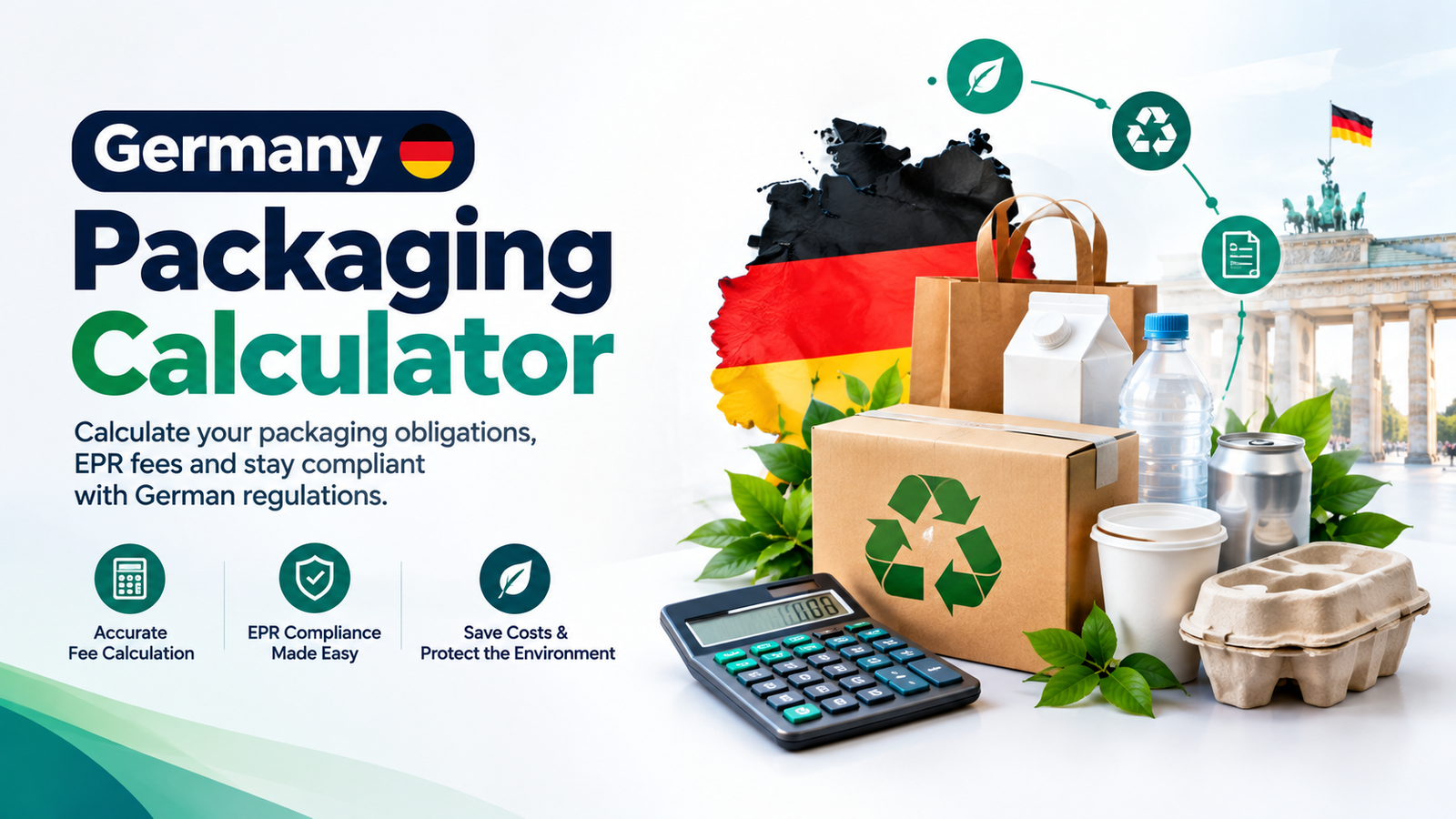
VerpackG Made Simple: Why You Need a Packaging Calculator for the German Market
Germany is one of the most lucrative e-commerce markets in Europe. However, anyone selling physical products to German end consumers quickly runs into a massive bureaucratic hurdle: the German Packaging Act (VerpackG). This law aims to minimize the environmental impact of packaging waste and actively promote recycling.
For online retailers and international brands, this translates to a complex reporting obligation. If you do not know exactly how much cardboard, plastic, or glass you are introducing into the market, you risk severe penalties. This is precisely where a packaging calculator comes into play. In this comprehensive guide, you will learn how to accurately calculate your packaging volumes, avoid legal pitfalls, and discover how Complico Consulting GmbH can support you on your path to full compliance.
What is the German Packaging Act (VerpackG) ?
The VerpackG was enacted to enforce Extended Producer Responsibility (EPR) in Germany. It obligates companies to contribute financially to the collection, sorting, and recycling of their packaging. You can find the full overview of the German packaging law requirements on our service page.
The most important rule upfront: Under the law, you are considered a "producer" the moment you commercially place system-participating packaging on the German market for the first time. This applies not only to goods manufacturers but explicitly to importers and online retailers (such as Amazon FBA sellers or Shopify store owners) who ship packaged goods to German end consumers. For a deeper look, read our EPR Germany guide for Amazon sellers.
Affected packaging types include:
Sales Packaging (Primary Packaging): The casing that directly protects the product (e.g., a shampoo bottle or a shoebox).
Secondary Packaging (Grouped Packaging): Used to bundle multiple sales units.
Shipping Packaging: The classic shipping carton including filling material, adhesive tape, and shipping labels.
Why a Packaging Calculator is Indispensable for Your Business
The law requires more than just a blanket registration; it demands a kilogram-accurate report of your annual packaging volumes, broken down by material type. These figures form the basis for calculating your license fees for a Dual System.
Manual calculations using messy Excel spreadsheets are error-prone and time-consuming. A professional packaging calculator automates this process. It helps you seamlessly convert product data, shipping volumes, and material weights into report-ready totals. This is critical because authorities audit strictly: failing to register in the LUCID portal of the Central Agency Packaging Register (ZSVR) can result in fines of up to €100,000 for a single violation.
Step-by-Step: How to Determine Your Packaging Quantities Correctly
To ensure your packaging calculator delivers accurate results, you need to collect clean data beforehand. Follow these systematic steps:
Analyze Components: Take apart a typical shipment. What packaging elements are included ? Don't forget the apparent small items like hangtags, bubble wrap, adhesive tape, and the packing slip pouch.
Weigh Materials: Use a precise scale to weigh each component individually. Assign the weights to the legal material fractions (e.g., paper/cardboard/carton, plastic, glass, aluminum, tinplate, or composite materials).
Create Product Profiles: If you sell 50 different products, you don't need to weigh each one from scratch. Create average profiles (e.g., "Standard jewelry shipment" or "T-shirt in a polybag").
Multiply by Sales Figures: Multiply the weight of each profile by your projected annual order volume destined for Germany.
Feed Data into the Packaging Calculator: Let the tool calculate the final annual quantity in kilograms, which you can then report legally and securely.
LUCID and the Dual System: The Reporting Process
The German system rests on two pillars that must communicate seamlessly with one another:
Step 1: Registration with LUCID. You must register with the ZSVR in the LUCID packaging register and obtain a registration number. This must happen before your first shipment. Our step-by-step LUCID registration guide walks you through the process.
Step 2: Contract with a Dual System. You enter into a licensing agreement with one of the recognized Dual Systems in Germany. Here, you report the volumes calculated via your packaging calculator and pay the recycling fee.
Step 3: Data Reporting in LUCID. The exact same quantities and the name of your Dual System must now be deposited in LUCID. Discrepancies between the data reported to your system and LUCID will inevitably lead to compliance issues.
For very large market participants, an additional hurdle exists: a Declaration of Completeness (Vollständigkeitserklärung) audited by an expert is required if your annual quantities exceed 80 tons of glass, 50 tons of paper/cardboard, or 30 tons of other materials.
Common Pitfalls with VerpackG (and How to Avoid Them)
Even experienced merchants often make costly mistakes when licensing packaging. Watch out for these common traps:
Forgetting the Adhesive Tape: A classic mistake. Package tape is also part of the shipping packaging and must be weighed and licensed as plastic (or PPK for paper tape).
Dropshipping Misunderstandings: If you have goods shipped via dropshipping, you are often still legally the one placing the goods on the market in Germany. The licensing obligations typically fall back on you as long as only your brand is visible on the packaging.
Missed Year-End Reports: At the beginning of the year, you submit a planned volume forecast. In the spring of the following year, you must correct these figures with the actual shipped quantities via a year-end report. A good packaging calculator stores your historical sales data and makes this reconciliation effortless.
Complico Consulting GmbH: Your Partner for Product & Packaging Compliance
Regulations in the EU are only becoming more stringent. In addition to the German VerpackG, the new EU Packaging and Packaging Waste Regulation (PPWR) is currently creating waves, establishing a uniform legal framework directly applicable across all 27 EU member states. Learn more in our article on EPR and PPWR packaging compliance.
Complico Consulting GmbH assists international brands and online retailers with these exact challenges. Instead of getting lost in a jungle of country-specific regulations, material definitions, and registration portals, we handle the complex side for you.
Our services include:
Utilizing advanced tools such as our proprietary packaging calculator for error-free volume determination.
Country-specific legal analyses for all of Europe.
Complete takeover of the registration and reporting process with LUCID and the Dual Systems.
100% legal security with zero administrative overhead for your team.
We ensure you can focus on your core business—selling your products—while we handle compliance in the background seamlessly and securely. Reach out to us directly via our contact page or check out our pricing options to get started.
Frequently Asked Questions (FAQ)
1. What happens if I calculate my quantities incorrectly in the packaging calculator ?
If you accidentally underestimate your volumes, you are technically in violation of the law. The legislation provides for fines for incorrect or incomplete reports. However, the mandatory year-end report gives you the opportunity to correct planned volumes based on actual sales figures at the end of the year.
2. Does VerpackG apply to small online retailers and small business owners ?
Yes, without exception. The Packaging Act has no de minimis threshold. Even if you ship only 10 packages a year, you must register with LUCID and sign a contract with a Dual System.
3. Is transport packaging the same as shipping packaging ?
No. Shipping packaging (the package sent to the end consumer) is subject to system participation and must be licensed. Transport packaging (e.g., pallets or large shrink wraps that only secure transport between businesses) generally does not reach the end consumer. They are subject to special B2B take-back obligations, but do not need to be licensed with a Dual System.
4. How often do I have to report my packaging quantities ?
At least twice a year. At the beginning of a calendar year (or when starting your business), you submit a planned volume report for the current year. By mid-May of the following year, you must submit the actual volume report (year-end report), reflecting the exact weights of the past year.
5. What does licensing cost on average ?
Costs depend directly on your calculated volume and materials. As a packaging calculator shows, glass and aluminum are usually more expensive or heavier per kilogram than paper and cardboard. For small online retailers, minimum fees with Dual Systems often start around €25 to €50 per year. More answers can be found in our FAQ section.
E-commerce success in Germany hinges on compliance with local laws. Don't wait for expensive cease-and-desist letters from competitors or penalties from the ZSVR. Leverage the data-tracking of a reliable packaging calculator and bring experts on board. Complico Consulting GmbH stands ready as your full-service partner to handle your packaging compliance from the first gram to the last ton.