
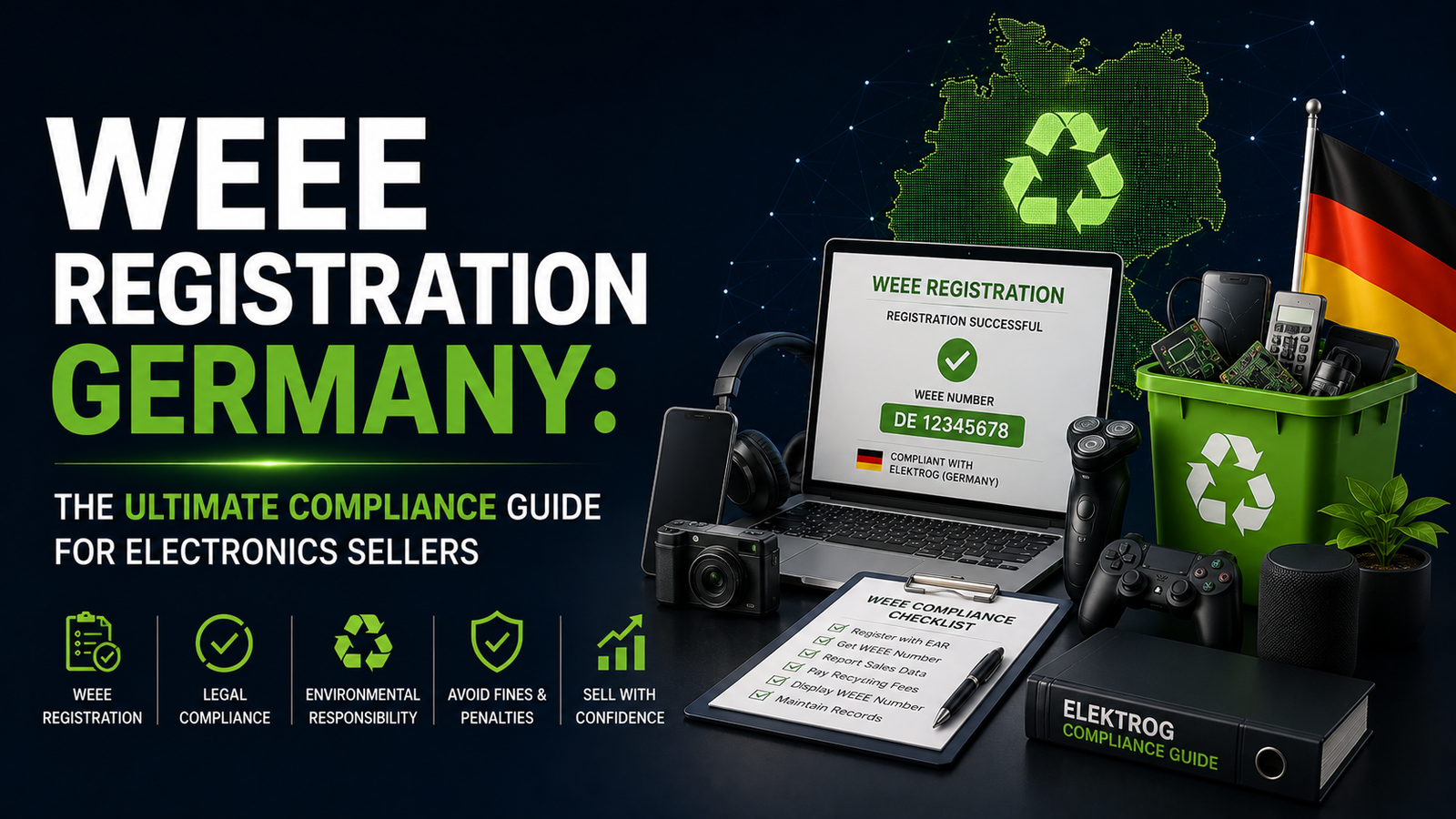
If you are currently selling electronics in the German market or planning to launch your brand there you have likely heard the term WEEE Germany echoing in forums and seller groups. For many e-commerce entrepreneurs, this acronym sounds like just another bureaucratic hurdle. In reality, it is the cornerstone of your legal right to sell electronics in Europe's largest economy.
At Complico Consulting GmbH, we talk to hundreds of sellers every year who are shocked to find their best-selling products suddenly deactivated on Amazon or eBay. The culprit ? More often than not, it is a missing or invalid WEEE registration.
This guide is designed to cut through the legal jargon. We'll break down what WEEE Germany compliance actually entails, why it's non-negotiable, and how you can get compliant without losing your sanity.
What is WEEE, and Why Does Germany Care ?
WEEE stands for Waste Electrical and Electronic Equipment. In Germany, the legal framework that enforces this directive is known as the ElektroG (Elektro- und Elektronikgerätegesetz).
The logic behind the law is simple: The manufacturer (which, in the eyes of the law, often includes the importer or distance seller) is responsible for the entire lifecycle of their product. When your customer in Berlin or Munich finishes using your blender, smartphone, or LED light, that device becomes electronic waste. The German government mandates that producers not the taxpayers must fund the collection, treatment, and recycling of that waste.
Is This Only for Manufacturers ?
Absolutely not. If you are a distance seller, an online retailer, or a private-label brand importing goods into Germany, you are legally considered a "producer."
If you place electronic equipment on the German market for the first time, you have the same legal obligations as a massive factory. The law does not distinguish between a small Shopify store and a multinational corporation. If you sell it in Germany, you are responsible for it in Germany.
The Core Requirement: Registration with Stiftung EAR
The central authority overseeing this process is Stiftung EAR (Elektro-Altgeräte Register). Think of them as the clearinghouse for all things electronic waste in Germany.
Before you sell your first unit, you must register your brand and the types of equipment you sell with Stiftung EAR.
Do You Need an Authorized Representative ?
This is the part that trips up most non-EU sellers. If your company is not established in Germany (i.e., you don't have a physical branch or office there), you cannot register with Stiftung EAR directly.
You are legally required to appoint a Germany-based Authorized Representative (Bevollmächtigter). This representative acts as your local legal proxy. They handle the communication with the authorities, sign the documents, and take on the liability for your compliance. At Complico Consulting, we see this as the most critical step for international sellers without this appointment, your path to registration is effectively blocked.
The WEEE Compliance Checklist
Navigating the registration process requires precision. One missing document can lead to delays of weeks. Here is the lifecycle of your compliance:
1. Classification
First, categorize your product. There are six main categories of electrical equipment under the ElektroG (e.g., small appliances, IT equipment, screens). You must register specifically for the category you are selling in.
2. The Financial Guarantee
To ensure that recycling funds are available even if your company ceases to exist, the law requires an "insolvency-proof financial guarantee." This is essentially a security bond. You pay a premium to a guarantor, and they provide the certificate that Stiftung EAR requires.
3. Official Registration
Once you have your representative and your guarantee, you submit your application through the EAR portal. If successful, you receive your WEEE Registration Number (e.g., WEEE-Reg.-Nr. DE 12345 678).
4. Ongoing Reporting (The Step Most Sellers Forget)
Registration is not a "set it and forget it" task. You are required to submit monthly quantity reports detailing how much weight (in tons) of equipment you have placed on the market. If you fail to report, your registration can be flagged, leading to potential account suspension.
What Happens If You Ignore WEEE Germany Requirements ?
We frequently hear, "My volume is low, surely they won't notice me ?"
The reality is quite different. Since July 2023, major marketplaces like Amazon and eBay are legally mandated to verify your WEEE status. They don't just "check" occasionally; they automatically validate your WEEE number against the Stiftung EAR database.
If your number is missing, invalid, or doesn't match your brand name, the consequences are immediate:
- Listing Deactivation: Your products will be pulled from the site, often without warning.
- Financial Penalties: Fines for non-compliance can reach up to €100,000.
- Legal Warnings: Competitors in Germany are notoriously vigilant. They can send Abmahnung (legal warnings) for unfair competition, which often involve hefty legal fees.
- Profit Skimming: Authorities have the power to seize profits made from non-compliant sales.
How Complico Consulting GmbH Can Help
At Complico Consulting GmbH, we specialize in making European regulatory compliance invisible. You shouldn't have to become a German law expert to sell your products; you should be focused on growing your brand.
We assist international manufacturers and e-commerce sellers with:
- Authorized Representative Services: We act as your local link to Stiftung EAR.
- Compliance Audits: We help you categorize your products correctly to avoid overpaying or under-reporting.
- Streamlined Registration: We handle the paperwork, the guarantee, and the portal submissions so you don't have to navigate the German government website in German.
- Ongoing Reporting: We manage your monthly quantity reports, ensuring you stay compliant month after month.
Ready to Secure Your Market Access ?
The German market is massive and rewarding, but it demands respect for the rules. Don't let a missing WEEE registration derail your hard work.
If you are unsure whether your current catalog meets the WEEE Germany requirements, or if you simply need a partner to handle the bureaucracy, we are here to help.
Contact Complico Consulting GmbH today for a consultation. Let's get your products moving safely and legally into the German market.
Disclaimer: This blog post is for informational purposes only and does not constitute legal advice. Regulatory requirements can change. Always consult with a qualified compliance expert or legal counsel for your specific business situation.
Frequently Asked Questions (FAQs)
1. What is WEEE Germany ?
WEEE Germany refers to Germany's implementation of the Waste Electrical and Electronic Equipment (WEEE) Directive through the ElektroG. It requires producers and sellers of electrical and electronic equipment to register, finance recycling, and comply with reporting obligations before selling products in Germany.
2. Who needs WEEE Germany registration ?
Any manufacturer, importer, private-label brand, or online seller placing electrical or electronic products on the German market for the first time generally needs WEEE Germany registration. This includes businesses selling through Amazon, Shopify, eBay, Etsy, and other e-commerce platforms.
3. Is WEEE Germany registration mandatory for Amazon sellers ?
Yes. Amazon requires sellers offering electrical and electronic equipment in Germany to provide a valid WEEE Germany registration number. Listings may be suspended or removed if valid registration information is not provided.
4. What is Stiftung EAR ?
Stiftung EAR is the official German authority responsible for managing WEEE Germany registrations. It maintains the producer register, issues WEEE registration numbers, and oversees compliance with Germany's electronic waste regulations.
5. Do non-German businesses need an Authorized Representative for WEEE Germany ?
Yes. Businesses without a legal establishment in Germany generally must appoint a Germany-based Authorized Representative to complete the WEEE registration process and communicate with Stiftung EAR on their behalf.
6. What products require WEEE Germany registration ?
Most electrical and electronic products require WEEE Germany registration. This includes household appliances, consumer electronics, lighting products, IT equipment, electrical tools, electronic toys, medical devices, and many other categories covered under the ElektroG.
7. What happens if I sell products without WEEE Germany registration ?
Selling electrical products without valid WEEE Germany registration can result in marketplace listing suspensions, customs issues, fines of up to €100,000, legal action from competitors, and restrictions on selling products in Germany.
8. Is WEEE Germany registration a one-time process ?
No. After obtaining your WEEE Germany registration number, you must continue meeting ongoing compliance obligations, including submitting regular quantity reports and maintaining accurate records of products placed on the German market.
9. How long does WEEE Germany registration take ?
The registration timeline depends on the product category, documentation, and application accuracy. Appointing an experienced compliance partner can help avoid delays and ensure a smoother registration process.
10. How can Complico Consulting GmbH help with WEEE Germany compliance ?
Complico Consulting GmbH provides end-to-end WEEE Germany compliance services, including Authorized Representative services, Stiftung EAR registration support, product classification, financial guarantee assistance, ongoing quantity reporting, and regulatory guidance to help businesses sell electronics legally in Germany.
More About WEEE Germany Resources:
- The Official Registration Authority (Stiftung EAR)
- German Environment Agency (Umweltbundesamt - UBA)
- European Commission Official WEEE Directive Framework
- German Federal Institute for Occupational Safety and Health (BAuA)
Ready to get your electronics compliant and back on the shelves in Germany ? Explore our services overview, check our compliance pricing, or contact our team for a tailored WEEE compliance audit. You may also find our guides on WEEE registration under ElektroG and what a WEEE number is useful, or browse more insights on our blog.