
About this resource
Demystifying Germany’s ElektroG 2: What Manufacturers and Retailers Need to Know
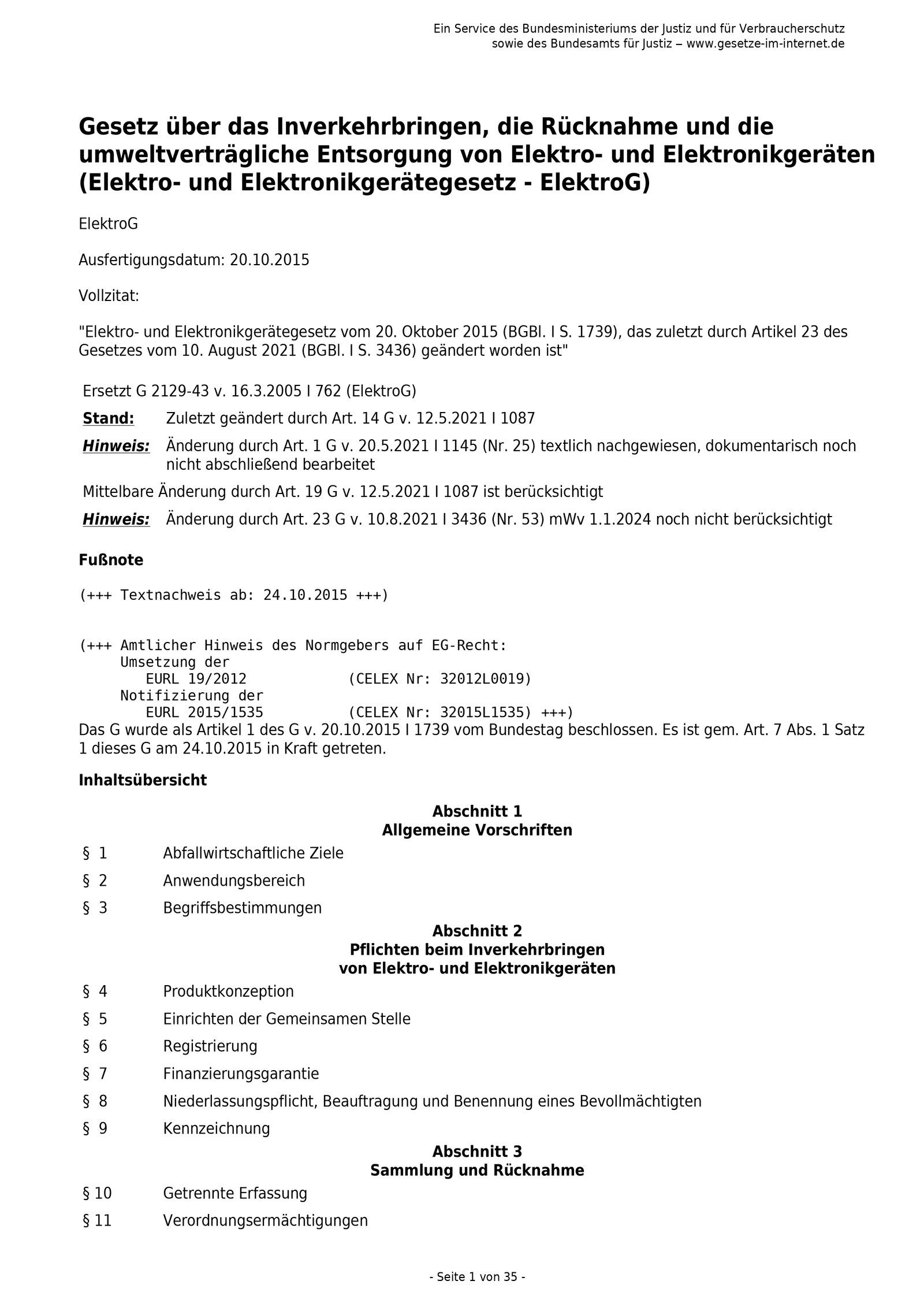
In the world of European compliance, navigating Germany's environmental regulations can feel like stepping through a labyrinth. Among the most critical pieces of legislation for anyone selling tech, appliances, or electronic components in Germany is the Elektro- und Elektronikgerätegesetz (ElektroG)—commonly known as the German Electrical and Electronic Equipment Act.
With the introduction of ElektroG 2 (aligned with the EU’s recast WEEE Directive), the regulatory framework tightened significantly, shifting even more accountability onto manufacturers, importers, and online retailers.
Whether you are launching a new consumer gadget or scaling an e-commerce store into the German market, here is a breakdown of what ElektroG 2 entails and how to stay on the right side of the law. Our German WEEE compliance service can support you at every step.
1. What is ElektroG 2 and Why Was It Introduced ?
The ElektroG translates the European WEEE Directive (Waste Electrical and Electronic Equipment) into German national law. Its primary goals are straightforward yet ambitious:
- Prevent waste from electrical and electronic equipment.
- Promote re-use, recycling, and recovery to protect natural resources.
- Ensure environmentally sound disposal of hazardous substances found in modern electronics.
While the original 2005 law laid the groundwork, ElektroG 2 expanded definitions, streamlined product categories, and introduced stricter take-back and registration mandates to tackle Europe's soaring e-waste volumes. For the latest updates, read our article on ElektroG changes in 2026 for online retailers.
2. Core Obligations for Manufacturers and Importers
If you place electrical and electronic equipment on the German market, you are legally considered a "producer" (regardless of whether you manufacture the goods locally or import them). Under ElektroG 2, your compliance checklist must include:
- Stiftung EAR Registration: Before selling anything, manufacturers must register with the Stiftung EAR (the official clearing house for waste electrical equipment in Germany). Selling without valid registration is illegal. See our step-by-step guide to WEEE registration in Germany and learn what a WEEE number is.
- Insolvency-Proof Financial Guarantees: Producers must prove they have financial backing to cover the future disposal costs of their products. This ensures that taxpayers aren't left footing the bill if a company goes out of business. Learn how to obtain a WEEE guarantee in Germany or check our WEEE guarantee premium offer.
- Brand Transparency: Brands must permanently label their products so that the manufacturer can be explicitly identified, alongside the iconic crossed-out wheelie bin symbol. Labeling standards are defined in EN 50419.
3. What Changed for Retailers and Online Marketplaces ?
ElektroG 2 didn't just target manufacturers; it fundamentally transformed responsibilities for physical and online retailers.
Retail Take-Back Rules
- 1:1 Take-Back: Retailers with significant electrical sales areas (generally 400 m² or more) must accept old appliances for free when a customer buys a new, functionally equivalent device.
- 0:1 Take-Back (Small Appliances): Small electronics with no external dimension exceeding 25 cm (think old smartphones, small cables, or pocket calculators) can be returned to large retailers free of charge without requiring the purchase of a new item.
- Online Retailers: E-commerce platforms must provide equivalent take-back solutions, meaning customers must have a viable, cost-free way to return old electronics.
Marketplace Due Diligence
Online marketplaces and fulfillment service providers are legally mandated to verify that third-party sellers on their platforms are properly registered with Stiftung EAR. If a seller cannot prove compliance, marketplaces are required to block them from selling. Sellers on Amazon or eBay should read our guides on electronics registration for Amazon Europe and Amazon Germany WEEE compliance.
4. The Cost of Non-Compliance
Failing to comply with ElektroG 2 is a risky gamble. Enforcement agencies and competitors actively monitor compliance registries. Violations can lead to:
- Six-figure administrative fines
- Immediate sales bans on non-compliant product lines
- Civil liability and warning letters (Abmahnungen) from competitors or environmental associations
Avoid these risks by reviewing the most common WEEE compliance mistakes and our overview of EU compliance fines.
Final Thoughts
ElektroG 2 is a pillar of Germany’s commitment to a circular economy. While the administrative hurdles—from Stiftung EAR registrations to managing take-back logistics—can seem daunting, treating compliance as an integral part of your market-entry strategy is non-negotiable.
By prioritizing proper registration and eco-conscious supply chains early on, businesses can avoid costly penalties while contributing to a more sustainable future. If you are a non-German seller, you may also need an authorised representative and an understanding of Extended Producer Responsibility (EPR). Ready to get started? Contact our compliance experts or view our pricing.