

About this resource
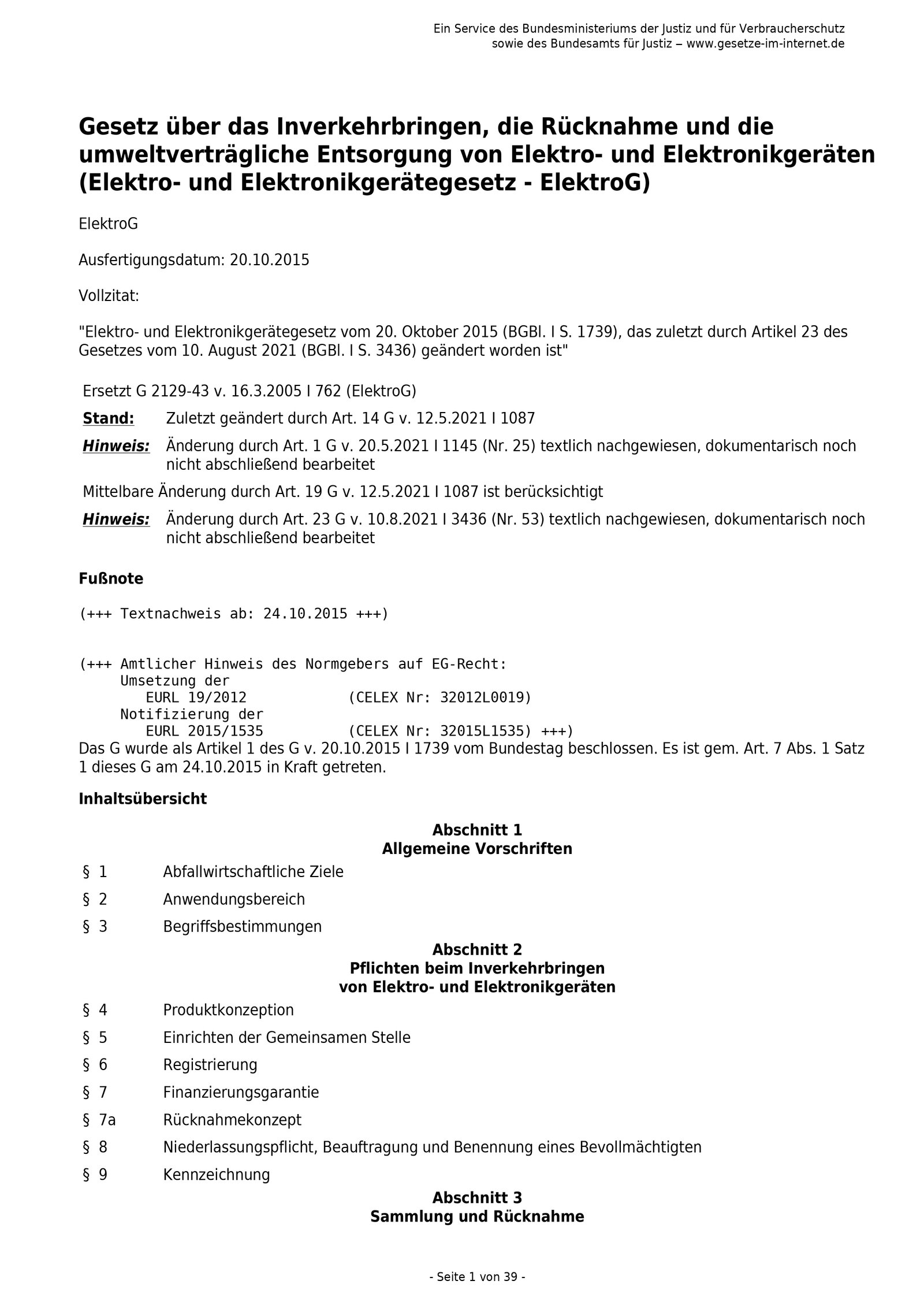
In the modern digital age, electronic devices dominate our daily lives—from smartphones and kitchen appliances to complex industrial machinery. But what happens when these gadgets reach the end of their lifecycle? In Germany, the answer is tightly regulated by the Elektro- und Elektronikgerätegesetz (ElektroG), with ElektroG 3 representing a major tightening of environmental accountability and producer responsibility.
Whether you are an international e-commerce seller targeting German consumers, a domestic manufacturer, or a high street retailer, understanding ElektroG 3 is no longer optional—it is a strict legal prerequisite for doing business in Germany.
What is ElektroG 3 and Why Was It Introduced ?
The ElektroG is Germany's national implementation of the European Union's WEEE Directive (Waste Electrical and Electronic Equipment). Its primary goals are straightforward yet vital:
- Protecting Environment and Health: Preventing hazardous substances (like lead, mercury, and cadmium) from leaking into landfills and ecosystems.
- Resource Conservation: Promoting recycling, component reuse, and the recovery of rare raw materials.
- Extended Producer Responsibility (EPR): Shifting the financial and logistical burden of waste management from municipalities and consumers onto the actual producers and distributors of electronic goods. Learn more in our EPR service overview.
ElektroG 3 brought rigorous enhancements to close regulatory loopholes, ensuring that online marketplaces, smaller grocers, and foreign cross-border sellers can no longer bypass environmental laws.
Core Obligations: Who is Affected and What is Required ?
The regulation applies broadly to anyone who places electrical and electronic equipment (EEE) onto the German market for the first time. This includes manufacturers, importers, brand owners, and distance sellers (including cross-border e-commerce platforms like Amazon, eBay, and independent webshops).
| Compliance Requirement | Description |
|---|---|
| Stiftung EAR Registration | Before selling any electronic product in Germany, companies must register with the stiftung ear (Elektro-Altgeräte Register) and secure a unique WEEE-Reg.-Nr. |
| Financial Guarantee | For B2C (Business-to-Consumer) devices, manufacturers must provide an insolvency-proof financial guarantee to cover future recycling costs. |
| Regular Volume Reporting | Registered entities must submit ongoing monthly and annual statistical reports detailing the exact weight and types of equipment placed on the market. Use our WEEE calculator to estimate your volumes. |
| Take-Back & Collection Coordination | Participation in collection coordination systems is compulsory to ensure physical collection points handle old appliances smoothly. |
Expanded Rules for Retailers and Supermarkets
One of the most impactful shifts brought by ElektroG 3 involves physical retail networks and grocery stores. Previously, many food retailers and smaller supermarkets could sidestep taking back electronic waste due to minimum floor space thresholds.
Under ElektroG 3, supermarkets and grocery stores that regularly sell electrical appliances (such as electric toothbrushes, phone chargers, or kitchen gadgets) are also integrated into the take-back system. If a store offers electronics to consumers, consumers must be given accessible channels to return old, small electronic devices—even without purchasing a new item.
The Cost of Non-Compliance: Risks for Sellers
German authorities and enforcement bodies monitor compliance closely, with oversight extending heavily into online marketplaces. Failing to comply with ElektroG 3 carries severe commercial penalties (see also our overview of EU compliance fines):
- Fines up to €100,000 for administrative offenses.
- Immediate Sales Bans and product seizures until registration and conformity are established.
- Marketplace Delisting: Major platforms like Amazon are legally obligated to block unregistered sellers.
- Competitor Lawsuits: Private-law warnings and unfair competition claims from compliant industry rivals.
Final Thoughts: Sustainability as a Business Standard
While the administrative requirements of ElektroG 3 might feel daunting at first glance, they reflect a broader, permanent shift toward a circular economy. For brands and retailers, compliance is not just about avoiding fines—it is an essential trust signal for environmentally conscious consumers in Germany.
Ensuring proper registration, transparent reporting, and eco-friendly product lifecycles protects both our planet and your brand's long-term viability in the European market. Explore our German WEEE registration service, view our pricing, or contact us for support. For more guidance, visit our blog.